


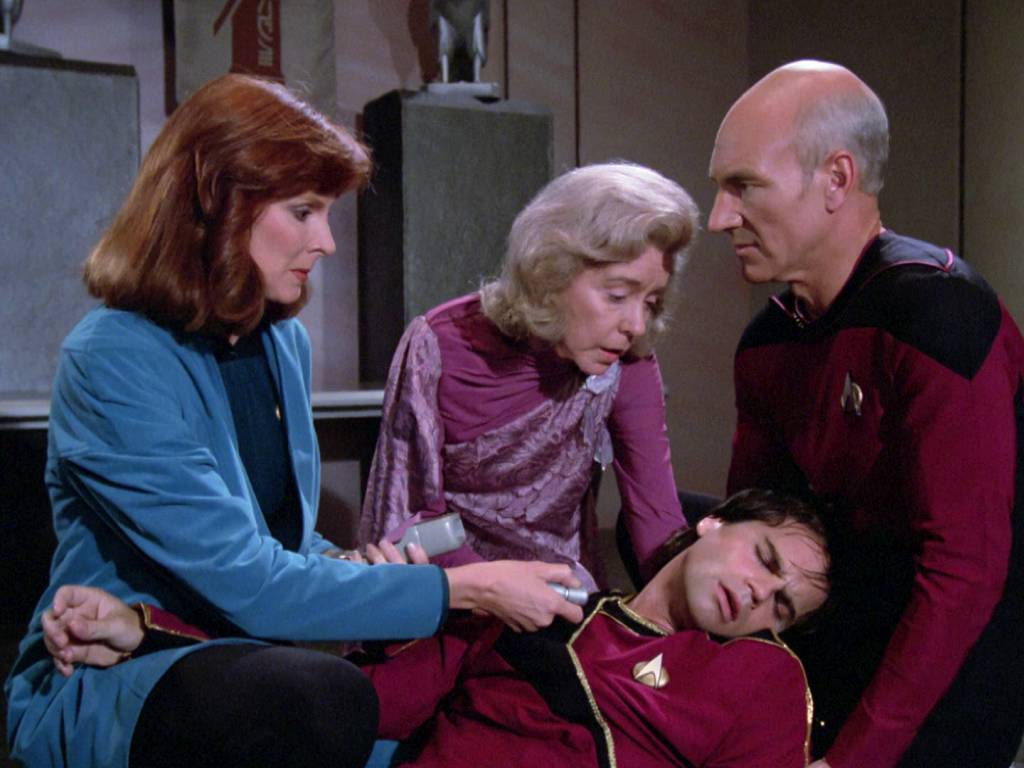
Captain Jean-Luc Picard is one of science fiction television’s greatest leaders. Patrick Stewart brought intelligence, dignity, and authority to the bridge of the USS Enterprise-D. However, even the best captain cannot save every mission.
For more of his unforgettable genre work, check out our ranking of Patrick Stewart’s 10 most powerful and spectacular sci-fi performances.
Star Trek: The Next Generation delivered unforgettable stories like “The Inner Light,” “Darmok,” and “The Measure of a Man.” Unfortunately, the series also produced episodes that wasted Picard’s potential. Some gave him questionable diplomatic assignments. Others surrounded him with weak plots, awkward character moments, or painfully dated storytelling.
This ranking looks at ten of the weakest Star Trek: The Next Generation episodes involving Captain Picard. It considers the quality of the story, Picard’s role, character development, and how well each episode uses one of Starfleet’s most respected captains.
These aren’t necessarily the ten lowest-rated episodes in the entire series. They are episodes where Picard’s presence doesn’t make the adventure work.
Table of Contents
- How We Ranked the Episodes
- 10. “The Last Outpost”
- 9. “Angel One”
- 8. “Justice”
- 7. “Code of Honor”
- 6. “The Battle”
- 5. “Too Short a Season”
- 4. “We’ll Always Have Paris”
- 3. “Manhunt”
- 2. “The Perfect Mate”
- 1. “Bloodlines”
- Picard’s Best Episodes
- Frequently Asked Questions
How We Ranked the Episodes
This list focuses on episodes that feature Captain Jean-Luc Picard in a significant way. We considered several factors when selecting the entries:
- Story quality: Does the episode deliver a compelling science-fiction story?
- Character development: Does the plot give Picard meaningful opportunities to grow?
- Writing: Does the dialogue and storytelling hold up?
- Execution: Does the episode deliver on its premise?
- Legacy: How well does the episode hold up during a modern rewatch?
10. “The Last Outpost” (Season 1, Episode 5)
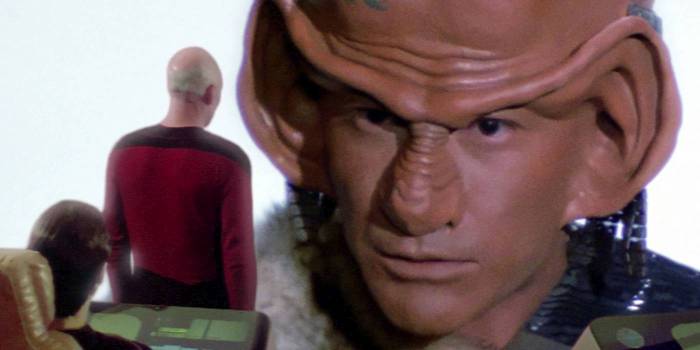
“The Last Outpost” introduces the Ferengi as a potential new threat to the Federation. The Enterprise pursues a Ferengi vessel after it steals technology from a Federation outpost. Both ships become trapped by a mysterious force near an abandoned planet.
Picard must work with the Ferengi captain to understand their situation. The encounter eventually leads to a confrontation with an ancient guardian.
The episode has an interesting science-fiction premise. Unfortunately, its execution makes the Ferengi look more comical than intimidating. Their exaggerated behavior doesn’t establish the formidable adversaries the franchise originally intended.
Picard gets a chance to demonstrate his diplomatic skills. However, the story doesn’t give him much meaningful material. The mystery takes too long to develop, and the resolution feels underwhelming.
Why it ranks here: The episode introduces an important Star Trek species but struggles to make the encounter compelling.
9. “Angel One” (Season 1, Episode 14)
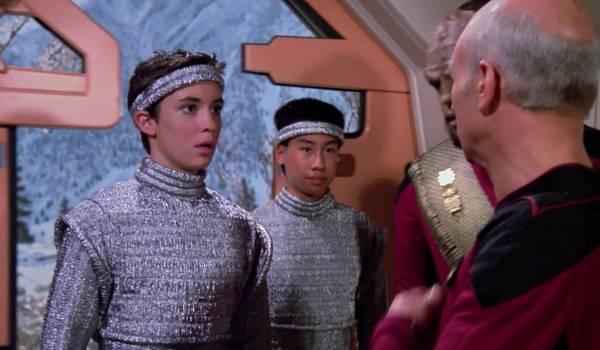
“Angel One” sends the Enterprise to a planet governed by women. The crew discovers a group of male political fugitives hiding from the authorities. Picard must navigate the diplomatic situation while an illness threatens the Enterprise crew.
The episode attempts to explore gender roles and political power. Unfortunately, its ideas feel simplistic and dated. The planet’s social structure is more of a gimmick than a convincing civilization.
Picard’s diplomatic responsibilities provide some interesting moments. However, the episode divides its attention between the planetary conflict and the medical emergency aboard the Enterprise. Neither storyline develops into something particularly memorable.
The result is an adventure that feels more like an awkward morality play than thoughtful Star Trek.
Why it ranks here: Its dated social commentary and uneven storytelling make this one of the show’s least satisfying early adventures.
8. “Justice” (Season 1, Episode 8)
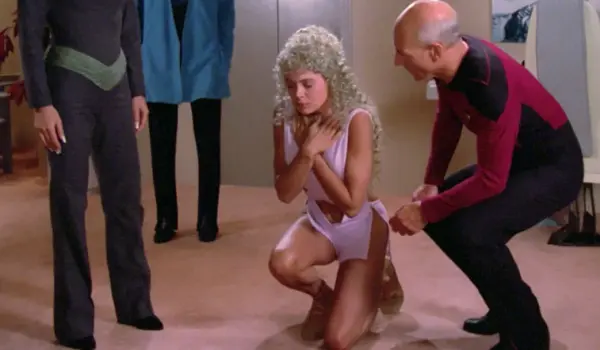
Picard faces a difficult decision in “Justice” when Wesley Crusher accidentally violates the laws of an apparently peaceful planet. The local authorities sentence Wesley to death, forcing Picard to confront the Prime Directive.
The captain must decide whether to respect another civilization’s laws or interfere to save a member of his crew.
It’s a strong premise for a Star Trek story. The Prime Directive creates a genuine moral conflict, and Picard’s responsibility as captain makes the situation especially difficult.
Unfortunately, the planet’s society feels shallow. Its inhabitants appear more interested in presenting an artificial paradise than exploring the consequences of their justice system.
Picard’s dilemma also resolves too conveniently. The episode raises important questions but doesn’t explore them as deeply as later TNG stories would.
Why it ranks here: A promising ethical conflict gets lost in an underdeveloped alien society.
7. “Code of Honor” (Season 1, Episode 4)
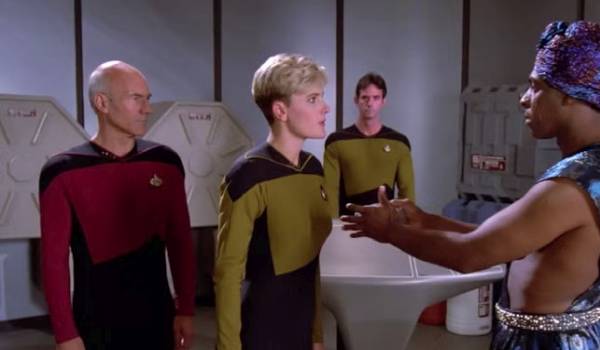
“Code of Honor” is one of the most infamous episodes of Star Trek: The Next Generation. The Enterprise visits Ligon II to negotiate for a vaccine. The negotiations collapse when the planet’s leader kidnaps Tasha Yar.
Picard must negotiate for her release while respecting the planet’s customs. The situation eventually leads to a ritual combat challenge.
The episode gives Picard a diplomatic problem with potentially serious consequences. However, the alien culture is poorly developed, and the story relies on uncomfortable stereotypes.
The premise could have explored cultural misunderstandings and the limits of diplomacy. Instead, the episode delivers a simplistic conflict that has aged particularly badly.
Picard’s efforts to resolve the situation cannot overcome the story’s larger problems.
Why it ranks here: The episode’s troubling portrayal of an alien civilization overshadows its diplomatic premise.
6. “The Battle” (Season 1, Episode 9)
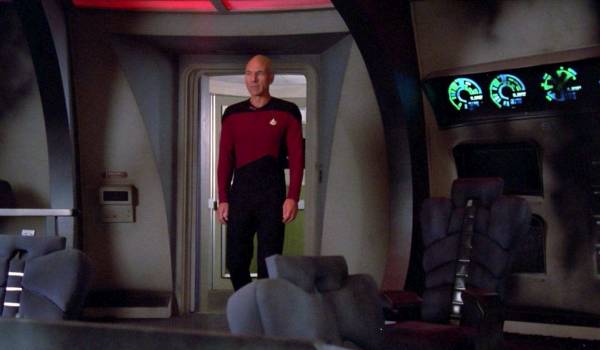
“The Battle” brings Picard’s past back to haunt him. The Ferengi captain DaiMon Bok presents the Enterprise captain with his former ship, the USS Stargazer.
Picard commanded the Stargazer before taking over the Enterprise-D. He believes the vessel was destroyed during a battle with a Ferengi ship. Bok, however, has a much more personal reason for giving Picard the ship.
The episode offers an opportunity to explore Picard’s history and his experiences before the Enterprise. That makes it an important character story, especially for viewers interested in his earlier Starfleet career.
Unfortunately, the plot becomes predictable as Bok’s revenge scheme unfolds. The mind-altering device also makes Picard’s behavior feel less like a natural character conflict.
There are worthwhile ideas here, but the execution doesn’t fully deliver on them.
Why it ranks here: Picard’s history deserves a stronger story than this uneven revenge plot.
5. “Too Short a Season” (Season 1, Episode 16)
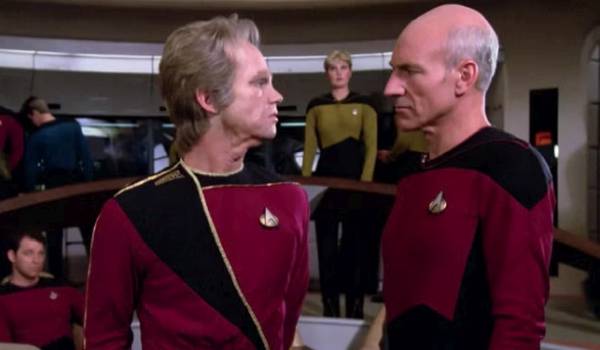
Picard faces a diplomatic crisis when the Enterprise transports Admiral Mark Jameson to a planet where negotiations have stalled. Jameson is an aging Starfleet officer whose past actions have made him both famous and controversial.
As the mission continues, Jameson becomes younger and stronger. His transformation reveals the consequences of a dangerous treatment and the mistakes he made decades earlier.
The story gives Picard a front-row seat to the consequences of Jameson’s ambition. It also raises questions about aging, responsibility, and the damage caused by decisions made in the name of peace.
Unfortunately, the de-aging effects and makeup undermine the drama. Jameson’s behavior also becomes increasingly difficult to take seriously.
Picard’s role as mediator is interesting, but the episode’s central gimmick distracts from its more meaningful ideas.
Why it ranks here: A potentially powerful story about accountability gets buried beneath an awkward science-fiction concept.
4. “We’ll Always Have Paris” (Season 1, Episode 24)

“We’ll Always Have Paris” explores Picard’s romantic past. The Enterprise investigates a scientific mystery involving time distortions and encounters Dr. Paul Manheim, a scientist whose experiments have created dangerous temporal effects.
The situation becomes personal when Picard discovers that Manheim’s wife is Jenice, a woman he once loved.
This episode offers a rare glimpse into Picard’s life before Starfleet. It shows that the captain has regrets and emotional attachments beyond his responsibilities aboard the Enterprise.
Unfortunately, the romance never becomes as compelling as the premise suggests. The scientific mystery and Picard’s personal story compete for attention, leaving both underdeveloped.
The episode deserves credit for exploring Picard’s emotional life. Still, it lacks the depth that later character-focused stories would bring to the captain.
Why it ranks here: Picard’s romantic history is worth exploring, but this story never reaches its emotional potential.
3. “Manhunt” (Season 2, Episode 19)
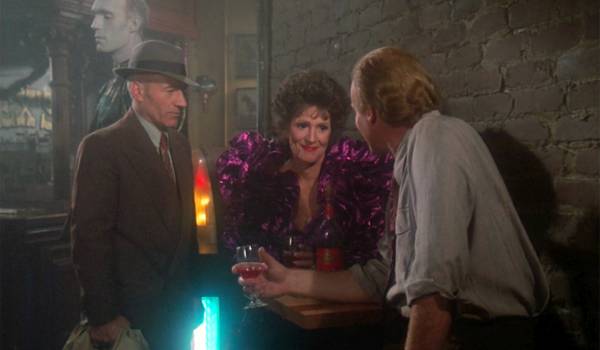
“Manhunt” brings Lwaxana Troi aboard the Enterprise, where her arrival creates an uncomfortable situation for Picard. She has decided that the captain is her next romantic target.
Picard attempts to avoid Lwaxana’s advances while the Enterprise travels to an important diplomatic conference. Her presence makes his already complicated responsibilities even more difficult.
The episode offers some comic moments, but much of the humor depends on Picard being uncomfortable. His usual composure becomes the target of a storyline that repeatedly pushes the same joke.
Lwaxana is a colorful character, and Majel Barrett brings plenty of energy to the role. However, the episode doesn’t give Picard enough to do beyond trying to escape an awkward social situation.
The story also struggles to balance its comedy with the diplomatic mission.
Why it ranks here: Picard’s discomfort becomes the entire joke, and the episode doesn’t have enough story to support it.
2. “The Perfect Mate” (Season 5, Episode 21)
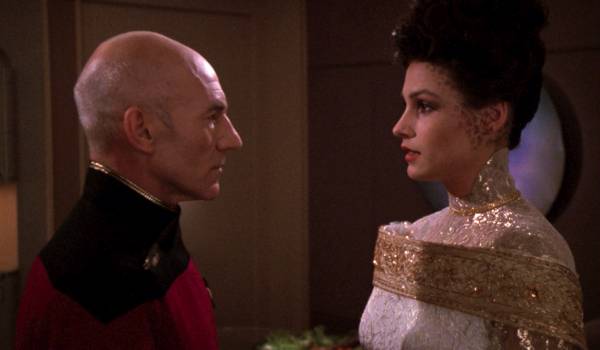
“The Perfect Mate” puts Picard in an unusual romantic situation. The Enterprise transports Kamala, a genetically engineered empathic metamorph, who is intended to become the wife of a powerful political leader.
Kamala’s abilities allow her to adapt to the desires of the people around her. As Picard spends time with her, the two develop a connection that complicates the diplomatic arrangement.
The episode attempts to explore attraction, consent, duty, and personal responsibility. Patrick Stewart gives Picard’s internal conflict a thoughtful performance.
However, the premise raises uncomfortable questions about Kamala’s lack of control over her own identity. Her purpose has been decided by others, and the story struggles to resolve the ethical problems it introduces.
Picard recognizes the situation’s complexity, but the episode’s romantic framing doesn’t always match its more troubling implications.
Why it ranks here: Strong performances cannot completely overcome a premise that raises more ethical questions than it answers.
1. “Bloodlines” (Season 7, Episode 22)
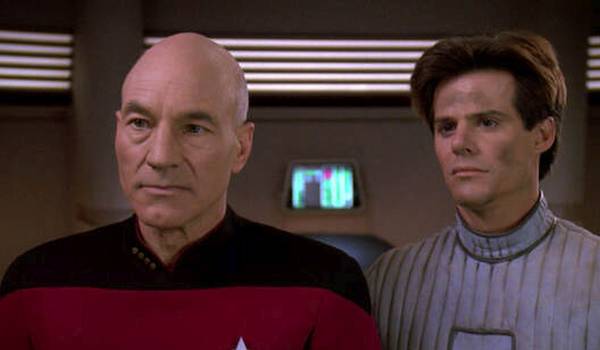
“Bloodlines” gives Picard a personal crisis when he learns that he may have a son. A mysterious man named Bok claims that Picard fathered a child during his earlier years in Starfleet.
Picard initially dismisses the claim. However, new information forces him to investigate the possibility that he has a family he never knew existed.
The episode revisits DaiMon Bok, a Ferengi who has been obsessed with revenge against Picard since the events of “The Battle.” Bok’s latest scheme threatens the captain’s supposed son.
The idea of Picard discovering an unexpected family connection has enormous dramatic potential. It could have revealed another side of the captain and challenged his commitment to Starfleet.
Unfortunately, the mystery becomes more interesting than the resolution. Bok’s revenge plot feels like a familiar callback rather than a meaningful new chapter. The emotional consequences of Picard’s discovery also receive less attention than they deserve.
Patrick Stewart does what he can with the material. Still, the episode doesn’t deliver the powerful character exploration its premise promises.
Why it ranks here: A major revelation about Picard’s personal life becomes another forgettable revenge story.
Picard’s Best Episodes Prove How Good TNG Could Be
Ranking the weakest Picard episodes also highlights just how much better Star Trek: The Next Generation could be.
“The Measure of a Man” gives Picard one of his greatest courtroom battles. “Darmok” challenges him to communicate with an alien captain whose language depends on metaphor. “The Inner Light” gives him an entire lifetime of memories in another civilization.
“Chain of Command” puts Picard through one of his most difficult personal ordeals. “Tapestry” explores the choices that shaped his life. Finally, “All Good Things…” gives the captain a fitting story that connects the series’ beginning and ending.
These episodes understand what makes Picard such a compelling character. He is a diplomat, explorer, intellectual, and leader. His greatest stories challenge those qualities rather than simply putting him in another awkward situation.
Frequently Asked Questions
What is the worst Star Trek: The Next Generation episode?
“Shades of Gray” is frequently identified as one of the weakest TNG episodes. The Season 2 finale is largely a clip show built around Riker’s recovery. However, it isn’t particularly Picard-focused.
What are the worst Star Trek: The Next Generation episodes featuring Picard?
Episodes such as “Code of Honor,” “Angel One,” “Justice,” “Too Short a Season,” and “Bloodlines” are among the weaker adventures involving Captain Picard.
Which Star Trek: The Next Generation episode focuses most on Picard?
“The Inner Light” is one of the series’ most celebrated Picard-centered episodes. It follows the captain as he experiences an entire lifetime as a member of an unfamiliar civilization.
What is Patrick Stewart’s best Star Trek: The Next Generation episode?
“The Inner Light” is often considered one of Patrick Stewart’s finest performances as Jean-Luc Picard. “Chain of Command,” “Darmok,” and “The Measure of a Man” are also standout episodes.
Why are early Star Trek: The Next Generation episodes often criticized?
The first two seasons feature uneven writing, inconsistent characterization, and stories that had not yet established the show’s strongest creative direction. The series became more consistent as it developed its characters and storytelling approach.
Final Thoughts
Captain Jean-Luc Picard deserves some of the best stories in science fiction television. Patrick Stewart helped turn the Enterprise-D captain into an enduring television icon. However, not every mission was worthy of his talent. These weaker episodes show what happens when a great character gets stuck in an underdeveloped story. Fortunately, TNG’s strongest adventures more than make up for its occasional misfires.
What do you think is the worst Star Trek: The Next Generation episode featuring Captain Picard? Did we overlook an especially disappointing Enterprise adventure? Share your picks in the comments! If you enjoyed this ranking, share it with fellow Trekkies on Facebook, X, Bluesky, and Reddit.
RELATED POSTS
- Let’s All Wish Sir Patrick Stewart a Happy Captain Picard Day
- Every Star Trek Movie Ranked from Worst to Best
- Every Star Trek Series Ranked from Worst to Best (2026)
- Star Trek Villains: The 15 Greatest and Most Ruthless of All-Time
- Every Hidden Detail in the New Avengers: Doomsday Concept Art You Missed
- The Ultimate Guide to Star Trek Uniform Colors
Discover more from The Geek Twins
Subscribe to get the latest posts sent to your email.
