


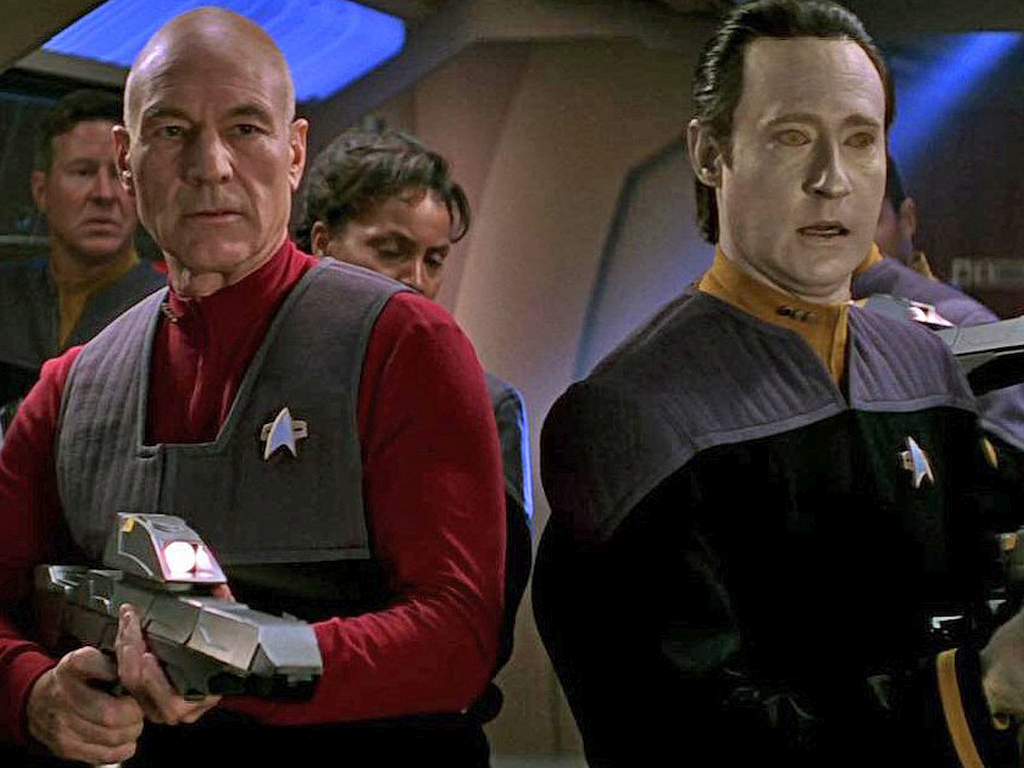
Star Trek, a science-fiction franchise that began as a television series in the 1960s, transitioned to the big screen in 1979. The franchise continued as a movie franchise until the late 1980s with Star Trek: The Next Generation. The first Trek cast aged out, and younger actors joined the cast. Despite being more niche than Star Wars, Star Trek has excelled as a movie series over the past 40 years. The franchise’s average is higher than other science-fiction sagas, and even critical flops have improved with hindsight.
Discover the full ranking of every Star Trek movie, from iconic classics like The Wrath of Khan to misfires like The Final Frontier. See where your favorite lands.”
First, here are all the Star Trek movies in order of release
- Star Trek: The Motion Picture (1979)
- Star Trek II: The Wrath of Khan (1982)
- Star Trek III: The Search for Spock (1984)
- Star Trek IV: The Voyage Home (1986)
- Star Trek V: The Final Frontier (1989)
- Star Trek VI: The Undiscovered Country (1991)
- Star Trek: Generations (1994)
- Star Trek: First Contact (1996)
- Star Trek: Insurrection (1998)
- Star Trek: Nemesis (2002)
- Star Trek (2009) – Reboot / Kelvin Timeline
- Star Trek Into Darkness (2013) – Kelvin Timeline
- Star Trek Beyond (2016) – Kelvin Timeline
- Star Trek: Section 31 (2025)
14. Star Trek: Section 31 (2025)
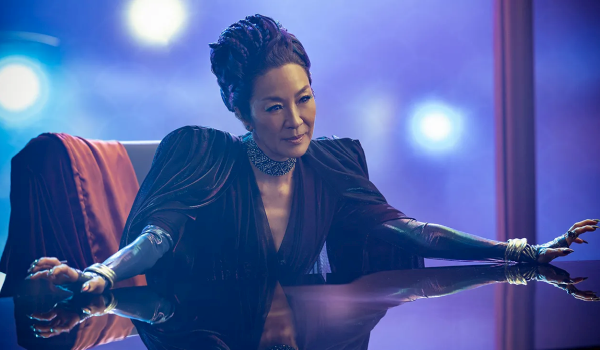
Star Trek: Section 31 (2025)
Directed By Olatunde Osunsanmi
Starring: Michelle Yeoh, Sam Richardson, Humberly González, Kacey Rohl, and Lusi Zhao
The worst movie on the list is also the most recent. It’s also the only TV movie for Paramount+. The film Section 31 has entertaining elements, but is sloppy and overly complex.
The visuals are what you’d expect from a television budget. So it’s hard to even compare it to the others. But lots of TV movies work with a small budget if the story and characters are well-done. What we get in Section 31 feels weak with paper-thin character development. The fact that Osunsanmi couldn’t get a good performance from an Oscar-winning actress shows how little there was to work with. This movie completely misunderstands why we love Star Trek.
13. Star Trek: Nemesis (2002)
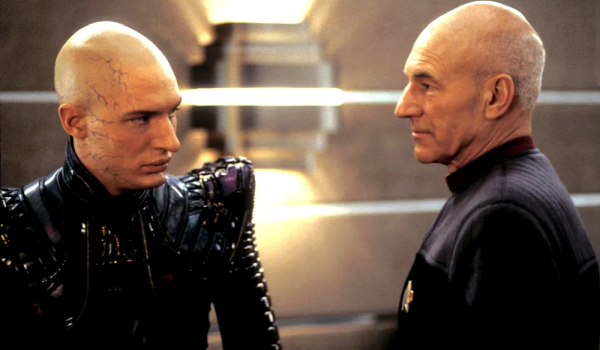
Directed By John Woo
Starring: Patrick Stewart, Jonathan Frakes, Brent Spiner, LeVar Burton, Marina Sirtis, and Michael Dorn
Star Trek: Nemesis is the tenth Trek movie, but its muddled messages about peace feel outdated in 2002. While it is entertaining, it feels like a bad lecture from Animal House. The visuals are decent, especially the Reman ship, but it’s missing the visual punch of even Insurrection. The best Trek movies have great villains, and while Tom Hardy does an admirable job, Shinzon is the worst in the series. Stewart tries his best, but there’s not much to work with. Although there is a great story arc for Troi. The plot is derivative and adds nothing new to the movies. Baird does a good job technically, but the movie is unworthy of the most ardent Star Trek fans.
12. Star Trek V: The Final Frontier (1989)
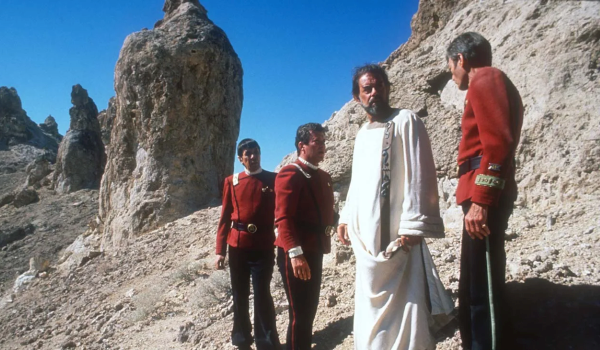
Directed By William Shatner
Starring: William Shatner, Leonard Nimoy, DeForest Kelley, James Doohan, Nichelle Nichols, and Walter Koenig
The seventh Star Trek movie is garbage. The Final Frontier has ambitious goals and visuals, but budget limitations led to muddled and inconsistent effects. A bunch of shots show miniature models or matte paintings that don’t blend well with live-action. The writing is terrible and has an inconsistent tone with strange plot choices.
William Shatner’s direction does have its own flair and unique style, but is hampered by story problems and uneven execution. He wasn’t able to coax good performances out of the veteran cast, and it fell flat.
11. Star Trek Generations (1994)
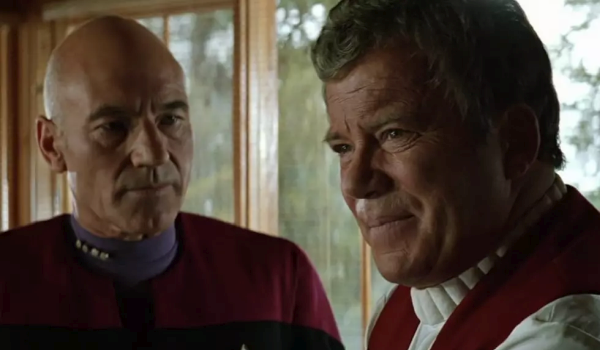
Directed By David Carson
Starring: Patrick Stewart, Jonathan Frakes, William Shatner, Leonard Nimoy, and DeForest Kelley
The 1994 film Generations was intended as an attempted crossover between the original and the next generation. Passing the torch with mixed success. There are some memorable moments, but it’s very uneven. The story goes in weird directions, and the meetings between the old and new cast feel awkward.
David Carson’s direction is the worst of all the theatrical films, but the movie has some good visuals, and the characters, especially Shatner’s brief cameo, are good.
10. Star Trek: Insurrection (1998)
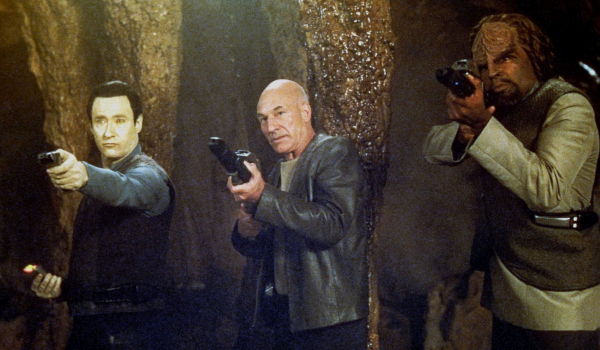
Directed By Jonathan Frakes
Starring: Patrick Stewart, Jonathan Frakes, Brent Spiner, LeVar Burton, Marina Sirtis, and Michael Dorn
Star Trek: Insurrection, the ninth in the franchise, is less a theatrical film and more like a series of unrelated episodes. The movie tries to provide powerful visual effects with its extravagant make-up. But it feels more like an extended television budget and doesn’t work on the big screen.
The story is trying to push the boundaries of familiar tropes like the Prime Directive, but it comes off as formulaic and predictable. Don’t get me started on the “quirky” forced humor like the dune buggy scene. There’s not much, but it is an attempt to appeal to millennials, and that part works.
9. Star Trek Into Darkness (2013)
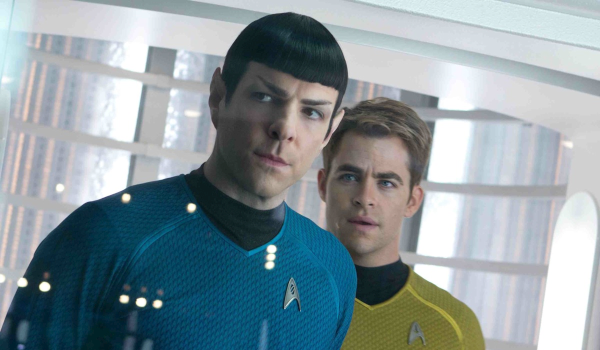
Directed By J. J. Abrams
Starring: Leonard Nimoy, Chris Pine, Zachary Quinto, Zoe Saldana, and Karl Urban
The 12th movie in the franchise and the second of the Kelvin reboot had big shoes to fill. In many ways, it works thanks to its irreverent and Trekkie-pleasing performances, massive action sets, and well-paced character scenes. The visuals are stunning, and Abrams finally restrained his use of lens flares.
Unfortunately, it relies on action scenes to distract from the very thin plot. But it does have some decent socio-political commentary and works as a fast-paced summer adventure. Kirk and Spock have great chemistry, and it left fans anxious for the next film.
8. Star Trek III: The Search for Spock (1984)
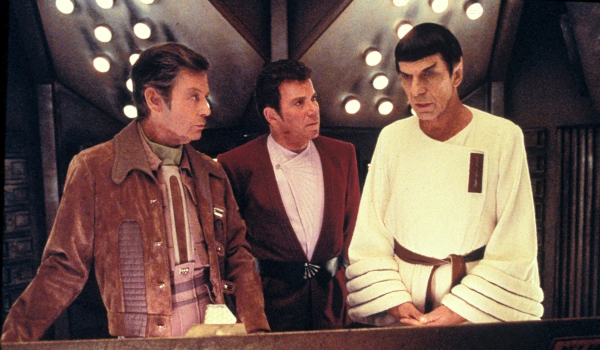
Directed By Leonard Nimoy
Starring: William Shatner, Leonard Nimoy, DeForest Kelley, James Doohan, and Nichelle Nichols
The third film has to follow up on one of the most beloved movies in the franchise. In many ways, it works. The visual effects are good for the era, and the spacedock and Klingon Bird of Prey are as impressive today as it was then
Leonard Nimoy steps into the director’s chair, and his direction is decent but lacks style and feels functional. He’s got a good script to work with, and the actors can show an emotional depth. The strong bonds between the characters are based on years of working together.
Star Trek III is a lively and likable science fiction adventure that satisfies hard-core Trekkies and new recruits to the franchise. Unlike the next movie.
7. Star Trek: The Motion Picture (1979)
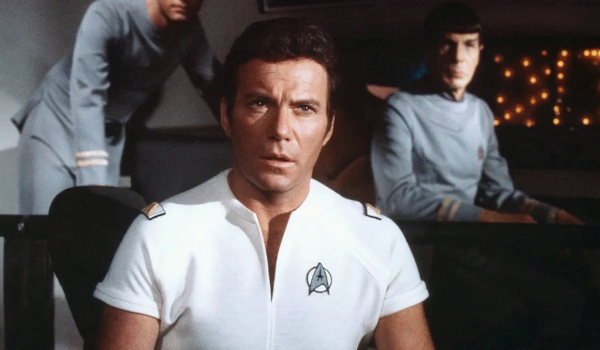
Directed By Robert Wise
Starring: William Shatner, Leonard Nimoy, DeForest Kelley, James Doohan, and Nichelle Nichols
After the cancellation of the Original Series, Roddenberry convinced the studio to make a feature film. It comes on the heels of cerebral science fiction films like 2001: A Space Odyssey (1968) and blockbusters like Star Wars (1977). Unfortunately, while it’s visually ambitious, the title and pacing issues affect the story’s impact.
The special effects are crude by today’s standards. But the movie is groundbreaking for its use of detailed ship flybys and model work. The first Trek movie has a smart plot for fans, but it’s way too familiar. For the average moviegoer, it’s a snore fest.
6. Star Trek Beyond (2016)
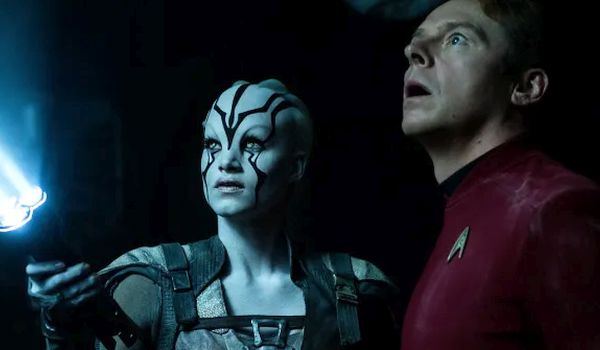
Directed By Justin Lin
Starring: Chris Pine, Zachary Quinto, John Cho, Simon Pegg, and Zoe Saldaña
The third, and final, film in the Kelvin timeline is the thirteenth in the franchise. It underperformed, but Star Trek Beyond is a fun popcorn movie that highlights teamwork and the core strength of the Enterprise’s leadership crew.
It is a taut piece of filmmaking with perfectly choreographed action scenes and a rapid-fire pace. Justin Lin helps bring out the cast’s natural chemistry and energetic camera work, big action sequences, and strong digital effects. Without being hampered by a recycled villain it works better than Into Darkness. But it couldn’t compare to the first film in the rebooted timeline. Which brings us to the next Star Trek movie.
5. Star Trek (2009)
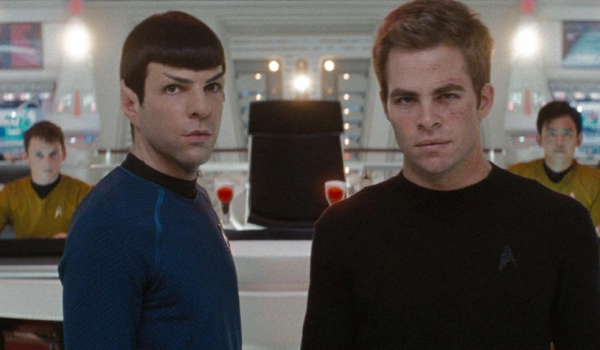
Directed By J. J. Abrams
Starring: Chris Pine, Zachary Quinto, Leonard Nimoy, Eric Bana, and Bruce Greenwood
The eleventh film in the franchise is also its biggest swing. When Viacom, the company that controlled Paramount Pictures, split from CBS Corporation in 2005, they kept Paramount’s television properties, including the Star Trek name. But not the stories. To get around that, they rebooted the movies with a new timeline and new stories with the characters.
Thanks to impressive CGI and a generous use of lens flares, the new film is both nostalgic and fresh. Abrams’ unbridled enthusiasm for the franchise carried over to its new younger cast. Unfortunately, all the lens flares don’t make up for the television-quality acting of the inexperienced cast. It reinvigorated the franchise, but the next film overshadows it.
4. Star Trek: First Contact (1996)
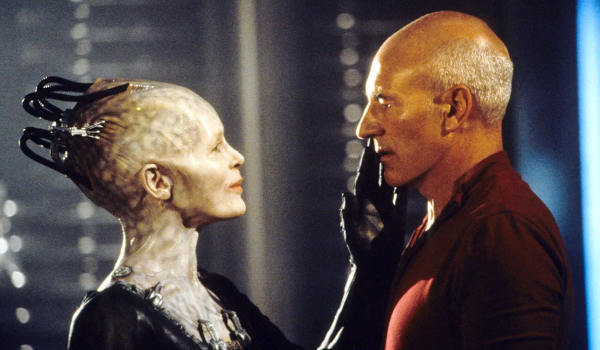
Directed By Jonathan Frakes
Starring: Patrick Stewart, Jonathan Frakes, Brent Spiner, LeVar Burton, Michael Dorn, Alfre Woodard, James Cromwell, and Alice Krige
The eighth film in the franchise, First Contact, has the strongest story of the TNG era. It has a powerful emotional depth thanks to Stewart’s classical training. The visual effects are stellar thanks to the Borg, slick ship battles, and a tight visual production. Plus, it brings back the fan-favorite villains, the Borg, and introduces the Queen.
Jonathan Frakes takes the directing reins, and the film is a thrilling sci-fi adventure that rivals films outside of the franchise. The plot isn’t nearly as strong as others in the franchise, but it offers visually interesting scenes and philosophical elements. Plus, Brent Spiner brings some much-needed humor to the film. It’s the most enjoyable time spent with the new crew.
3. Star Trek IV: The Voyage Home (1986)
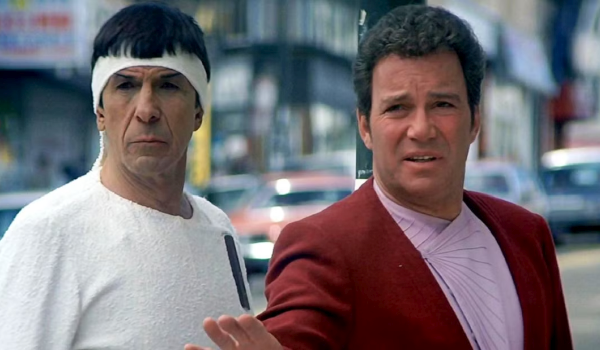
Directed By Leonard Nimoy
Starring: William Shatner, Leonard Nimoy, DeForest Kelley, James Doohan, and Nichelle Nichols
After the drama of the second and third films in the franchise, The Voyage Home brings back some of the humor of the Original Series. The fourth Star Trek film is a warm, wittier, and more socially relevant film that reunites the original cast with the original TV format. The film is witty, featuring the bemused citizens of the future trying to cope with 20th-century life.
Under Nimoy’s direction, it has a light-hearted tone, and he balances humor and drama well. The effects are wonderful, seamlessly blending location shooting, time-travel effects, and practical FX. The movie even manages to bring the future technology and still maintains the modern world. The acting makes what could have been a preachy message about conservation fun and engaging.
2. Star Trek II: The Wrath of Khan (1982)
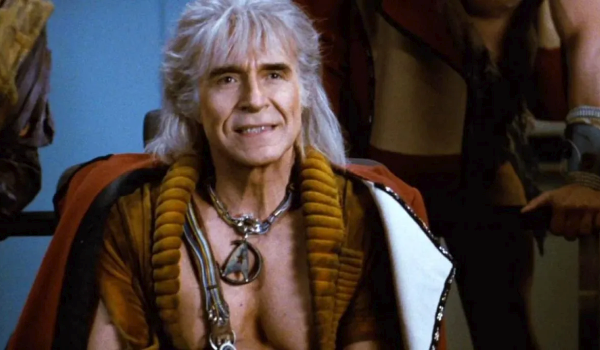
Directed By Nicholas Meyer
Starring: William Shatner, Ricardo Montalban, Leonard Nimoy, DeForest Kelley, and James Doohan
The second film in the franchise is The Wrath of Khan. It’s a major course correction after the slow-paced first entry. Veteran director Nicholas Meyer crafts a satisfying space adventure that combines the spirit of the popular TV series with modern technology. But the plot feels like an extension of the Original Series,
Wrath of Khan’s Genesis Planet scene is the first computer-generated scene in movie history, and the practical effects of the space battles are the best in the franchise. Ricardo Montalban’s commanding performance and William Shatner’s Captain Kirk provide a wonderful pairing, even though they were never on set together.
1. Star Trek VI: The Undiscovered Country (1994)
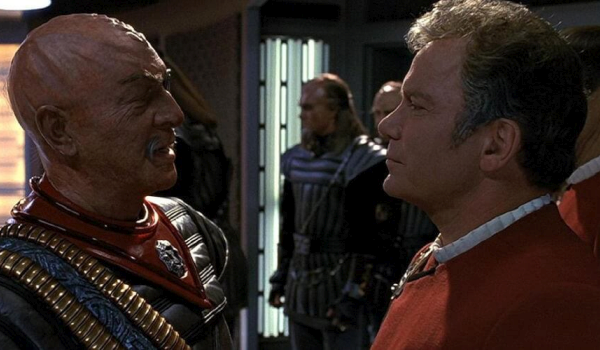
Directed By Nicholas Meyer
Starring: William Shatner, Leonard Nimoy, DeForest Kelley, James Doohan, and Nichelle Nichols
Nicholas Meyer returns to direct the sixth film in the franchise and the last film starring the original cast. He directs some stylish and strong ship battles, and the visuals rival Wrath of Khan.
Where it shines is a story filled with political intrigue set against a solid mystery. Star Trek has always been at its best when it’s making political commentary and the Cold War storyline with the Klingons. Christopher Plummer makes General Chang an eloquent Klingon with a complex, honorable (if ruthless) demeanor. Fans of the voyages of the Enterprise couldn’t have asked for a better send-off for the original cast. That’s why it’s the best Star Trek film ever made.
Which is your favorite Star Trek Movie? Which is the worst? Let us know in the comments below!
Captain America: Brave New World is coming with a lot riding on it. It stars Anthony Mackie as the new Captain America. He’s replacing the insanely popular Steve Rogers, played by fan favorite Chris Evans. It follows a bunch of recently poorly received comic book movies, like Madame Web, The Marvels, and Ant-Man, and the Wasp 2. There are reports about reshoots and rumors of poor test screenings.
Some are using his comics from the mid-2000s to predict the movie will bomb. Are they right? No, and we’ll break down why.
What is All-New, All-Different Marvel?

Back in the mid-2010s, Marvel decided to try a bold new initiative. The goal was to bring fans of the MCU (Marvel Cinematic Universe) into comic books. Marvel also wanted to de-emphasize characters and groups they didn’t have the movie rights to then. An All-New Marvel Universe is created following the “Secret Wars” storyline. One significant impact of the storyline is that all of Marvel’s alternate universes, like “Ultimate,” have converged into one.
Ms. Marvel, Nova (Sam Alexander), Ultimate Spider-Man (Miles Morales), Thor (Jane Foster), Captain America (Sam Wilson), Iron Man, and The Vision make up the new principal cast of the Avengers. While Peter Parker swings around in Amazing Spider-Man, Morales is the main character in the main Spider-Man book. Because of their growing prominence in the Marvel film universe, the Inhumans play a significant role instead of their often specialized roles in recent history. The Fantastic Four is disbanded, and some characters moved to Guardians of the Galaxy.
There are numerous situations in which new ones replace significant heroes. Logan is gone, and Laura Kinney, aka X-23, assumes Wolverine’s role but is guided by an older Logan from another universe. Amadeus Cho, the Marvel genius, transforms into the new Hulk. Kate Bishop, who took over as the primary Hawkeye, appears to be at odds with Clint Barton. Peter Quill goes on adventures, and Kitty Pryde takes over as the next Star Lord.
The company started dozens of new comic titles. They also relaunched or revamped dozens of others. In addition, several key classic Marvel characters have been replaced with new people taking on the title. The “All-Different” part of the launch is that they’re people of color or females. Ghost Rider (Johnny Blaze) transfers his powers to Hispanic Robbie Reyes. According to Marvel senior VP and executive editor Tom Brevoort, the new Avengers team “more closely reflects the world outside your window.” The goal was to create a more diverse look for Marvel since most of its heroes were created by old white dudes in the 1950s and 60s.
The initiative lasted almost a year before Marvel pulled the plug and did another reset with “Marvel Legacy” in 2017. So what went wrong?
Did Diversity Kill All-New, All-Different Marvel?

Many people complained that the entire initiative failed because of a “woke” agenda—the replacement of beloved characters with new or renamed characters from minority groups.
Even David Gabriel, Marvel’s senior vice president of sales and marketing, blamed diversity. Gabriel, in an interview with ICV2 said: “What we heard [from retailers] was that people didn’t want any more diversity,” He added. “They didn’t want female characters out there. That’s what we heard, whether we believe that or not. I don’t know that that’s really true, but that’s what we saw in sales.
“We saw the sales of any character that was diverse, any character that was new, our female characters, anything that was not a core Marvel character, people were turning their nose up against. That was difficult for us because we had a lot of fresh, new, exciting ideas that we were trying to get out and nothing new really worked.”
But it’s a little more complicated than that.
What Happened to the Sale of the All-New, All-Different Comics?

One of the goals of the All-New, All- Different reset was to compete with the buzz created by the rival comic company. DC Comics redesigned and relaunched their series of ongoing monthly superhero comic books in 2011 under “The New 52”. In September 2011, DC released 52 new series and canceled all its previous titles when the “Flashpoint” crossover storyline concluded.
By 2016, the relaunch had revitalized the brand with new takes on familiar characters like Superman, Batman, and more. While the sales were great, the mainstream media were fascinated by the changes and gave the comics tons of free press.
Did the ANAD change increase comic book sales? Yes and no. According to Comic Chron, Marvel already held the top spot in sales in 2015—comic books sold around $579 million that year. The top five comics were Marvel Star Wars #1, Secret Wars #1, Bravest Warriors Tales from the Holo John #1, Orphan Black #4, and Dark Knight III The Master Race #1. So Marvel was already winning over DC. Sales were initially encouraging, but by October 2016, they started to decline significantly.
2017 hit the comics industry hard. That year brought the most significant percentage decline since 1998. Retailer orders for comics, graphic novels, and periodicals dropped 10% to $522.25 million. Marvel got scared, but all the comic book publishers were scared. While sales were down, the company still had the hottest comic books.
Sales declined for All-New, All-Different Marvel, but all the comics sold less. So, it’s impossible to say that the more diverse characters killed the sales. But there’s something more critical that killed the brand.
Disrespecting the Legacy Characters

While most readers welcomed the new characters, some complained about what had happened to the original characters. Hawkeye killed Banner because he thought the Hulk would become a murderous monster, reversing decades as a hero. Steve Rogers became an old man but clashed with Sam Wilson’s moral code, excusing the inexcusable. Thor Odinson was declared unworthy after hundreds of years as the original Thor. Johnny Blaze gave up his powers and just became a regular guy. Tony Stark retired as Iron Man when he fell into a coma, and Riri Williams took over.
In their attempts to put a focus on the all-new heroes, they tore down the legacy of the originals instead of allowing the fans to discover the new guys. Fans fell in love with Kamala Khan and Miles Morales without tarnishing the reputation of Carol Danvers and Peter Parker. Instead, there was a groundswell of anger at the replacements and bitterness towards the different versions.
Ms. Marvel creator G. Willow Wilson explained the problem well when she said, “Launching a legacy character by killing off or humiliating the original character sets the legacy character up for failure. Who wants a legacy if the legacy is s****y?”
Characters like Sam Wilson got the brunt of comic fans’ anger towards Steve Roger’s failings.
Too Many Titles

The other problem is Marvel decided to launch nearly 60–65 titles with first issues, with a total of 76 issues. The brand was geared toward new readers. But to keep up with the comics, fans would have to pay almost $300 a month to read all the titles.
By contrast (as of 2025), Marvel currently has about 30 monthly titles. This is half as many tiles as in 2016. The company learned that there were too many titles and it was too ambitious.
By 2017, Marvel brought back Steve Rogers as Captain America. He teamed up with Wilson, who fought side-by-side as TWO Captain Americas. There were even two titles named Captain America: Captain America: Symbol Of Truth and Captain America: Sentinel of Liberty.
None of these had anything to do with Sam Wilson. While he is the leader of the All-New, All-Different Avengers, many factors led to the end of the titles. It’s a bold experiment and still a monument to Marvel’s history. New characters like Squirrel Girl, Ms. Marvel, The Mighty Thor, Spider-Gwen, Miles Morales, and Moon Girl prove fans are excited about new heroes. ANAD failed, but it was more about the treatment of core characters, bad press, and a global industry slowdown that led to the fall of All-New, All-Different Marvel.
The Year of Controversy at Marvel

2017 was a nightmarish year of bad PR for Marvel. At the beginning of 2017, it changed its digital download policy and sparked an outcry from retailers and readers. The company later reconsidered, saying they were focusing on fans and the industry. But it got worse.
Then, ICv2 reported that Marvel editor-in-chief Axel Alonso was accused of devaluing artists’ contributions during a presentation to retailers, claiming only Steve McNiven and Olivier Coipel significantly impacted sales.
That same day, SVP sales David Gabriel blamed declining sales on diverse, new, and non-core characters. The feedback was so strong that Gabriel had to backtrack. He clarified that retailers were unhappy with abandoning core Marvel heroes. Still, the popularity of new titles and characters like Squirrel Girl, Ms. Marvel, The Mighty Thor, Spider-Gwen, Miles Morales, and Moon Girl remained strong.
If that wasn’t enough, in April, the X-Men franchise’s relaunch was halted by controversy when Indonesian penciler Ardian Syaf allegedly included hidden anti-semitic and anti-Christian references in the artwork for X-Men: Gold, contradicting Marvel’s inclusiveness and the X-Men’s values, leading to Syaf’s firing.
The biggest Marvel story of the year was the reveal that the Steve Rogers we knew and loved was a fascist Hydra agent all along. The backlash was so swift the company begged for patience as the story unfolded. Fans would later see the fascist Captain America beaten up by a magically created non-fascist version, using his muscles and his shield, but the damage was done.
Meanwhile, Marvel’s October was marred by a series of issues, including the failure of lenticular covers, a retailer revolt, and a deal with military contractor Northrop Grumman being pulled within 24 hours due to backlash.
But there was more drama behind the scenes at Marvel. In November, writer Brian Michael Bendis left the publisher for DC Entertainment, while editor-in-chief Alonso resigned in a “mutual decision” between himself and Marvel a few weeks later.
Next, C.B. Cebulski, a former Marvel writer and editor, was named the new editor-in-chief. Shortly after he was hired, he admitted to defrauding a company a decade earlier by pretending to be a Japanese writer, Akira Yoshida. This was while he was working as a freelancer and editor at Marvel.
Finally, Marvel hired former Image Comics staffer Ron Richards as the new VP/Managing Editor of New Media. After he was hired, accusations of sexual harassment came to light.
So 2017 was not a great year for Marvel comics. How much these events affected sales is hard to say. But they sure didn’t help fans warm up to the idea of a black Captain America.
The new Sam Wilson Captain America movie may fail. But the success or failure of Captain America: Brave New World has nothing to do with the comics almost ten years ago.
What do you think? Let us know in the comments below!
Discover more from The Geek Twins
Subscribe to get the latest posts sent to your email.
