Close Menu
The Geek Twins

    Subscribe to Updates

    Get the latest creative news from FooBar about art, design and business.

    What's Hot

    Star Trek: A Bold New LEGO Build Has Been Unveiled

    July 24, 2026

    Exclusive: Lo Plater Reveals His Epic Indie Comics Journey

    July 23, 2026

    Top 10 New Comic Books This Week: 7/22/2026

    July 22, 2026
    Facebook X (Twitter) Instagram
    Facebook X (Twitter) Instagram YouTube
    The Geek TwinsThe Geek Twins
    Subscribe
    • Home
    • Movies
      1. Movie Reviews
      2. Movie Trailers
      3. View All

      Review: SUPERGIRL (2026) – A Promising and Thrilling Start

      July 8, 2026

      Review: STAR WARS: THE MANDALORIAN AND GROGU (2026) – Thrilling Nostalgia

      June 29, 2026

      Review: DISCLOSURE DAY (2026) – A Startling and Surprising Misfire

      June 22, 2026

      Review: IMMORTAL COMBAT (2026) – Famous Warriors and Cheesy Action

      June 11, 2026

      Avengers: Doomsday Trailer Unleashes Doctor Doom’s Fury

      July 21, 2026

      Every Jaw-Dropping Secret Hidden in the Dune: Part Three Trailer

      July 10, 2026

      Review: SUPERGIRL (2026) – A Promising and Thrilling Start

      July 8, 2026

      The End of Oak Street: Complete Guide to the Sci-Fi Survival Movie

      July 3, 2026

      Avengers: Doomsday Trailer: 7 Biggest Secrets Left Unanswered

      July 21, 2026

      Avengers: Doomsday Trailer Unleashes Doctor Doom’s Fury

      July 21, 2026

      Unleash the Magic with New The Mandalorian and Grogu DVD Release

      July 14, 2026

      Every Hidden Detail in the New Avengers: Doomsday Concept Art You Missed

      July 14, 2026
    • Comics
      • Comic Reviews
    • Television
      1. Television Reviews
      2. Television Trailers
      3. View All

      THE BOROUGHS Review and Recap (S1E2): Hidden Chaos

      June 19, 2026

      THE BOROUGHS Review and Recap (S1E1): Retirement Horror and Hope

      May 22, 2026

      Every Shocking Episode Of Daredevil: Born Again Season 2 Ranked You Need To Watch

      May 12, 2026

      STAR TREK: STARFLEET ACADEMY Review and Recap (S1E6): Disastrous Lessons

      February 13, 2026

      Everything We Know About the Frightening Show The Boroughs

      May 15, 2026

      Star Trek: Strange New Worlds Season 4 Trailer Breakdown

      May 1, 2026

      Spider-Noir Release Date, Cast, and Everything We Know So Far

      April 28, 2026

      New Lanterns HBO Show: Everything You Need To Know

      March 13, 2026

      Star Trek’s 60-Year Legacy Ignites Comic-Con with Massive Announcements

      July 11, 2026

      The Surprising Reason Kat Dennings Forgot She Was in the MCU

      July 7, 2026

      New Art of Star Wars: Andor Reveals Fantastic Visual Design

      June 30, 2026

      Star Trek: Castmembers are Returning for a Surprising New Project

      June 27, 2026
    • Books
      • Book Reviews
    • Reviews
    • Trailers
    • About the Geek Twins
    The Geek Twins
    Home » Why Shatner Never Appeared on Star Trek: The Next Generation
    Movies

    Why Shatner Never Appeared on Star Trek: The Next Generation

    Maurice MitchellBy Maurice MitchellJune 19, 2026Updated:June 19, 2026No Comments17 Mins Read
    Facebook Twitter Pinterest LinkedIn Tumblr Email
    Why Shatner Never Appeared on Star Trek: The Next Generation
    Share
    Facebook Twitter LinkedIn Pinterest Email

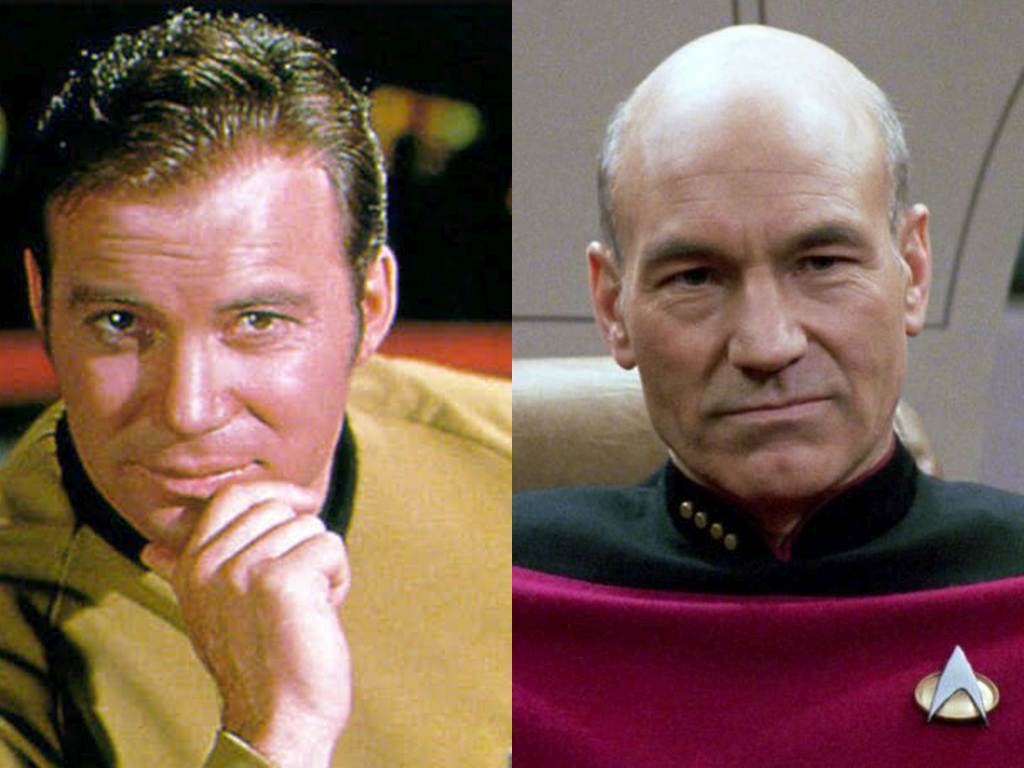
    For many Star Trek fans, one of the franchise’s biggest missed opportunities was never seeing Captain Kirk and Captain Picard share the screen during Star Trek: The Next Generation’s run. While William Shatner remained synonymous with Captain Kirk, several creative, storytelling, and production factors kept him from appearing on the series. Here’s why one of science fiction’s most iconic characters never officially boarded the Enterprise-D.

    The Next Generation Wanted to Establish Its Own Identity
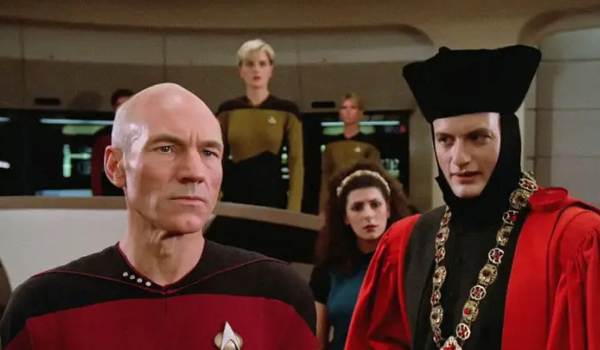
    Patrick Stewart as Captain Jean-Luc Picard standing sternly alongside John de Lancie as Q, who is dressed in a red and black judge's robe, with Marina Sirtis as Counselor Deanna Troi and Denise Crosby as Lieutenant Natasha 'Tasha' Yar on the bridge of the USS Enterprise in the sci-fi show Star Trek: The Next Generation.
    Star Trek: The Next Generation (1987): Captain Jean-Luc Picard (Patrick Stewart), Q (John de Lancie), Counselor Deanna Troi (Marina Sirtis), Lieutenant Natasha ‘Tasha’ Yar (Denise Crosby) [Image Credit: Paramount Television]

    Fans already struggled to accept a new captain on Star Trek. For nearly two decades, audiences had associated the franchise with Captain Kirk and the original crew of the USS Enterprise. As a result, many fans questioned whether a new captain could successfully lead the franchise. The producers wanted viewers to accept Patrick Stewart as the new face of Star Trek and to see Captain Picard as a worthy successor rather than a replacement for Kirk. Consequently, the creative team worked hard to establish Picard as a unique character with his own leadership style. You can see where he fits in our ranking of Star Trek captains ranked from worst to best.

    The original plan suggested by Paramount was for the Next Generation to have an ensemble of new, younger actors. They thought they could have a few of the original series crew as “elder statesmen.” But the creative team wanted viewers to invest in the adventures of the Enterprise-D rather than rely on nostalgia from the 1960s series. Furthermore, Kirk’s frequent appearances could have overshadowed the new crew, making it harder for audiences to connect with them.

    Aside from the first-season episode “The Naked Now,” which served as a callback to the original series episode “The Naked Time,” the show focused on creating fresh stories and new characters. Instead, the writers expanded the Star Trek universe with new ideas, new challenges, and new heroes. The creative team wanted viewers to invest in the adventures of the Enterprise-D rather than rely on nostalgia from the 1960s series. For example, the series introduced memorable characters such as Data, Worf, and Geordi La Forge while also creating iconic new threats like the Borg. New alien races such as the Ferengi and the Borg, along with recurring characters and storylines unique to TNG, helped distinguish the show from its predecessor.

    The first Star Trek spinoff would be its own thing, proving that the franchise could thrive beyond Kirk and Spock. Ultimately, that strategy paid off, as Star Trek: The Next Generation became one of the most successful and influential science-fiction television series of all time, paving the way for future spinoffs and expanding the Star Trek universe for a new generation of fans.

    Captain Kirk Was Presumed Retired From Starfleet
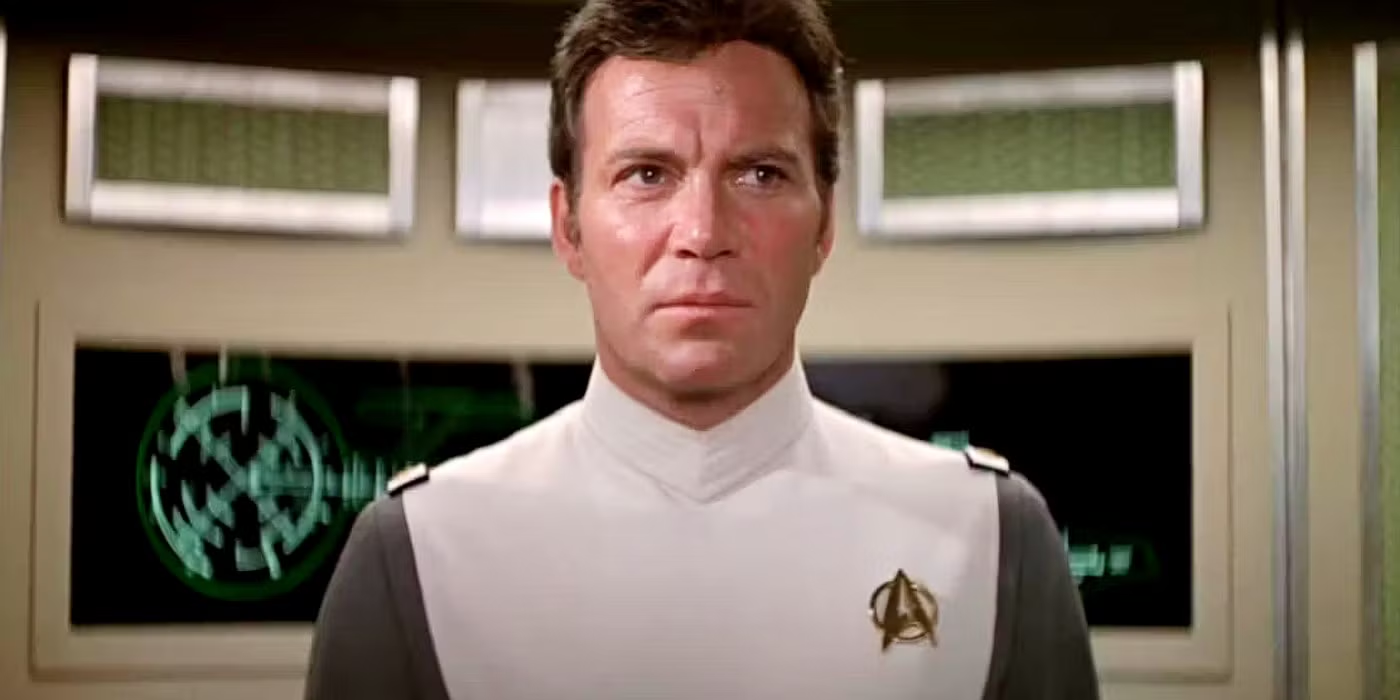
    A medium close-up of William Shatner as Admiral James T. Kirk wearing a white and gray Starfleet uniform on the bridge of the starship Enterprise.
    Star Trek: The Motion Picture (1979): Captain Kirk (William Shatner) [Image Source: Paramount Pictures]

    The second point is that Kirk would be too old. The Next Generation is set almost 80 years after The Original Series. Starfleet promoted Kirk to Rear Admiral before the timeline of the first movie. Therefore, by the time of the show, he would have been retired or dead. Even if Starfleet’s advanced medical technology had extended his lifespan, Kirk would have been well over 130 years old during the events of TNG. Furthermore, while humans in the 24th century routinely lived longer than they do today, the writers still had to account for the realities of aging and explain why a legendary Starfleet officer from a previous century remained active.

    Most fans felt the original films largely completed Kirk’s story. As a result, bringing him back would have required a major justification. Writers would have needed a compelling reason for Kirk to return to active duty, cross paths with the Enterprise-D crew, and play a meaningful role in the story rather than appear in a simple cameo. In addition, his age would have probably left him in a wheelchair. Even if advanced medicine kept him physically healthy, audiences might have found it difficult to accept Kirk as the action-oriented captain they remembered from the television series and films. Consequently, writers would likely have focused any appearance on Kirk’s legacy and wisdom rather than heroic adventures.

    Meanwhile, the franchise focused on the future instead of revisiting the past. The creative team wanted to introduce new heroes, new challenges, and a new era of exploration rather than continually rely on familiar faces from the original series. The Next Generation represented the next chapter of Star Trek, with new technology, new political realities, and new storytelling opportunities. Although Starfleet continued to honor Kirk and his accomplishments, the producers believed the franchise needed to move forward if it wanted to grow. Ultimately, that commitment to the future helped establish The Next Generation as more than a continuation of Kirk’s adventures—it became a landmark series that expanded the Star Trek universe and proved that the franchise could thrive with a new generation at the helm.

    Gene Roddenberry Had Mixed Feelings About Revisiting Kirk
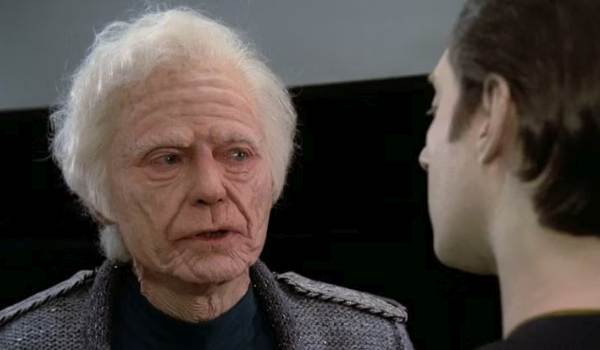
    An elderly Admiral Leonard McCoy speaking to Lieutenant Commander Data.
    Star Trek: The Next Generation (1987): Adm. Leonard McCoy (DeForest Kelley), Lieutenant Commander Data (Brent Spiner) [Image Credit: Paramount Television]

    The creator of Star Trek, Gene Roddenberry, wanted the new show to stand on its own. He didn’t want the series to rely on nostalgia and fan service to attract viewers. Instead, Roddenberry wanted audiences to embrace a new crew, a new captain, and a new vision of the future. He believed that The Next Generation needed to prove that the Star Trek universe could thrive beyond the adventures of Kirk, Spock, and McCoy. As a result, the writers focused on creating original stories and introducing fresh characters rather than constantly revisiting the past. The creative team was also cautious about using the characters and actors from the 1960s because they feared frequent appearances would distract viewers from the Enterprise-D crew and undermine the show’s efforts to establish its own identity.

    The only exception was DeForest Kelley, who played the original ship’s doctor, McCoy. Unlike a major guest-starring role, his appearance served as a brief connection between the two eras of Star Trek. The character is called an unnamed “Admiral,” although longtime fans immediately recognized him as Dr. Leonard McCoy. Considering he would have remained on the cutting edge of medical advances throughout his career, it made sense that he would still be alive at 137 years old. Furthermore, his cameo did not influence the plot or shift attention away from the new cast. The only reference he makes is an aside about Vulcans, a subtle nod to his long friendship with Spock. Consequently, the appearance felt more like a respectful passing of the torch than an attempt to revisit the glory days of the original series.

    Eventually, several other cast members reprised their roles, including Leonard Nimoy as Spock and James Doohan as Montgomery “Scotty” Scott. However, these appearances came years after The Next Generation had established itself as a successful series. By that point, viewers had already embraced Picard, Data, Worf, Riker, and the rest of the crew. Therefore, the writers could bring back familiar characters without risking the show’s identity. More importantly, these limited guest appearances were always story-driven. The writers used them to advance the narrative, deepen the connection between different eras of Star Trek, and explore how the galaxy had changed since the days of the original Enterprise. Ultimately, Roddenberry’s approach helped the show become more than a continuation of the original series—it became a landmark chapter in the franchise’s history and paved the way for future generations of Star Trek storytelling.

    The Original Series Cast Was Still Making Movies
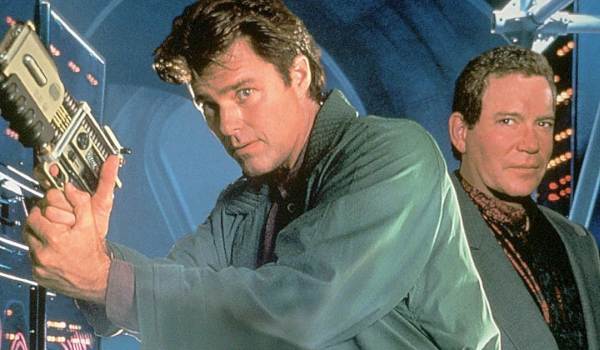
    Television still of Greg Evigan as Jake Cardigan, William Shatner as Walter H. Bascom in the sci-fi show TekWar
    TekWar (1994): Jake Cardigan (Greg Evigan), Walter H. Bascom (William Shatner) [Image Credit: Syndication]

    There’s another reason William Shatner didn’t appear on The Next Generation. Most of the original series actors were busy with projects outside of Star Trek. William Shatner was busy directing and acting in movies like Star Trek III through IV. He was also busy with the TekWar books and the show based on them. Leonard Nimoy spent much of his time directing major feature films (Three Men and a Baby, The Good Mother). Nichelle Nichols mainly worked on the Trek movies, but she also did television and voice work while the series was on the air. All of this meant that they were reluctant to put more work into the show.

    Also, the movies and films had different priorities and budgets. The studio executives wanted to avoid creating a conflict between the storylines and the films. Shatner preferred the status and salary of the movies anyway. Some suggest he demanded a salary of one million for a single appearance on the show. Either way, most people got used to seeing him on the big screen.

    The Crossover Finally Happened in Star Trek Generations
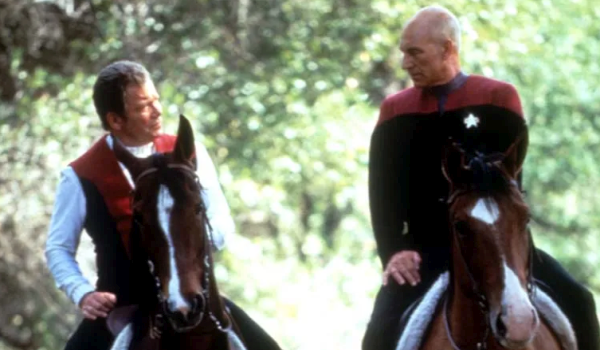
    Patrick Stewart as Picard, and William Shatner as Kirk riding brown horses through a wooded area in Star Trek Generations (1994)
    Star Trek Generations (1994): Picard (Patrick Stewart), Kirk (William Shatner) [Image Source: Paramount Pictures]

    Fans and even the writers considered a meeting between the two legendary captains. The idea remained popular throughout TNG’s run. But the meeting felt so big that it would only fit on the silver screen.

    Eventually, it was decided that the crossover would happen in the 1994 Star Trek movie Generations. While the writers planned to have Picard and Kirk fight each other, they eventually settled on focusing on the Next Generation cast as a “passing of the torch” to the sequel cast. But even then, the idea of Kirk overshadowing Picard was a concern. Paramount insisted that the original cast only make an appearance in the first few minutes of the movie, and Kirk was only supposed to reappear at the very end.

    How TNG Benefited Without Kirk
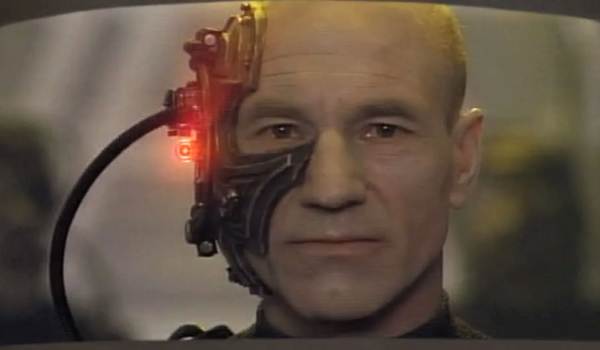
    A close-up shot of Patrick Stewart as Captain Jean-Luc Picard assimilated as Locutus of Borg, showing mechanical implants covering the right side of his face with a glowing red light.
    Star Trek: The Next Generation (1990): Captain Jean-Luc Picard / Locutus of Borg (Patrick Stewart) [Image Credit: Paramount Television]

    Did Star Trek: The Next Generation miss out by never bringing Captain Kirk aboard the USS Enterprise-D? Not necessarily. While a crossover between Kirk and Picard would have thrilled fans, the absence of the Original Series captain ultimately allowed TNG to establish its own identity. Instead of relying on familiar faces from the past, the series focused on developing its own characters, stories, and themes. As a result, Captain Picard emerged from Kirk’s shadow and became one of the most respected and beloved leaders in franchise history.

    Moreover, the limited involvement of the Original Series cast allowed audiences to connect with an entirely new generation of characters. Over seven seasons, the crew of the Enterprise-D built a legacy that rivaled that of their predecessors. Characters such as Captain Picard, Commander Riker, Data, Worf, and Geordi La Forge became fan favorites in their own right. Meanwhile, episodes like “The Best of Both Worlds,” “Yesterday’s Enterprise,” and “All Good Things…” helped define the golden age of Star Trek: The Next Generation.

    Furthermore, TNG proved that Star Trek could thrive beyond the adventures of Kirk and Spock. The show’s success revitalized the franchise and demonstrated that audiences would embrace new captains, new crews, and new stories. Consequently, TNG paved the way for an entire era of television, including Deep Space Nine, Voyager, and Discovery. It also launched four feature films starring the Next Generation cast.

    Ultimately, the decision to keep Captain Kirk away from the Enterprise-D may have strengthened the series rather than weakened it. By allowing Picard and his crew to stand on their own, Star Trek: The Next Generation evolved from a risky sequel into one of the most successful and influential science-fiction series ever produced. Today, discussions about why Kirk never appeared on TNG, Captain Picard’s legacy, and the success of Star Trek: The Next Generation remain popular topics among fans, proving that the show never needed Kirk to become a legend.

    What If Kirk Had Appeared on TNG?
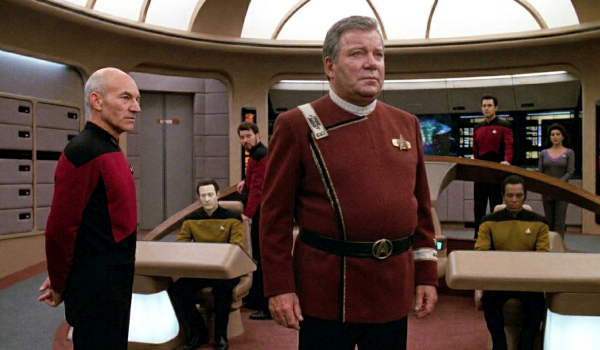
    An AI-generated image of William Shatner as an older Captain James T. Kirk in a red Starfleet uniform standing on the bridge of the USS Enterprise-D alongside Patrick Stewart as Captain Jean-Luc Picard and the crew of Star Trek: The Next Generation.
    Star Trek: The Next Generation (1987): Captain Jean-Luc Picard (Patrick Stewart), Lieutenant Commander Data (Brent Spiner), Counselor Deanna Troi (Marina Sirtis), Commander William Thomas ‘Will’ Riker (Jonathan Frakes) [Image Generated by Gemini]

    A Captain Kirk appearance on Star Trek: The Next Generation would have created one of the franchise’s most memorable crossovers. Fans would have loved seeing Kirk’s bold, instinct-driven leadership clash with Picard’s diplomatic and thoughtful approach while exploring how the legendary captain adapted to the 24th century.

    However, bringing Kirk aboard the Enterprise-D also risked overshadowing Picard and the new crew during a crucial period when TNG was establishing its own identity. By saving the meeting between the two captains for Star Trek Generations, Star Trek preserved a special moment that remains one of the most talked-about “what if” scenarios in franchise history.

    Join the Conversation

    Do you think Captain Kirk should have appeared on Star Trek: The Next Generation? Share your thoughts in the comments below and tell us how you would have written a Kirk-Picard crossover. If you enjoyed this article, share it on Facebook, X, Threads, and other social media platforms to keep the Star Trek conversation going.

    Related Posts

    • New Star Trek Book Maps Every Timeline in the Multiverse
    • Star Trek Villains: The 15 Greatest and Most Ruthless of All-Time
    • Strange New Worlds Stars Share Surprising and Heart-Warming Farewells
    • 15 Forgotten 90s Sci-Fi TV Shows That Deserved Another Season
    • Ultimate Guide to Sci-Fi Vehicles: Starships, Hovercars & Iconic Rides
      Ranked
    • Top 10 Greatest Romances in “Star Trek” History, Ranked
    • Every Star Trek: The Original Series Episode Ranked from Worst to Best

    The first trailer for The Mandalorian & Grogu marks a major turning point for Star Wars. Instead of continuing as a Disney+ series, the story is being reshaped into a theatrical IMAX experience designed for the biggest screens possible. Backed by Lucasfilm and directed by Jon Favreau, the film isn’t just extending the saga of Din Djarin and Grogu—it’s aiming to reintroduce Star Wars to a new generation of moviegoers while reigniting the theatrical spectacle that defined the franchise.

    Here’s the latest trailer:
     

    What the Mandalorian & Grogu Trailer Reveals

    The trailer positions the film as a clear departure from the episodic format fans know from The Mandalorian series. Instead, it leans into a cinematic structure built for large-scale storytelling.

    IMAX-Exclusive 25-Minute Preview Event

    One of the most significant events tied to the film’s rollout is an IMAX-exclusive 25-minute preview being shown in select theaters. This isn’t just a standard trailer. It’s an extended presentation designed to function like a mini cinematic experience. The footage is intended to highlight scale, sound design, and visual immersion, reinforcing why the project has been built with theatrical presentation in mind. The preview will only be available in participating IMAX theaters and is being used as a promotional event rather than a general release.

    On May 4, 2026, for “Star Wars Day,” Lucasfilm is hosting a free, exclusive IMAX fan event showcasing over 25 minutes of footage from The Mandalorian and Grogu. The event takes place at 7:00 PM local time at select IMAX theaters globally, featuring exclusive posters and surprises.

    This isn’t just a standard trailer—it plays more like a mini-featurette or opening chapter.

    • An extended 25-minute preview shown only in theaters
    • Designed to highlight cinematic scale and sound design
    • Intended to showcase why the film belongs on the big screen
    • Limited participation across select theater locations

    This approach is designed to give fans confidence that The Mandalorian & Grogu isn’t just a continuation of streaming. It’s being positioned as a major theatrical event.

    Where to Watch the IMAX Preview

    The IMAX preview is not available online or through streaming platforms. Instead, it is being distributed as a limited theatrical experience.

    More than 25 minutes of brand-new video will serve as the focal point of each fan event, and special prizes will include a brand-new poster. A list of participating IMAX theaters is available here.

    Jon Favreau’s Vision for a New Generation

    According to Jon Favreau, the goal of the film goes beyond continuing an existing storyline. The intention is to create a Star Wars experience that is accessible to viewers who may not have followed the series while still rewarding long-time fans.

    That means focusing on emotional storytelling, character-driven arcs, and a sense of wonder that can stand on its own. The approach reflects an effort to introduce a new generation to Star Wars in a way that feels welcoming rather than dependent on prior knowledge.

    Din Djarin and Grogu were at peace in the third season, at least temporarily. In order to help defend the Outer Rim, he has adopted Grogu as his son and apprentice. Together, they intend to live in a modest cabin and take on occasional jobs.

    “He made it clear that he was only going to work for the good guys now,” Favreau said. “We switched the Western archetype from the bounty hunter to the guy who’s hunting down the bad guys in the wanted posters on the post office wall for the sheriff.”

    When we meet him again in the film, “he’s a bit different from when we first met him, but he’s still, at his heart, a gunfighter and a warrior,” Favreau said. They’re hunting down ex-Imperial warlords who seem to be organizing. (Reminder, these events happen after “Return of the Jedi” and before “The Force Awakens.” )

    Additionally, he is not too excited about his new job, which will return him within the Hutt family’s sphere of influence. Indeed, Jeremy Allen White, Jabba the Hutt’s online partner, plays his son, Rotta, who is a gladiator.

    “That’s one of those fun things for people who may have been following along since the first ‘Clone Wars’ film,” Favreau said. “If you don’t know who he is, you’re going to figure it out pretty quick. And he’s a lot different than people remember, and I think we have a bit of fun with that.”

    Additionally, Favreau is fairly certain that superfans never call him “Stinky.”

    There are other newcomers to Star Wars besides White. Martin Scorsese portrays an alien, while Sigourney Weaver plays a leader of the New Republic.

    Why IMAX Matters

    The decision to prioritize IMAX is central to the film’s identity. The presentation is designed for large-format screens, enhanced sound systems, and a more immersive viewing environment than streaming can provide.

    “With the bigger screen and the larger production value, we were able to dip into another one of George Lucas’ influences, which is the Flash Gordon-style space opera where you get big monsters and creatures and worlds,” he said. “We get to do a lot more than we had the ability to do when we had to turn the show around in a year and fit it onto a television screen. Now we’re in IMAX, we had several years to do it. We got to build sets, we got to build miniatures, we got to have stop motion set pieces … it opened up a lot of opportunities to do things that we never got to do before.”

    This approach reinforces Star Wars as a shared theatrical experience rather than a purely home-viewing franchise. It also signals a broader shift back toward cinema as the primary destination for major Star Wars storytelling.

    A Shift in Star Wars Strategy

    The move toward a theatrical release suggests a change in direction for the franchise. Rather than continuing exclusively in episodic streaming form, Star Wars appears to be re-embracing the cinema model for its flagship stories. This shift may also indicate changes in how future The Mandalorian narratives are delivered, potentially blending or replacing traditional season structures with feature-length storytelling.

    What to Watch For

    The trailer and preview footage emphasize large-scale action and emotional character dynamics, but they also hint at deeper connections within the Star Wars universe. Viewers should pay attention to how Din Djarin and Grogu’s relationship evolves under new pressures, as well as subtle world-building details that may point toward larger narrative threads.

    Final Thoughts

    The Mandalorian & Grogu is being positioned as more than a continuation of a popular series. It is a deliberate effort to return Star Wars to the big screen in a meaningful way, combining IMAX spectacle with accessible storytelling. If the approach succeeds, it could mark the beginning of a new era where Star Wars once again prioritizes theatrical experiences while welcoming a broader audience into the galaxy far, far away.

    Join the Conversation

    Are you planning to see The Mandalorian & Grogu in IMAX, or do you think Star Wars works better at home on streaming? Share your thoughts in the comments and send this to other fans to join the conversation.


    Discover more from The Geek Twins

    Subscribe to get the latest posts sent to your email.

    DeForest-Kelley James-Doohan Leonard-Nimoy Patrick-Stewart Star-Trek star-trek-generations-1994 Star-Trek-III Star-Trek-The-Next-Generation Star-Trek-The-Next-Generation-Paramount-Television Star-Trek-The-Original-Series-NBC Star-Trek-VI-The-Undiscovered-Country-1994 StarTrek tekwar-syndication television William-Shatner
    Share. Facebook Twitter Pinterest LinkedIn Tumblr Email
    Maurice Mitchell
    • Website
    • X (Twitter)

    Related Posts

    Star Trek: A Bold New LEGO Build Has Been Unveiled

    July 24, 2026

    Avengers: Doomsday Trailer: 7 Biggest Secrets Left Unanswered

    July 21, 2026

    Avengers: Doomsday Trailer Unleashes Doctor Doom’s Fury

    July 21, 2026

    Comments are closed.

    Our Picks
    • Facebook
    • Twitter
    • Instagram
    • YouTube
    Don't Miss

    Star Trek: A Bold New LEGO Build Has Been Unveiled

    News July 24, 2026

    LEGO has officially unveiled its newest Star Trek LEGO set, giving fans another chance to…

    Exclusive: Lo Plater Reveals His Epic Indie Comics Journey

    July 23, 2026

    Top 10 New Comic Books This Week: 7/22/2026

    July 22, 2026

    Avengers: Doomsday Trailer: 7 Biggest Secrets Left Unanswered

    July 21, 2026
    The Geek Twins Weekly: Sci-Fi & Superhero Newsletter
    Get the latest sci-fi and superhero news, comic reviews, and geek culture updates every week from The Geek Twins. Subscribe free.
    About Us
    About Us

    Your source for the hottest geek news. We know you love science fiction and we do too. Our goal is to help you enjoy what you love even more.

    Email Us: geektwins@gmail.com

    Facebook X (Twitter)
    Our Picks
    New Comments
    • PT Dilloway on 20 Interesting Things We Found in the Trailer for Captain America: Brave New World
    • PT Dilloway on Ubisoft’s Star Wars Outlaws Game Will Focus on Life of Crime
    • L. Diane Wolfe on A New Film by Steven Spielberg Will Rival Star Wars and the Avengers
    • Patrick Dilloway on Capricorn One (1977): When O.J. Simpson Played an Astronaut
    Facebook X (Twitter) Instagram Pinterest
    • Home
    © 2026 ThemeSphere. Designed by ThemeSphere.

    Type above and press Enter to search. Press Esc to cancel.