


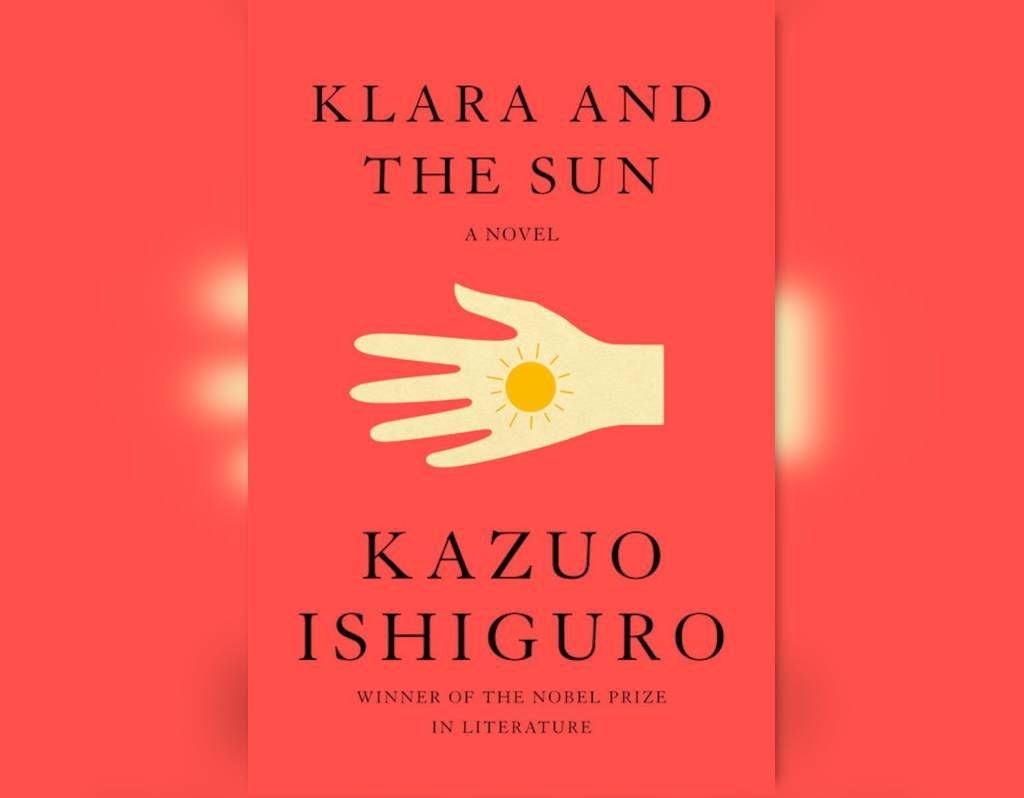
Read this review to find out if Klara and the Sun (2021) is worth reading. With Taika Waititi’s Klara and the Sun hitting theaters on October 23, 2026, there’s never been a better time to read the book. Kazuo Ishiguro’s 2021 novel follows Klara, a solar-powered Artificial Friend who watches the world from a store window. Eventually, a lonely, sickly girl named Josie chooses her, and Klara devotes herself completely to the family. If you caught our Klara and the Sun trailer breakdown, you already know Jenna Ortega is stepping into the title role. But how does the source material actually hold up? After all, Ishiguro won the Nobel Prize in Literature, so expectations run sky-high. So, I picked up the novel to see whether it’s a sci-fi gem or just another robot story. Here’s my take on the writing, the worldbuilding, the characters, and whether it’s worth your time before the movie arrives.
About: Klara and the Sun (2021)
Author: Kazuo Ishiguro
Release Date: March 02, 2021
Publisher: Faber and Faber
Description: From her place in the store, Klara, an Artificial Friend with outstanding observational qualities, watches carefully the behavior of those who come in to browse, and of those who pass on the street outside. She remains hopeful that a customer will soon choose her, but when the possibility emerges that her circumstances may change forever, Klara is warned not to invest too much in the promises of humans. In Klara and the Sun, Kazuo Ishiguro looks at our rapidly changing modern world through the eyes of an unforgettable narrator to explore a fundamental question: what does it mean to love?
Writing Style and Readability
Kazuo Ishiguro writes Klara and the Sun in plain, almost polite prose, and that’s the whole trick. Klara narrates everything, and she’s a solar-powered Artificial Friend who sees the world with charming literal-mindedness. Her sentences are short, careful, and oddly formal, like a very sweet robot filling out a report. She capitalizes things like the Sun and the “Cootings Machine,” so ordinary objects start feeling mythic. When she gets overwhelmed, her vision literally breaks into boxes, and Ishiguro describes it that way. As a result, the book reads fast, even though the emotional punches land slowly. There’s no dense jargon or world-building info dump to wade through. Instead, you piece together the bigger, darker picture from what Klara notices but doesn’t fully understand. If you’ve read Never Let Me Go, you’ll recognize the move: calm voice, quiet dread, and emotional moments you didn’t see coming.
Immersive World-Building and Atmosphere
The worldbuilding in Klara and the Sun is minimalist, and that’s by design. Ishiguro tosses out big ideas like genetically “lifted” children, workers replaced by machines, and a rigid, class-divided society. However, he never stops to explain any of them. That’s because Klara is so sheltered that she has no frame of reference for what she sees. She spends the first part of the book in a store window, after all. As a result, we only pick up tidbits about the world, never anything concrete. We catch hints of a much larger, colder system, but only through what Klara sees and overhears around her. Meanwhile, the adults talk around the hard stuff, and Klara isn’t equipped to read between the lines. In this way, the book skips the exposition and keeps its focus squarely on the characters. That’s both good and bad. On one hand, the restraint makes the story feel intimate and lets your imagination fill in the gaps. On the other hand, sci-fi fans craving answers will walk away with a lot of unanswered questions. Still, an oppressive tone hangs over every chapter. And it creates a striking contrast with Klara’s relentlessly hopeful, almost innocent worldview.
Character Development and Plot Intricacy
The main characters feel more like shells of personality than fully formed people. Mostly, they exist to move the story forward. Considering our narrator is a robot, that actually makes sense. Klara has never had a family, so she doesn’t really understand Josie’s parents. She simply calls them “the Mother” and “the Father,” and that’s about as deep as it gets. Josie and Rick do have character arcs, to be fair. However, we never see much of their lives outside the time they spend with Klara. Their hopes and dreams boil down to a handful of things they say out loud. Everything else is implied, and you have to fill in the blanks yourself. Meanwhile, Klara’s naivety went from charming to downright annoying by the final chapters. Frankly, I didn’t find myself caring much about any of them by the end.
The plot, on the other hand, is very simple. Klara watches, worries, and tries to help in her own strange, sun-worshipping way. Along the way, Ishiguro drops a few twists you won’t see coming. Unfortunately, some of them never fully resolve, which leaves the ending feeling more muted than moving.
Originality, Innovation, and Fresh Ideas
The idea of a robot companion has been done hundreds of times in science fiction books, movies, and TV shows. From Bicentennial Man to Spielberg’s A.I. Artificial Intelligence, we’ve seen machines learn to love their humans plenty of times. So honestly, nothing about the concept struck me as original. What is new, though, is the presentation. Ishiguro filters everything through Klara’s odd, earnest point of view, and that gives the story a fresh angle. He also builds an intriguing world for her to exist in, full of lifted kids, replaced workers, and quiet social divides. That’s exactly what makes the scant worldbuilding so frustrating. The pieces are all there, but he barely picks them up. If he had leaned harder into those ideas, the novel could have been genuinely powerful. Instead, it settles for being a gentle character study with a sci-fi backdrop. As a result, longtime science fiction fans won’t find many surprises here. Meanwhile, hard sci-fi fans will feel stranded on an island of half-explored ideas, staring at a mainland they never get to visit. It’s a fascinating premise, but it leaves you wanting a lot more than the book delivers.
Themes, Meaning, and Lasting Impact
Underneath its quiet surface, Klara and the Sun tackles some pretty big questions. The biggest one is simple: what actually makes a person unique, and could a machine ever replace them? Ishiguro’s answer is surprisingly tender. He suggests that what makes us special lives less inside us and more in the people who love us. Meanwhile, Klara’s devotion to the Sun turns the book into a meditation on faith and hope. She believes completely, even when that belief borders on superstition. On top of that, the story pokes at inequality, parental grief, and the uneasy cost of genetically “upgrading” children. There’s also a lingering sadness in how easily people discard things once they’ve outlived their usefulness. Klara’s fate drives that point home in a way that’s hard to shake. Admittedly, the thin characters soften some of the emotional punch. Even so, the ideas themselves are strong enough to carry the weight. They raise uncomfortable questions about love, loyalty, and what we owe the things we create. As a result, the book’s lasting impact comes from what it makes you think about, not just what happens on the page. Long after the final chapter, Klara’s hopeful little voice still echoes in your head.
Overall: Skip Klara and the Sun (2021)
Klara and the Sun is a quiet, thoughtful novel that’s easy to admire, even when it’s hard to love. Ishiguro’s clean prose and Klara’s oddly charming narration make it a smooth, fast read. Meanwhile, the big ideas about love, faith, and what makes us human give it real staying power. However, the thin worldbuilding and underdeveloped characters keep it from reaching its full potential. There’s a fascinating sci-fi world hiding in the margins, and I wish Ishiguro had let us explore more of it. Still, that restraint is part of his style, and plenty of readers will find it beautiful rather than frustrating. That’s why I landed on 3 1/2 stars, a solid recommendation with a few reservations. If you loved Never Let Me Go or enjoy literary fiction with a speculative twist, this one belongs on your list. On the other hand, hard sci-fi fans hunting for detailed world-building may want to look elsewhere. Either way, it sparks conversation, and that’s always worth something. In the end, Klara may not have won my heart, but she definitely earned my respect.
3.5 out of 5 stars  Have you read Klara and the Sun (2021) yet? Let us know what you think in the comments section below, and feel free to share this review on any social media platform.
You can also follow us on Twitter, Facebook, and Bluesky. If you enjoyed this review, you can click the link to read all of our previous book reviews.
Related Posts
- Klara And The Sun Trailer Breakdown: Everything We Learned
- Review: Project Hail Mary (2021)
- Review: Sunrise on the Reaping (2025)
- Review: The Running Man (1982): A Relentless, Timeless Dystopian Thriller
- Review: “Star Trek My First Book of Colors” and “Star Trek: My First Book
of Space” Go Where No Kid’s Book Has Gone Before
Discover more from The Geek Twins
Subscribe to get the latest posts sent to your email.
