


Science fiction has always found clever ways to sneak profanity past censors—and fans love it. From “frak” in Battlestar Galactica to “smeg” in Red Dwarf, these sci-fi curse words became iconic parts of geek culture. Here are the greatest fictional swear words ever created—and why they still stick. Here are 15 of the most popular and profane fictional curse words in science fiction.
(Note: Because this is a PG blog, we’ll be handling this with some self-censorship, but it could still be NSFW.)
What Are Sci-Fi Curse Words?
Sci-fi curse words, also known as fictional swear words, are inventive terms created by writers to simulate real-world profanity without violating broadcast standards. These made-up curse words appear in movies, TV shows, and books, allowing characters to express frustration, anger, or humor in ways that feel authentic to the world they inhabit. Fans of sci-fi love these unique words because they become a part of the culture, appearing in memes, fan fiction, and cosplay. Understanding sci-fi curse words is essential for anyone exploring the language, slang, and creative storytelling of science fiction.
Why Sci-Fi Uses Made-Up Swear Words
Creators of science fiction often use made-up curse words to bypass censorship while maintaining emotional impact. Traditional swear words are often restricted on TV or in children’s and family-friendly content, so fictional swear words provide a safe alternative. Beyond compliance, these words help with world-building by giving alien species, futuristic societies, or unique cultures their own linguistic identity. Iconic examples like “frak” from Battlestar Galactica or “smeg” from Red Dwarf show how sci-fi curse words can resonate with fans and become memorable cultural touchstones.
Best Sci-Fi Curse Words Ranked
Here’s a list of the greatest and most popular curses in sci-fi movies and television shows. Just be careful using them in mixed company. Some fraking nerf-herder might think you’re calling him Bantha Poodoo.
| Rank | Curse Word | Show / Universe | English Meaning (Censored) |
|---|---|---|---|
| 1 | Frak | Battlestar Galactica | F*ck |
| 2 | Smeg | Red Dwarf | Sh*t / General insult |
| 3 | Gorram | Firefly | G*d d*mn |
| 4 | Shazbot | Mork & Mindy | Oh sh*t / D*mnit |
| 5 | Frell | Farscape | F*ck |
| 6 | P’tak (petaQ) | Star Trek | A cowardly, dishonorable person |
| 7 | Dren | Farscape | Sh*t |
| 8 | Belgium | The Hitchhiker’s Guide to the Galaxy | The most offensive word in the galaxy |
| 9 | Felgercarb | Battlestar Galactica (1978) | Cr*p / Bullsh*t |
| 10 | Poodoo | Star Wars | Fodder / Excrement |
| 11 | Karabast | Star Wars Rebels | D*mn / Oh no |
| 12 | Dank Ferrik | The Mandalorian | G*d d*mnit / Frustrating situation |
| 13 | Hummer | The Expanse | B*stard / Jerk |
| 14 | Shuck / Shuckface | The Maze Runner | F*ck / Idiot |
| 15 | Klunk | The Maze Runner | Sh*t / Poo |
Note: Some links may lead to an approved affiliate, and a small percentage of the proceeds from the sale will be used to support the blog at no cost to you. Thank you!
15. Klunk in The Maze Runner (2014)
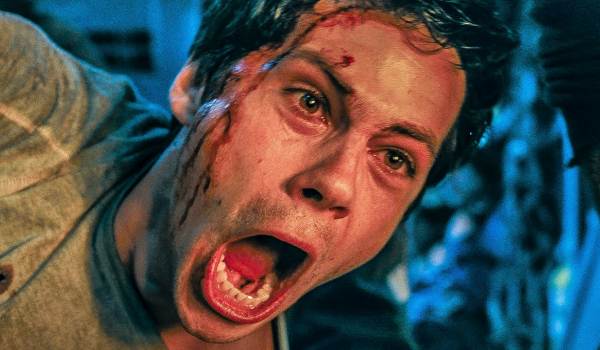
Quote: “What the Klunk is going on?”
Our next sci-fi curse is from The Maze Runner. “Klunk” originated in James Dashner’s The Maze Runner, published in 2009, as part of the invented Glader slang system. Dashner crafted the vocabulary to make the boys’ isolated community feel authentic, with “klunk” serving as a crude but humorous substitute for a bathroom expletive. When the film adaptations launched in 2014, “Klunk” successfully made the transition to the screen.
Fan Usage: Fans embraced “klunk” enthusiastically, incorporating it into everyday speech and online communities as a humorous alternative to real profanity. Its inherently funny sound made it particularly popular in memes and lighthearted fan content. For many readers, casually dropping “klunk” into conversation became a playful way of signaling membership in the *Maze Runner* fandom without needing any further explanation.
Appearances in Other Shows: “Klunk” carried over faithfully into the *Maze Runner* film trilogy beginning in 2014, giving it exposure to audiences beyond the books. While it never crossed into other franchises or television properties, its presence in the films helped cement its place in broader YA pop culture. Like “shuckface,” it remained firmly rooted in its origin but became widely recognized among fans of dystopian YA fiction generally.
It’s available on Amazon
14. Shuck / Shuckface in The Maze Runner (2014)

Quote: “You are the shuckiest shuck-faced shuck in the world!”
In a dimension of its own, we find “Shuckface.” Dashner created an entire lexicon of slang for the Gladers — the boys trapped inside the maze — to build a believable, isolated community that would have naturally developed its own language over time. Words like “shuck,” “klunk,” “slinthead,” and “shuckface” give the world a sense of authenticity and humor. The closest English equivalent would be “f*ck.’
Fan Usage: Fans reported using Glader slang at every opportunity, converting friends to the vocabulary even when those friends hadn’t read the books. (The Maze Runner Wiki) The term was used primarily by Minho as comic relief, though other Gladers employed it too. (Urban Dictionary) On Wattpad, “shuckface” became a tag across a large body of fan fiction (Wattpad), spanning both canon and alternate-universe settings, making it a genuine badge of fandom identity.
Appearances in Other Shows: “Shuckface” has remained closely tied to The Maze Runner rather than crossing into other properties. Its influence was more lateral, sparking conversations about how dystopian franchises build immersive world-languages. But it never quite escaped its origin, remaining a distinctly Glader invention.
It’s available on Amazon
13. Hummer in Alien Nation (1989)
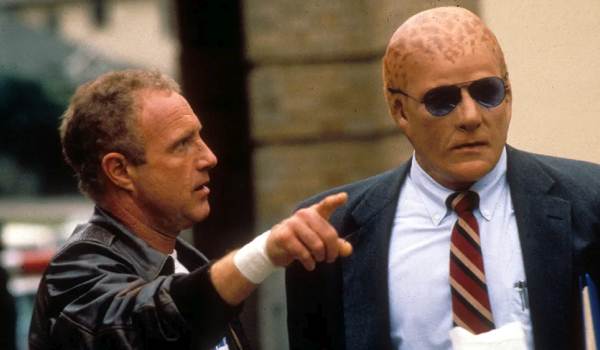
Quote: “Take off, mother-hummer!”
Back in the 80s, there was a movie about alien immigration called Alien Nation. Later, the movie was translated into a television series. In the universe of the television series, Hummer serves as a fascinating linguistic “false friend” between humans and the Tenctonese (Newcomers). While the word is a harmless, everyday term on Earth—often associated with humming a tune or the rugged vehicle brand—it is a deeply offensive, sexually charged slur in the Tenctonese language. This linguistic landmine creates a recurring source of friction and “fish-out-of-water” humor, as well as genuine social tension. The Newcomers struggle to navigate a human society where their most taboo concepts are part of casual, public vocabulary.
Fan Usage: Fan usage of the term typically mirrors the “Belgium” or “Shazbot” effect, where enthusiasts use “Hummer” as an in-universe euphemism to signal their knowledge of the show’s lore. Within the Alien Nation fandom, the word is often invoked when discussing the show’s unique approach to “Xenobiology” and linguistics, often appearing in fan-made Tenctonese dictionaries or role-playing guides. While the show hasn’t seen the same level of mainstream “re-boot” saturation as other sci-fi franchises, the “Hummer” incident remains one of its most cited examples of clever world-building, frequently referenced in sci-fi tropes lists regarding “Accidental Profanity” in fiction.
Appearances in Other Shows: Beyond the books and radio plays, the “history” of the word was expanded to include the Belgium Award. This is a prestigious (and highly controversial) trophy given to those who demonstrate the most “gratuitous use of the word ‘Belgium’ in a serious screenplay.” This meta-commentary on the arbitrary nature of what society deems “offensive” helped cement the joke as a fan favorite, turning a specific instance of editorial frustration into a permanent pillar of the franchise’s absurdist world-building.
It’s available on Amazon
12. Dank Ferrik in Star Wars: The Mandalorian (2019)
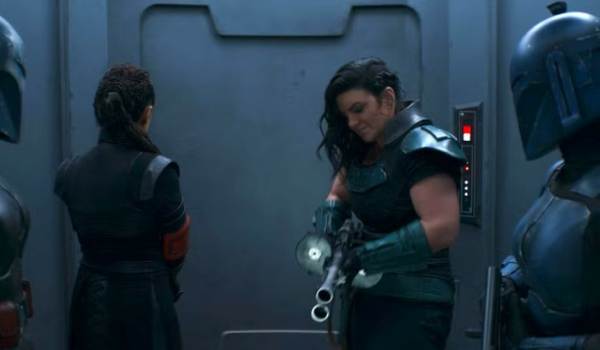
Quote: “Dank Farrik! Son Of A Mudscuffer!”
Our journey continues with the twelfth sci-fi curse on the list. The word first appeared in the Star Wars show The Mandalorian. An outlaw bounty hunter like Djinn Djarin isn’t going to say “gosh darn it.” Its exact meaning isn’t known, but based on the context, it can be f*ck or d*mn. No one has taken credit for it, but it was first used in the pilot episode written by the showrunners and creator Jon Favreau.
Fan Usage: The phrase has been used by fans on merchandise and as an inside joke among themselves. While the word has been embraced by fans, not everyone likes it. There have been several complaints about the writers using it too much.
Appearances in Other Shows: The word shows up in other places After it’s first utterance in The Mandalorian. Video games like Star Wars: Outlaws and Star Wars Jedi- Survivor. Also, The Book of Boba Fett and even LEGO Star Wars. Several modern tie-in novels and comics use the curse as well. But it’s never been used outside of the franchise. So the word is cool, but its cultural impact is minimal.
It’s available on Amazon
11. Karabast in Star Wars: Rebels (2014)
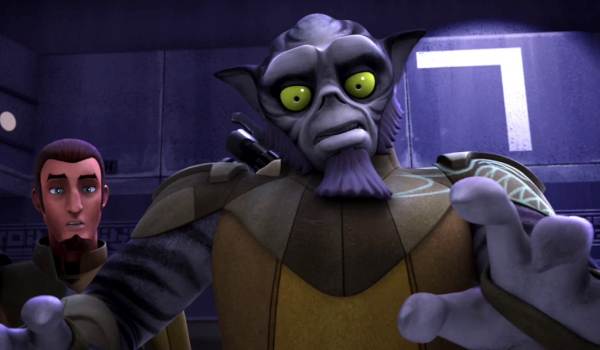
Quote: “Uh. Karabast, I know that look.”
A versatile favorite at eleven is the curse word Karabast. It’s used by Lasat Garazeb “Zeb” Orrelios in the show Star Wars: Rebels. The word is used to express shock and surprise. It’s equivalent to the English expression “d*mn it.” It was created by writer Greg Weisman for the third episode and voiced by Steve Blum. He’s going to be reprising his role in The Mandalorian and Grogu.
Fan Usage: Star Wars was envisioned as being for children by George Lucas. So the movies don’t have a lot of cursing. Fans embraced the expression in a similar way to Battlestar Galactica’s “Frak.” It’s a relatively recent addition. So it’s mainly used by fans of the modern Star Wars projects.
Appearances in Other Shows: The word has been heard in a few Star Wars projects, like video games like Star Wars: Galaxy of Heroes and novels like Master & Apprentice. On the other hand, it was used on an episode of Young Justice. This wasn’t a coincidence because the character was also voiced by Steve Blum, and the episode was also written by Greg Weisman.
It’s available on Amazon
10. Poodoo in Star Wars: Episode VI – Return of the Jedi (1983)
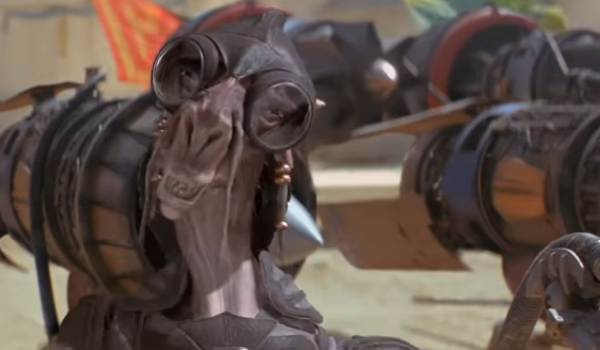
Quote: “Jedi Poodoo!”
Building on that momentum is one of the greatest curses in a galaxy far, far away. In the Star Wars universe, the evil Hutts rule the underworld. They’re so powerful that they don’t need to speak in the intergalactic language of Basic. One word that needs no translation is their Huttese swear word, Poodoo. Created by George Lucas, it means something like ”fodder” or “nonsense.” Its closest English equivalent would be sh-t. It first appears in the film Star Wars: Return of the Jedi.
Fan Usage: Within the fan community, “poodoo” is frequently utilized as an affectionate, “in-universe” euphemism. It is a staple of cosplay dialogue, fan fiction, and convention chatter, allowing enthusiasts to express frustration or emphasis without breaking the fourth wall or the family-friendly atmosphere of the fandom. Its usage has evolved into a linguistic badge of honor; knowing the correct context of the word signifies a deeper level of engagement with the lore. Beyond casual conversation, the term has permeated wider pop culture, appearing in various parodies, late-night sketches, and even appearing as a comedic exclamation in unrelated video game chat rooms and forums, cementing its status as one of the most enduring linguistic exports of the galaxy.
Appearances in Other Shows: Besides the movies, it’s frequently used as voice-line barks in titles like Star Wars: Knights of the Old Republic, Battlefront, and the LEGO Star Wars series. Plus, the term has been referenced in shows like Robot Chicken and Family Guy during their respective parody specials, often poking fun at the word’s dual meaning as both “food” and a colloquialism for “trash.”
It’s available on Amazon
9. Felgercarb in Battlestar Galactica (1978)
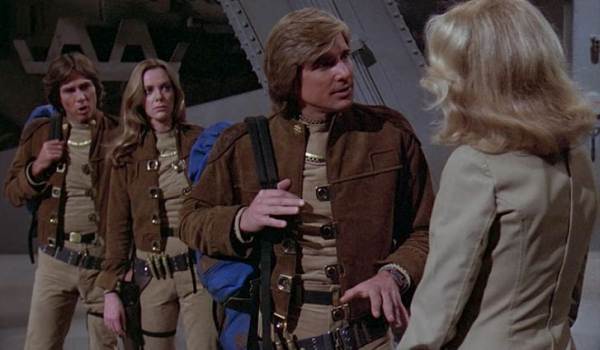
Quote: “All that effort and risk, for the Commander’s son. That’s utter FelderGarb, and you know it!”
Continuing the thread at number nine is a truly remarkable sci-fi curse. The pilot of Battlestar Galactica used Frack as a euphemism to avoid the network censors. Later, they decided to add another word. But unlike Frack, this was created by the production. Creator Glen A. Larson added it as a substitute for fecal matter or bullsh@t. According to Terrence McDonnell in another interview with Galactica.tv, the pronunciation varied because Dirk Benedict would sometimes say “felgercarb” and sometimes he’d say “feldercarb.” Either way, it was clear from the context that it was something disgusting. The word isn’t said in the reboot series, but it does appear as a brand of toothpaste.
Fan Usage: As I said, it’s not as well used as Frack, but among hardcore fans of BSG, it’s an important part of their vocabulary. It’s occasionally used in tech or political rants on social media and forums to describe something as “garbage” or “nonsense”.
Appearances in Other Shows: The word has never appeared on any major movies or television shows outside of the Battlestar Galactica franchise.
It’s available on Amazon
8. Belgium in The Hitchhiker’s Guide to the Galaxy (2005)
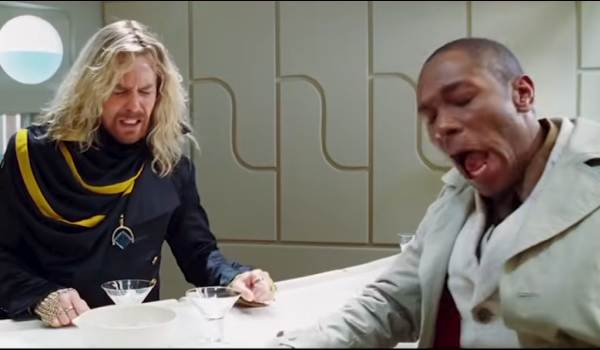
Quote: “Oh, Belgium man, Belgium!”
Leading our early picks is a country name that’s become the filthiest word in the universe. The history of Belgium in The Hitchhiker’s Guide to the Galaxy is rooted in a legendary battle with 1980s censorship. When Douglas Adams was preparing the US edition of Life, the Universe and Everything, his publishers demanded the removal of the “f-word” to ensure the book could be sold in retail chains like Walmart. Rather than simply deleting the sentence, Adams spitefully replaced the profanity with the word “Belgium” and added a sprawling footnote explaining that, in the rest of the galaxy, “Belgium” is considered the most “vile, gratuitous, and offensive” word possible.
Fan Usage: Among fans, “Belgium” is used as a meta-textual shorthand for extreme profanity, often shouted at conventions or in forums as a polite way to signal a “major curse.”
Appearances in Other Shows: The joke is most prominently featured in the “Fit the Tenth” episode of the original radio series and was further expanded in the Life, the Universe and Everything novel. It also appears in the Tertiary Phase radio scripts, which detail a prestigious award given for the “most gratuitous use of the word ‘Belgium’ in a serious screenplay.” Beyond the core franchise, the joke has been referenced across various British comedies and geek culture circles as a nod to Adams’ legacy, cementing its status as a “Safe For Work” linguistic signal for fans of high-concept, irreverent science fiction.
It’s available on Amazon
7. Dren in Farscape (2000)
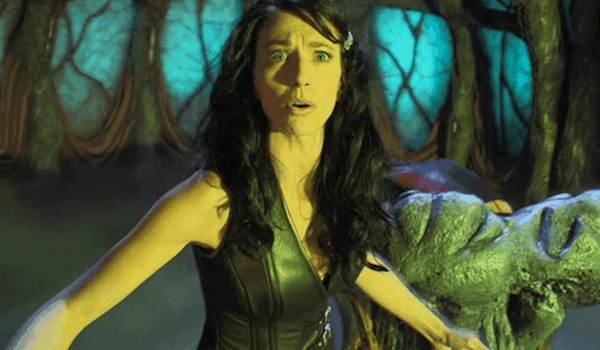
Quote: “What is this dren?”
Adding another layer to the discussion is Dren. It’s a fictional slang term originating from the sci-fi channel television series Farscape. It stands for solid body waste or “sh*t.” No one has been credited with creating the word, but it first appeared in a season one episode written by David Wilks.
Fan Usage: Fans use it in place of earthly swear words to evoke the show’s unique language. Examples include describing an episode as “full of dren” or referencing “frelling dren.”
Appearances in Other Shows: Dren appears frequently in fan fiction and on forums (like Reddit’s r/farscape) as part of the “Scaper” dialect, alongside other words like “frell”. Since the show has a relatively small fanbase, it hasn’t appeared in much outside the franchise. But it does make a guest appearance in an episode of Community.
It’s available on Amazon
6. petaQ in Star Trek: The Next Generation (1987)
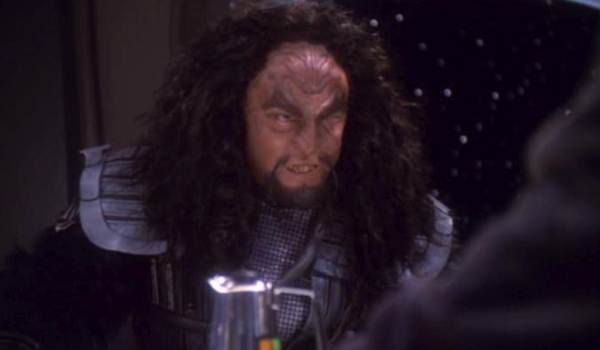
Quote: “At least I do not wear the uniform of the P’tak!”
Bringing a new energy to our countdown is a versatile Klingon curse word. “P’taq” originated within the Klingon language developed by linguist Marc Okrand for Star Trek III: The Search for Spock in 1984, later expanded through his 1985 book *The Klingon Dictionary*. It became a prominent insult as Klingon characters grew more central to The Next Generation in the late 1980s and DS9 through the 1990s. The word’s spelling varies across sources — “p’taq,” “petaQ,” and “pahtk” among them — reflecting the challenges of transliterating a constructed language. Over forty years of Star Trek storytelling, it has remained the go-to Klingon expletive.
Fan Usage: Fans of Star Trek embraced “p’taq” as enthusiastically as any piece of Klingon vocabulary, incorporating it into cosplay, convention culture, and online communities. Klingon language enthusiasts who study and speak tlhIngan Hol use it as a genuine expletive within that constructed language framework. It appears frequently in fan fiction, fan films, and social media, often deployed humorously between fans as a playful insult. Its aggressive sound and cultural authenticity made it a favorite among those who appreciate Star Trek’s deeper world-building.
Appearances in Other Shows: “P’taq” has appeared across nearly every corner of the Star Trek franchise, from The Next Generation and Deep Space Nine to Discovery and Strange New Worlds, making it one of the most consistently used Klingon insults in the canon. Beyond Star Trek itself, it has been referenced in pop culture discussions about constructed languages and alien world-building, alongside Elvish and Dothraki. Its longevity across multiple series and decades distinguishes it from most fictional slang, cementing it as a genuinely enduring piece of science fiction vocabulary.
It’s available on Amazon
5. Frell in Farscape (2000)
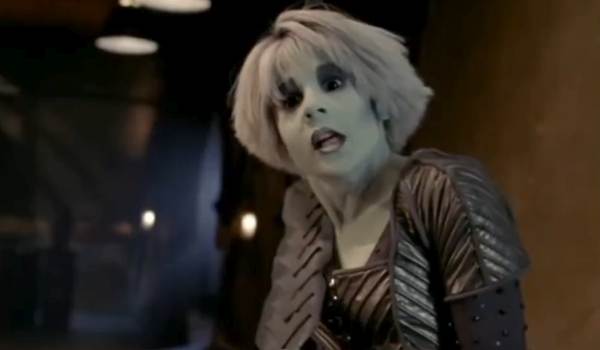
Quote: “Just make a frelling wormhole and go home.”
Moving right along to number five is a Farscape curseword. The term “frell” was developed by the writers of Farscape as a constructed language solution to avoid triggering censorship while maintaining the show’s mature atmosphere. It serves as a versatile substitute for the “f-word,” allowing characters to express strong emotions in a family-friendly manner. As the series evolved, “frell” became integrated into the vernacular of various alien cultures within the Uncharted Territories, alongside other invented slang. This consistent usage established it as a significant part of the show’s identity, ultimately making it a notable term in the global sci-fi lexicon.
Fan Usage: Among the “Scaper” fanbase, frell is a ubiquitous badge of identity used to signal a shared appreciation for the show’s irreverent and chaotic tone. Because it is phonetically satisfying and easily conjugatable, fans frequently adopt it in real-world settings, online forums, and fan fiction to bypass automated filters or to express frustration without using actual vulgarity. It is often paired with other Farscape slang like dren (trash/feces) or mivonks (testicles) to create complex, in-universe insults. This persistent usage decades after the show’s conclusion demonstrates how a well-crafted fictional swear word can transition from a simple writing trick to a permanent fixture of a community’s vernacular.
Appearances in Other Shows: “Frell” has achieved a legacy beyond its own series, appearing as a “geeky” Easter egg across various corners of pop culture. Most notably, the series Stargate SG-1 featured a direct parody of Farscape in its 200th episode—starring Farscape leads Ben Browder and Claudia Black—where the term was used prominently to poke fun at sci-fi tropes. The word has also been spotted in diverse media, ranging from a Dilbert comic strip to subtle nods in shows like Community, Rick and Morty, and The Big Bang Theory. Its inclusion in these various works usually serves as a shorthand to establish a character’s “sci-fi nerd” credentials, cementing the term as a cornerstone of modern science fiction lexicon.
4. Shazbot in Mork & Mindy (1978)
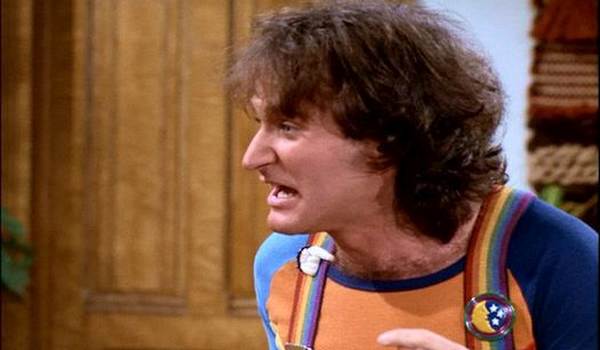
Quote: “Shazbot, I missed!”
Next, we look at the impact of an Orkan curseword. Robin William’s standup comedy was known as being very blue, and he regularly cursed. So how could the comedian translate his improvisational style to the small screen? He created the Orkan expression Shazbot. It’s used to express surprise, excitement, dismay, or bewilderment. Since these were the days of heavy TV censorship, this allowed them to sneak the word “sh*t” past the censors. Beyond just a catchphrase, “shazbot” came to represent the anarchic, improvisational spirit of Robin Williams himself, serving as a linguistic marker for the late 70s and early 80s counterculture that embraced sci-fi weirdness and quirky, non-conformist humor.
Fan Usage: In fan communities, particularly within the sci-fi and gaming spheres, “shazbot” transitioned from a TV joke to a functional tool for digital communication. It is most famously preserved in the Tribes video game franchise, where it is a selectable “voice command” (VGS) that players spam to express frustration or mid-game disaster. This usage effectively “colonized” the word for a younger generation of gamers who may have never seen Mork & Mindy, turning it into a timeless shorthand for “we’ve messed up.” In broader fandom, it functions much like Battlestar Galactica’s “frak”—a way for fans to signal their “geek” credentials while remaining polite in mixed company.
Appearances in Other Shows: The word is first used by Mork in Happy Days, and it continued into the spin-off. Besides that, in one episode of Community, Jeff Winger (Joel McHale) shouts “Shazbot” when he gets upset. The show The Simpsons has used it several times in referring to Homer’s time in the 70s. Most notably, the late lead singer of AC/DC, Bon Scott, used “Shazbot” and “nanu nanu” at the end of the 1979 song “Night Prowler.”
It’s available on Amazon
3. Gorram in Firefly (2002)
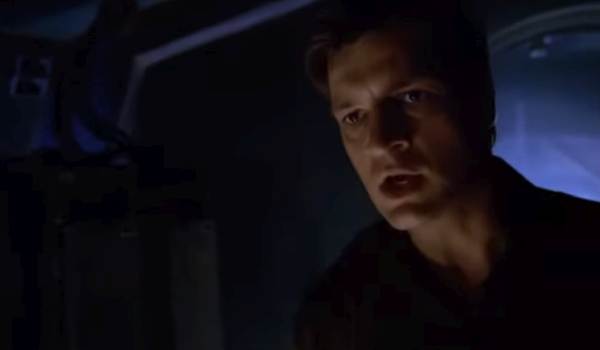
Quote: “Did the primary buffer panel just fall off my gorram ship for no apparent reason?!”
Next up on the list is Firefly’s epic curse word. Gorram has been used in writing since at least the 1960s. But it was popularized by the Western sci-fi TV show Firefly. It’s a swear word used to express anger and frustration, similar to “G@d d-mn”. The show uses a few other slang words like “shiny” for “cool”, and others in Old West dialect and Chinese.
Fan Usage: Firefly fans (Browncoats) and science fiction enthusiasts frequently use it to express anger, frustration, or emphasis, similar to “frak” in Battlestar Galactica.
Appearances in Other Shows: Since the word predates Firefly, it’s been used for decades. But there is no specific documented use of the curse word outside Firefly.
It’s available to buy or rent on Amazon
2. Smeg in Red Dwarf (1988)
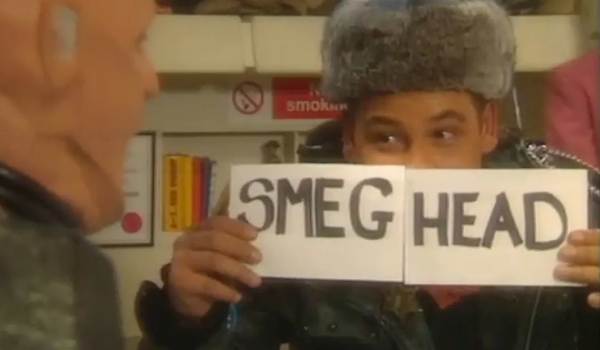
Quote: “Don’t be such a smegging smeg!”
Non-negotiable for second place is Smeg. Red Dwarf creators Grant and Naylor wanted to avoid using profanities and upsetting the BBC censors. So they invented a unique, harsh-sounding word that sounded vile and offensive. So many people said it sounded a lot like an abbreviation of the word “smegma”. The creators insist it’s not related to any bodily substance unintentionally. But they say it’s a “happy accident” that it’s close to a vulgar word.
Fan Usage: Fans of the British comedy regularly use variations of “smeg” and “smeghead.” The word represents the show’s rebellious, anti-authoritarian, and crude humor. Unfortunately, while Red Dwarf is massively popular in Britain, it’s not commonly known in the United States. So it’s not used much outside of the show’s fandom.
Appearances in Other Shows: The word is actually commonly associated with Smeg, the Italian home appliance brand known for its retro-styled toasters and fridges. Therefore, it’s hard to tell if anyone used the word as an intentional reference. The only time it’s been used is in Mad Max: Fury Road when someone says, “He’s a crazy smeg.” Also in the sequel Furiosa: A Mad Max Saga, a member of Dementus’s Biker Horde is named Smeg. Both director George Miller and writers collaborated with Brendan McCarthy and Nico Lathouris, who are from Britain and Australia, and have a huge fanbase. It’s not a coincidence.
It’s available on Amazon
1. Frak in Battlestar Galactica (2004)
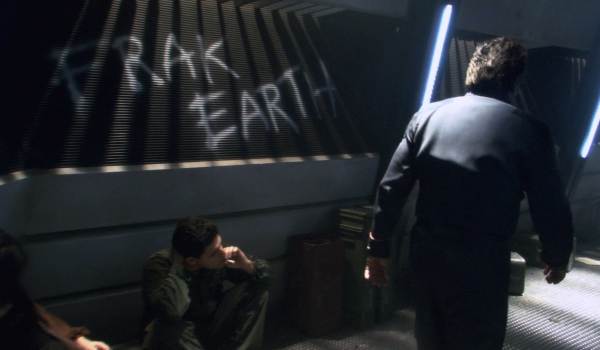
Quote: “What the frak is going on?”
Finally, we come to the greatest fictional curse word in sci-fi. The origin of the term “Frak” is explained in an interview with the director of the pilot. Richard A. Colla told Galactica.tv that the term “frack” was devised on set and was not in the original screenplay. Because of the network censors, they weren’t allowed to curse. However, when Dirk Benedict’s Starbuck would get frustrated and curse, he was encouraged to say “Frack” instead. When Battlestar Galactica was rebooted, the creators decided to bring back the classic curse word from the original series. This time, they shortened it to frak and used far more than in the original series. The original was used to get around the network censors. However, the Moore series is on cable and didn’t have any restrictions. It was just to convey the alienness of the gritty show.
Fan Usage: Fans of Battlestar Galactica use it extensively. But it’s also become a way for fans to give a subtle nod to each other. It’s also used as a way of cursing while giving an inside joke for fans to enjoy. The SyFy series appeals to a much younger audience and was able to take advantage of the growing fandom on the Internet. The word has almost taken on a life of its own and has branched out far beyond the confines of the franchise.
Appearances in Other Shows: The original series is a beloved cult classic, but the word didn’t make it into any contemporary shows or movies. Dilbert creator Scott Adams calls the word “pure genius.” The nerdy pop culture show The Big Bang Theory had the characters use it several times. Also, characters in the CW shows known as the “Arrowverse” use it a lot. Sitcoms from Veronica Mars, The Office, Scrubs, 30 Rock, and Gossip Girl all reference it. It’s so pervasive that other sci-fi franchises like Farscape and the Expanded Universe of Star Wars on the planet Cularin. It appears in a Dilbert cartoon strip and was referenced in the show Chuck.
It’s available on Amazon
Which is your favorite fictional curse? (No real profanity in the comments, please!)
Please use the buttons below to tell your friends about this post. Click on the links to follow us for free by Email, RSS, and follow us on Twitter @thegeektwins and like us on Facebook
Related Posts
- Katee Sackhoff Says ‘The Mandalorian’ Surprisingly Made Her Acting Better
- 5 Famous Co-ed Locker Rooms in Sci-Fi Movies and TV
- Battlestar Galactica Reboot Not Going To ‘Frak It Up’ ‘Ender’s Game’ Gets A
Release Date [News] - Paul Reubens: 9 Sci-Fi Roles Ranked from Worst to Best
- TV Guide Recognized Robin Williams’ Genius Back in 1978
Discover more from The Geek Twins
Subscribe to get the latest posts sent to your email.

<span class="dsq-postid" data-dsqidentifier="35783 ">7 Comments
Knew Frak had to be number one! Had forgotten about Frell. Been awhile since I watched Farscape.
That was a frakking good article, gorram it.
Bonus points for "SMEG"!
How about Batman Beyond's use of of the word "Slag it". It was way Shway!
I recall 2 and 3 fondly. I loved those shows.
Belgium…I didn't remember that at all. I might have to use that…
Smegging awesome! But you missed your chance to show off your true credentials by reporting the true origin of the word Frak – an expletive that, if this 1984 computer game is believed, dates back to the yo-yo slinging Neanderthal era http://youtu.be/UgiA10MfOu4
Smegging awesome!