


The Decades of Destiny Bracket: 64 Greatest Sci-Fi Shows (2026)
Updated: March 21/2026
The Decades of Destiny tournament isn’t just another popularity contest or a simple list of favorites. It is a structured exploration of how science fiction has shaped our collective imagination across generations.
In a genre defined by “what if,” this tournament seeks to answer one ultimate question: Which stories truly stand the test of time?
Update: Adjusted Dates
| 2026 Fan Voting Tournament Schedule | |
|---|---|
| Bracket Round | Voting Opens |
| First Four | March 16 (Winners Announced) |
| First Round of 64 | March 19 (Winners Announced) |
| Second Round of 32 | March 21 (Winners Announced) |
| Sweet 16 | March 26-27 (Voting Has Begun) |
| Elite 8 | March 28-29 |
| Final Four | April 4 |
| Championship | April 6 |
Why the Decades of Destiny Tournament Matters
The Decades of Destiny tournament isn’t just another popularity contest or a simple list of favorites. It is a structured exploration of how science fiction has shaped our collective imagination across generations.
1. It Honors the Evolution of the Genre
From the philosophical foundations of The Golden Era (1980s) to the high-concept blockbusters of the 2000s, sci-fi has constantly reinvented itself. By grouping contenders by their “destiny decades,” we can appreciate the specific cultural anxieties and technological dreams that birthed them.
2. It Bridges the Generational Gap
Sci-fi is a legacy. This tournament brings together fans who grew up with the practical effects and operatic storytelling of the 80s and those who were shaped by the digital frontiers and complex anti-heroes of the turn of the millennium. It’s a space where classic lore meets modern subversion.
3. It Highlights the “Cinderellas”
Every tournament has its titans—the franchises that seem unbeatable. But the real magic of Decades of Destiny lies in the “Cinderella” stories: the cult classics, the daring indie projects, and the overlooked gems that might just topple a giant. It gives a voice to the stories that changed us, even if they didn’t break the box office.
4. It’s About Community Participation
This isn’t a closed-door committee decision. Because fans drive the tournament, it matters. Every vote is a tribute to a story that inspired someone to look at the stars, question reality, or imagine a better future.
The Printable Decades of Destiny Bracket
You can download the bracket below.
[Download the PDF of the Official 2026 Bracket Here]
Tournament Breakdown: The Four Regions
1970s (The Pioneers)
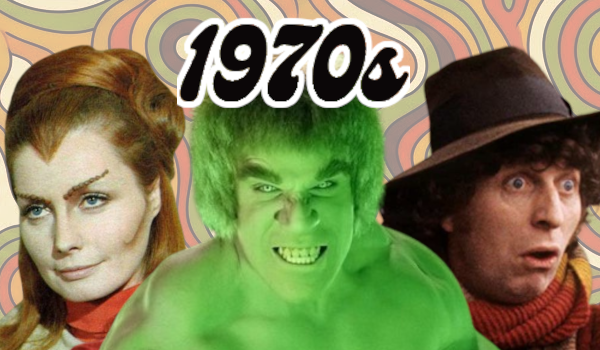
The 1970s were a time of social change, and the entertainment industry was evolving with it. As cultural sensitivities changed over the decade, the television industry saw substantial changes. Movies like Planet of the Apes, Star Wars, and Close Encounters of the Third Kind introduced mainstream audiences to high-concept science fiction. But the popularity of Star Wars had brought space travel back to television. Legions of fans fell in love with brave new visions of the future, both in the US and UK. But many young fans didn’t grow up with 70s television. Will they outdo the fans of classic sci-fi? Which of these 70s pioneers is your GOAT? Cast your vote in the bracket above!
- Seed #1: The Six Million Dollar Man – The blueprint for the modern sci-fi hero.
- The Era: Why the 70s laid the groundwork with high-concept episodic storytelling.
The Total List
- The Six Million Dollar Man – Bionic strength and speed; peak human.
- Battlestar Galactica – Massive warships, lasers, and FTL travel.
- Mork & Mindy – Alien powers, but mostly used for comedy.
- Space: 1999 – Moon-sized base, nuclear tech, Eagles.
- The Bionic Woman – Similar to Steve Austin; high-tier agent.
- The Incredible Hulk – Unstoppable raw power, but low tech/tactics.
- Land of the Lost – Primitive survival; limited tech.
- Doctor Who (Tom Baker) – TARDIS, Sonic Screwdriver, Time Lord IQ.
- Logan’s Run – High-tech city, but limited to Earth.
- Buck Rogers in the 25th Century – 25th-century space fighters and robots.
- Blake’s 7 – Alien super-ship Liberator, teleportation, and Orac’s super-computer.
- Planet of the Apes – Post-apocalyptic, mostly primitive.
- The Tomorrow People – Teleportation and telepathy; high potential.
- The Man from Atlantis – Amphibious powers, limited to water.
- Project U.F.O. – Government agents; 70s-era tech only.
- Jason of Star Command – Low-budget Saturday morning fun that hasn’t aged as well as the “big” shows.
- Quark – Space-capable, but incompetent.
1980s (The Golden Era)
The 1980s brought uncertain times for television networks. The major networks were reluctant to air science fiction shows. Thankfully, this was the era of syndication, and networks could air shows with less risk. Computer technology jumped from movie theaters to the small screen with varying levels of success. All of this led to a large number of experimental television shows with high-concept ideas. While ratings for some shows didn’t let them last more than a season, many developed a cult following that could swarm the bracket. Plus, the most popular sci-fi show of all time is in this decade. Which of these 80s trailblazers is your GOAT? Cast your vote in the bracket above!
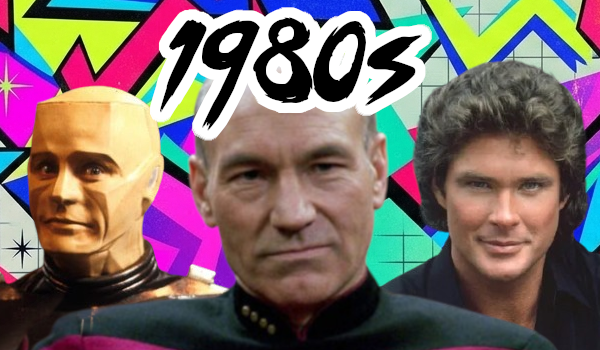
- Seed #1: Star Trek: The Next Generation – A juggernaut of diplomacy and discovery
The Total List
- Star Trek: The Next Generation – Phaser banks, photon torpedoes, shields.
- Knight Rider – K.I.T.T. is elite, but limited to the road.
- V: The Series – Lizard alien fleet; energy weapons.
- Quantum Leap – Time travel is random; Sam is vulnerable.
- ALF – Space alien, but no weapons; loves cats.
- The Twilight Zone (1985) – High-concept reality-warping powers.
- Max Headroom – Digital ghost; can take over any screen.
- Alien Nation – Advanced alien strength, but grounded.
- Beauty and the Beast – Street-level strength and urban stealth.
- The Greatest American Hero – Supersuit powers (when he can fly straight).
- War of the Worlds – A direct sequel to the 1953 film. High power level due to Martian tech, but a cult-tier legacy.
- Automan – Holographic solid matter; can create anything.
- Red Dwarf – Massive ship, though crewed by idiots.
- Starman – Telekinesis and alien wisdom.
- The Powers of Matthew Star – Prince with telekinetic and pyrotechnic gifts.
- Manimal – Shape-shifting into any animal.
- Galactica 1980 – Battlestar fleet, time-travel Vipers, and flying motorcycles.
1990s (The “Region of Death”)
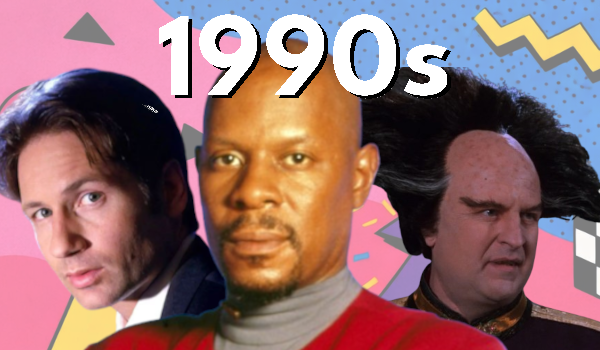
Peter Jurasik)
For science fiction television, the 1990s were a fantastic decade. Multiple Star Trek shows were dominating the airwaves. Thanks to the popularity of Trek, TV fans were demanding more science fiction adventures. Almost every major network had a flagship science fiction series to rival Trek, and TV creators were more than glad to meet the demand. Plus, advancing technology made high-quality special effects available to networks. The nineties had the most beloved science fiction shows, many of which could dominate the rankings.
- Seed #1: The X-Files – Paranoid, atmospheric, and incredibly difficult to beat.
The Total List
- The X-Files – Federal agents, limited by 90s tech.
- Star Trek: Deep Space Nine – Defiant-class ships and the station’s guns.
- Stargate SG-1 – Alien tech, Zat guns, and P90s.
- Babylon 5 – Massive space station; Starfuries.
- Star Trek: Voyager – High-end tech, plus Borg-enhanced gear.
- 3rd Rock from the Sun – Advanced aliens, but disguised as idiots.
- Farscape – Sentient ships and wild alien weaponry.
- Sliders – Inter-dimensional travel; zero combat tech.
- The Outer Limits (1995) – Often features world-ending tech/aliens.
- Earth: Final Conflict – Advanced alien race with bio-organic technology
- SeaQuest DSV – Most advanced sub in existence; talking dolphin.
- Space: Above and Beyond – Hard sci-fi space combat; railguns.
- Lois & Clark: The New Adventures of Superman – Superman. Enough said.
- Lexx – Lexx itself is a moon-sized “Key” capable of blowing up entire planets.
- Earth 2 – Frontier survivalists; basic blasters.
- Seven Days -They can redo any week; a powerful tactical edge.
- M.A.N.T.I.S. – A cool concept that struggled to find its footing; now a deep-cut cult memory.
2000s (The Modern Masters)
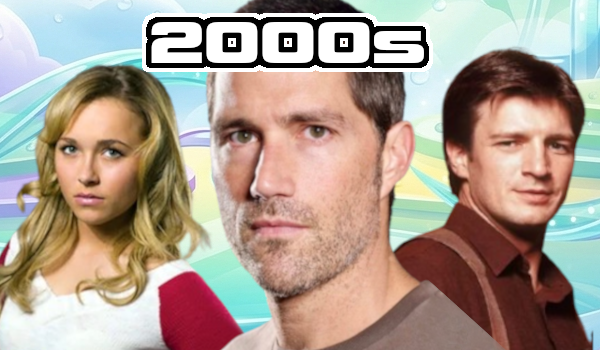
The turn of the millennium brought a seismic shift to science fiction. Moving away from the “Planet of the Week” format, the 2000s introduced gritty realism, complex political allegories, and the rise of the “Must-Watch” serialized epic. This region features some of the highest-rated shows in television history.
- Seed #1: Lost – The show that turned every viewer into an online theorist.
The Total List
- Lost – The Island has power, but characters are human.
- Battlestar Galactica 2004 – Gritty nukes, Vipers, and Cylon tech.
- Firefly – Outdated ship, but great crew/guns.
- Doctor Who (David Tennant) – Peak Time Lord power (The Time War).
- Fringe – High-end science, parallel worlds.
- Heroes – Time stop, flight, and regeneration.
- Stargate Atlantis – Ancient technology; city-ship shields.
- Star Trek: Enterprise – Early Federation; phase cannons.
- Smallville – Superman in training; massive raw power.
- The 4400 – A diverse range of superpowers.
- Torchwood – Stolen alien tech and Jack’s immortality.
- Eureka – Genius-level gadgetry and prototypes.
- Terminator: The Sarah Connor Chronicles – Terminators are nearly unstoppable but limited to hand-to-hand combat.
- Dollhouse – Brainwashing and personality imprinting.
- Andromeda – Sentient warship with 40 self-destructs.
- Jericho – Survivalists in a post-nuclear town.
- Flash Gordon 2007 – Often cited as a “missed opportunity” compared to the 1980 film or the comics.
Predictions & “Cinderella” Watch
Every tournament has its “bracket busters,” and the Decades of Destiny challenge is no different. While the #1 seeds like Star Trek: TNG and The X-Files have the name recognition, the following shows are primed for a deep run.
The Ultimate Cinderella: #12 Firefly (2000s Region)
Don’t let the seeding fool you. Despite airing only 14 episodes, the Browncoat fanbase is one of the most mobilized voting blocs in the galaxy.
- The Prediction: We expect Firefly to easily cruise past the early rounds, potentially knocking out a top-seeded prestige drama in the Sweet 16. It is the ultimate “giant killer.”
The Nostalgia Threat: #5 Land of the Lost (1970s Region)
While newer fans might look at the practical effects and see camp, Gen-X voters remember the sheer terror of the Sleestaks.
- The Prediction: If the 70s region turns into a nostalgia battle, look for the Marshall family to outrun higher seeds that lack the same childhood emotional connection.
The “Cult” Powerhouse: #3 Babylon 5 (1990s Region)
In the “Region of Death,” Babylon 5 is a #3 seed that plays like a #1. Because it was one of the first shows to master long-form serialization, its fans are fiercely protective of its legacy.
- The Prediction: A potential Elite Eight matchup between Babylon 5 and The X-Files could be the most-voted match of the entire tournament.
The “Expert” Final Four Prediction
If we look at the data—balancing mainstream popularity with “cult” mobilization—here is our early look at the potential Decades of Destiny Final Four:
- 70s: The Six Million Dollar Man
- 80s: Star Trek: The Next Generation
- 90s: The X-Files
- 00s: Battlestar Galactica (2004)
How to Participate & Vote
Ready to crown the GOAT? Participating in the Decades of Destiny bracket is simple. Whether you’re a tactical “bracketologist” or just want to support your favorite childhood show, here is how you can get involved:
1. Download Your Printable Bracket
Before the first round begins, grab the official Decades of Destiny 64-Show PDF. Print it out, fill in your winners, and share a photo of your predictions on social media using the hashtag #DecadesOfDestiny.
[Download the PDF of the Official 2026 Bracket Here]
2. Cast Your Votes
The tournament is divided into four era-defining regions. Voting for each round will open on the following schedule:
- First Four: Opens March 16
- Round of 64: Opens March 19
- Round of 32: Opens March 21
- Sweet 16: Opens March 26
- Elite 8: Opens March 28
- The Final Four: April 4
- The Championship: April 6
Where to Vote: All official polls will be hosted right here on The Geek Twins. Simply scroll to the current “Active Matchups” section and select your winners!
3. Join the Conversation
Don’t let your favorite show fall into the “Region of Death” without a fight!
- Comment: Defend your picks in the comments section of each post.
- Share: Use the social share buttons to rally your fellow fans on X (Twitter), Facebook, and Instagram.
- Predict: Think you know who will win it all? Tell us your Final Four picks early to earn “Expert” bragging rights.
The Road to the GOAT: What’s Your Prediction?
We’ve seen the heavy hitters, survived the “Region of Death,” and analyzed the eras that built the sci-fi landscape. But a bracket is just a piece of paper until the fans start voting.
Science fiction has always been about more than just special effects; it’s about the stories that stuck with us, the characters who felt like family, and the visions of the future that still keep us up at night. Whether you’re a die-hard Trekkie, an X-Phile, or a Cylon-hunter, your voice is what determines the true Greatest of All Time.
How to Make Your Voice Heard
- Cast Your Vote: Scroll up and use the interactive poll to weigh in on today’s featured matchups.
- Download the Bracket: Grab the [PDF version] and see if you can predict the Final Four before the results come in.
- Join the Debate: Head to the comments and tell us: Who is your #1 overall seed, and which show was the biggest snub in the Selection Committee?
Who do you think is the GOAT of science fiction television?
Discover more from The Geek Twins
Subscribe to get the latest posts sent to your email.
