


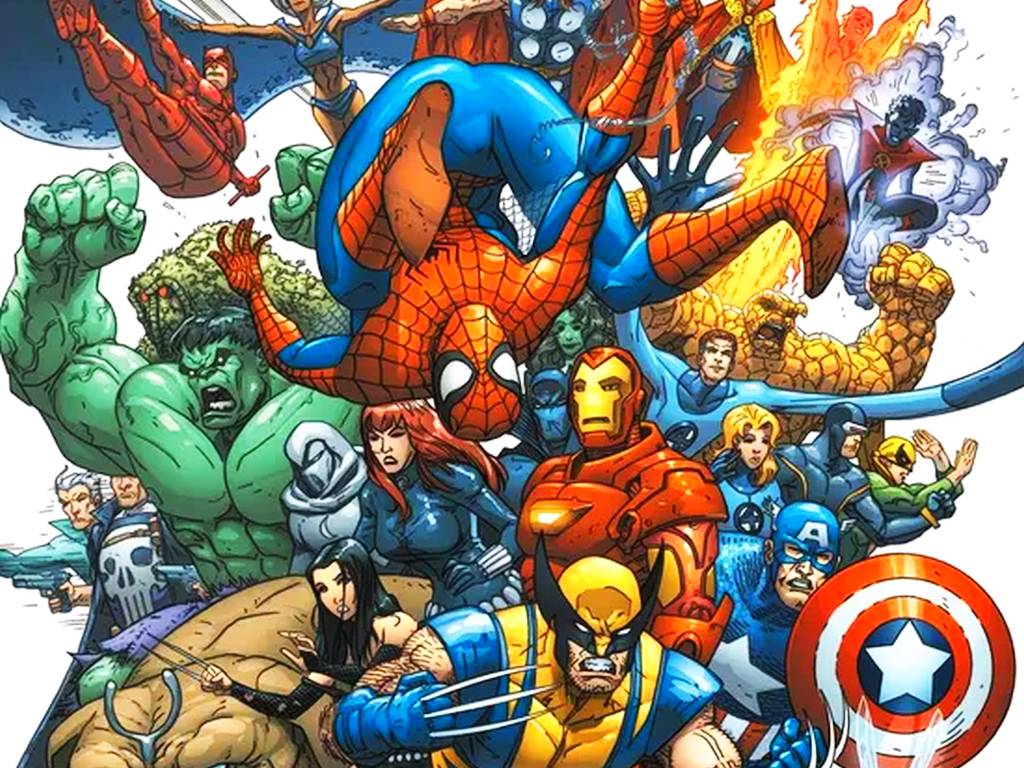
Marvel fans waited over two decades to see the X-Men fight alongside the Avengers. The wait wasn’t creative — it was corporate. A 1993 licensing deal handed X-Men film rights to 20th Century Fox, splitting mutants from the rest of Marvel’s cinematic universe. Disney’s massive acquisition of Fox finally reunited the characters. This is the full story of how it happened.
Table of Contents
The Original 1993 Rights Deal

Marvel wasn’t always the comics juggernaut it is today. Back in the 90s, the company teetered on the edge of bankruptcy and needed cash fast. DC, meanwhile, was cleaning up with movies like Christopher Reeve’s Superman and Tim Burton’s Batman. Plus Nielsen-record TV shows like the 1960s Batman and Wonder Woman gave DC success off the pages of the comic books. But by the 1990s, Marvel’s small-screen wins, like 70s-era The Incredible Hulk, were long gone, and duds like Howard the Duck didn’t help. The less said about that, the better (looking at you, Jeffrey Jones).
So the company let other studios take a crack at Marvel characters. It wasn’t just X-Men. This same cash-strapped era sent Spider-Man to Sony and bounced Hulk between studios for years. Licensing was survival, not strategy. Nobody at Marvel in 1993 was thinking about a future Marvel Cinematic Universe, because there wasn’t one yet. That year, 20th Century Fox picked up the rights to the X-Men and related villains for $2.6 million — a steal considering what the franchise would eventually be worth.
The exact deal details are under wraps, but we know it granted Fox exclusive film rights to the X-Men property, with a key wrinkle: Fox had to start producing a new movie every two to seven years, or the rights would revert to Marvel. So Fox got to work.
The Fox Era of X-Men Films
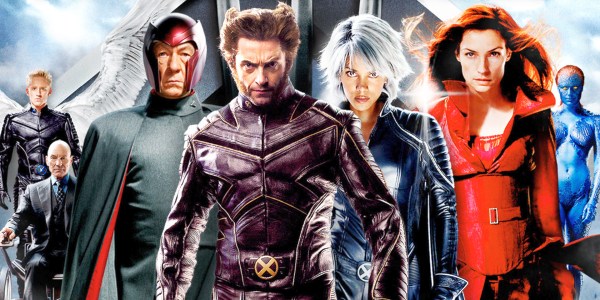
Fox released the first X-Men movie in 2000 and struck gold. It quickly became the eighth-highest-grossing film of 2000 domestically and ninth worldwide. With its gritty tone and black leather suits, it became the standard for superhero movies in the future. The sequels dropped about every three years until the third film, X-Men: The Last Stand. After that, Fox decided to focus on its most popular character, Wolverine. The Wolverine solo films didn’t do so well and led to the studio rebooting the franchise with a new timeline in 2011 with First Class. They also spun off the fan-favorite character Deadpool into a solo series.
This strategy worked for a long time, and the studio kept the clock running to maintain control. Unfortunately, the golden goose started producing rotten eggs. Starting with Apocalypse, the movies started bombing like Wolverine in Hiroshima. By the time 2017 rolled around, the studio created a standalone Logan film that effectively retired the character and set the franchise out to pasture. But the plan had worked out for decades, and Fox made billions worldwide.
The Disney-Fox Merger Explained
Fans spent years wishing the rights to the X-Men would return to Marvel. There was even a fan petition to give the licensing rights back to Marvel. In 2019, they got their wish. Disney struck a deal in 2017 to acquire the (briefly renamed) 21st Century Fox studio. The deal officially closed in 2019 for a “paltry” $71.3 billion. You can tell Marvel was getting cheap. Not only did they get the X-Men, but they also scooped up Fantastic Four, Avatar, and Fox’s film library.
At last, the stage was set, but there was one final hurdle to overcome. Before the sale, the studio had contracts with actors that reportedly forbade recasting until 2025. This also meant the studio couldn’t even think about recasting the actors. That’s why you had a 70-year-old Wolverine and a 90-year-old Professor Xavier waiting in the wings for Avengers: Doomsday. But that all changed last year.
How the Rights Returned to Marvel

When Disney got its hands on the X-Men film rights, it took the characters completely out of Fox’s hands. There were a bunch of X-Men and mutant projects in the works at the time. Channing Tatum’s long-gestating Gambit solo film, an X-Force team-up spinoff, and an X-23 movie starring Dafne Keen were all deep in development. Disney scrapped them all in May 2019, wiping Fox’s entire X-Men slate clean in one move. Even Dark Phoenix, the last mainline entry, got gutted, with planned sequel threads chopped out before release. If you’re wondering if Dark Phoenix or X-Men: The Last Stand is better, we got you covered.
The last project standing was The New Mutants. Originally slated for 2018, the horror-tinged spinoff got bounced across release dates for two straight years, caught between reshoots, the Disney-Fox merger, and finally a pandemic. When it hit theaters in August 2020, it became the tragic swan song of the Fox film era. The New Mutants wasn’t a disaster, but it landed more like a strange afterthought than the fresh new branch of the franchise Fox once envisioned.
At last, Marvel had full creative control over the X-Men on film after 26 years.
X-Men’s Future in the MCU

Mutants have already been creeping into the MCU for years. When the Ms. Marvel series arrived, they confirmed that Kamala Khan is a mutant. Patrick Stewart reprised Professor X in Doctor Strange in the Multiverse of Madness, and Kelsey Grammer brought Beast back in a post-credits scene for The Marvels. Both cameos hinted at a bigger integration to come. That integration accelerated fast in 2026, when Marvel confirmed the original Fox-era cast, including Patrick Stewart, Ian McKellen, James Marsden, Rebecca Romijn, Alan Cumming, and Kelsey Grammer, would return for Avengers: Doomsday, marking the X-Men’s true MCU debut.
That reunion, though, is a send-off rather than a fresh start. Following 2027’s Avengers: Secret Wars, Marvel is recasting the X-Men entirely for a new, standalone film. Jake Schreier, fresh off directing Thunderbolts*, is helming the reboot, with Sadie Sink, Kit Connor, Christopher Abbott, Samara Weaving, Inde Navarrette, Maya Boyd, and Adam Driver already announced as the new lineup. The film is set to open in theaters on May 5, 2028, positioning it as one of the first major releases of Marvel’s next chapter.
Kevin Feige has resisted calling it a full reboot, framing Secret Wars instead as a “reset” that resets the MCU’s timeline and clears space for new versions of long-running characters. Either way, the message is clear: after decades bouncing between studios, the X-Men are no longer guests in the Marvel Cinematic Universe. They’re about to become its centerpiece.
Conclusion
The road from Fox’s 1993 acquisition to Disney’s $71.3 billion deal reshaped Marvel’s cinematic future. What started as a financial rescue for a struggling comics publisher became one of the biggest rights reunions in film history. With mutants now heading toward the MCU, the wait fans endured for decades is finally paying off.
Did the Disney-Fox deal change how you see the MCU’s future?
Drop your thoughts in the comments below, and share this article with fellow X-Men fans on social media to keep the mutant hype alive!
Related Posts
- Updated: “Visual Guide to Marvel Character Live-Action Rights” Infographic by The Geek Twins
- Who Owns The Movie Rights To Marvel Characters in 2024
- 7 Reasons DARK PHOENIX Movie is Worse (and Better) Than THE LAST STAND
- Who Owns the Live-Action Movie Rights to Marvel Characters in 2022?
- Stan Lee Says Marvel Is “Working On” X-Men Movie Rights
Discover more from The Geek Twins
Subscribe to get the latest posts sent to your email.
