


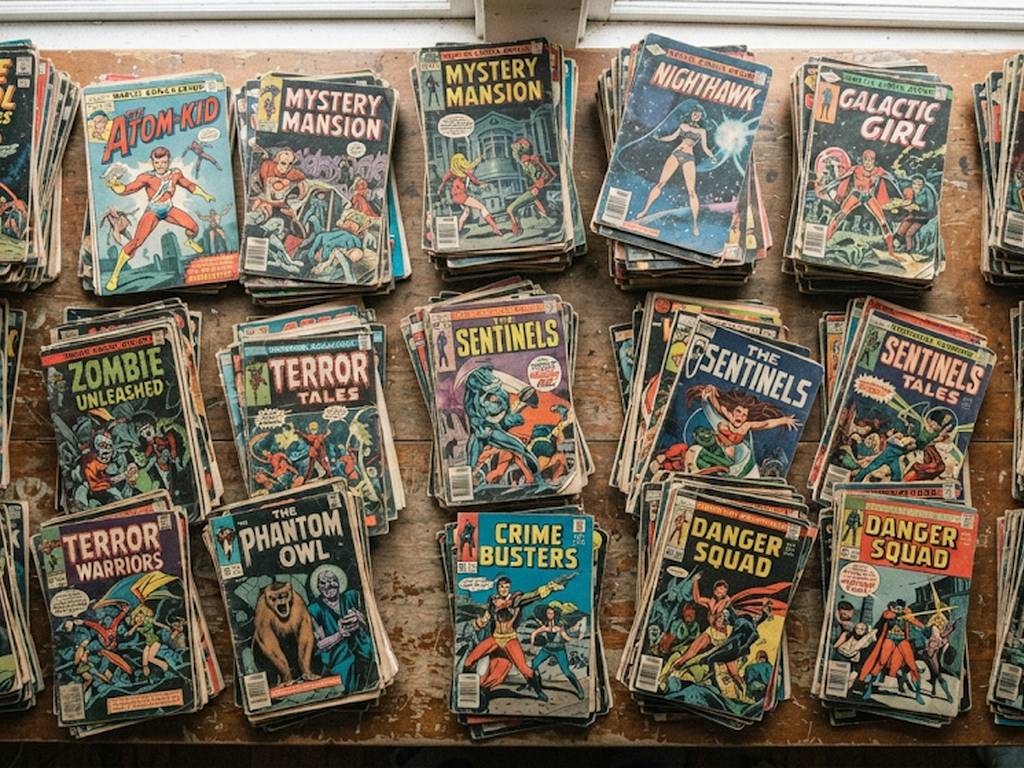
Let’s get the uncomfortable truth out of the way first. Comic book collecting can absolutely eat your paycheck alive. Between $5 cover prices, endless variants, and graded slabs priced like used cars, the hobby looks expensive. However, building a comic book collection on a budget is totally doable. You just need to shop smarter than the guy buying every incentive variant on Wednesday.
In this guide, we break down proven ways to grow your stack of Marvel, DC, and indie comics for less. Dollar bins, library apps, pull list discounts, and a few sneaky tricks all made the cut. So grab your longbox, and let’s save you some cash.
Heads up: This post contains affiliate links. As an Amazon Associate, we earn from qualifying purchases. It doesn’t cost you anything extra, and it helps keep The Geek Twins running.
Table of Contents
- Why Comic Book Collecting on a Budget Works
- Set a Comic Collecting Budget You Can Keep
- Pick a Collecting Focus Before You Spend
- Dig Through Dollar Bins and Back Issue Boxes
- Use a Pull List to Unlock Comic Shop Discounts
- Trade Paperbacks vs. Single Issues: Which Saves More?
- Read Free Digital Comics With Your Library Card
- Marvel Unlimited vs. DC Universe Infinite on a Budget
- Score Massive Digital Bargains With Humble Bundle
- Plan Ahead for Free Comic Book Day 2027
- Hunt Comic Lots at Yard Sales, Flea Markets, and Online
- Haggle Smart at Comic Conventions
- Budget Traps Every Collector Should Avoid
- Protect Your Collection With Affordable Storage
- Track Your Collection to Avoid Duplicate Buys
- FAQ
Why Comic Book Collecting on a Budget Works
Here’s a little secret the speculators won’t tell you. Most of the fun in comic collecting happens when you actually read the books. Shocking, we know. A comic book collection on a budget focuses on stories you love, not books sealed in plastic forever. That shift alone saves serious money.
Budget collecting also rewards patience. Instead of panic-buying hot books on release day, you wait, research, and pounce. Consequently, you often pay a fraction of what the hype crowd paid months earlier. Cheap comics have a funny way of showing up once everyone stops screaming about them.
Plus, a budget keeps the hobby fun for the long haul. Collectors who blow their savings in year one usually burn out by year two. Meanwhile, the slow-and-steady crowd keeps building and keeps enjoying it.
One more thing before we dive in. Never treat your comics like a retirement account. Values rise, values crash, and nobody knows which variant becomes the next big key. Collect because you love the medium. If something gains value later, great. Just consider it a bonus, not a business plan.
Set a Comic Collecting Budget You Can Keep
Step one sounds boring, but stick with us. Before you buy a single cheap comic, pick a monthly number. Write it somewhere you can’t ignore it. Many starter guides suggest somewhere between $30 and $80 per month. However, the right budget is whatever you can spend without sweating the electric bill.
Next, split that budget into buckets. For example, put half toward new releases, a chunk toward back issues, and a little toward supplies. Bags and boards aren’t glamorous, but they add up fast. Planning for them now beats the surprise later.
Then track everything. Seriously, everything. A quick Google Sheet or a collection app works fine. Log the date, the book, and what you paid. After a few months, you’ll see exactly where your comic collecting money goes. Spoiler alert: it’s probably the variants.
Finally, roll leftover cash forward. Didn’t spend your full budget this month? Great. Toss the extra into a “big buy” fund. Eventually, that fund covers a pricier key or a fat omnibus without wrecking your finances. Building a comic book collection on a budget isn’t about never splurging. It’s about splurging on purpose.
Pick a Collecting Focus Before You Spend
Walking into a comic shop without a plan is like walking into Costco hungry. You’ll leave with too much stuff and a vague sense of regret. That’s why a clear focus matters so much for a comic book collection on a budget.
Start by picking a lane. Maybe you love one character, like Spider-Man or Batman. Perhaps you follow a team, a writer, an artist, or a specific era. Any focus works, as long as it narrows your shopping list.
Short, complete runs also beat random scattered issues. A finished twelve-issue story feels way better than forty unrelated #1s. Additionally, complete runs are easier to hunt down in bargain bins full of cheap comics.
Following creators is another sneaky budget move. Favorite writers and artists often hop between publishers. Their lesser-known work at smaller publishers usually sells for pocket change. Consequently, you get great stories without paying the Big Two premium.
Most importantly, a clear focus kills impulse buys. When a shiny new #1 catches your eye, ask one simple question. Does this fit my collection? If not, put it back. Your wallet will thank you, even if your inner completionist sulks a little.
Dig Through Dollar Bins and Back Issue Boxes
Ah, the dollar bin. It’s the closest thing comic collecting has to a treasure chest. Every serious bargain hunter knows the thrill of flipping through a longbox of cheap comics. Somewhere in there, a gem is waiting for you.
Back issue bins at many local shops price books around $1 to $2 each. That’s less than half the cover price of a new comic. Meanwhile, the stories inside are often just as good. Sometimes they’re better.
Bronze Age and Modern Age reading copies show up constantly in these bins. Shops get flooded with them, so they price them to move. As a result, you can grab whole story arcs for the price of one new issue. Look for consecutive issue numbers sitting together. Previous owners often dumped full runs at once.
Don’t be shy about bulk deals, either. Grab a stack of twenty and ask the owner for a better price. Many shops happily knock off a few bucks to clear inventory. Worst case, they say no, and you still leave with cheap comics.
Honestly, dollar bin diving is the backbone of any comic book collection on a budget. Bring your want list, block out an hour, and dig in. Your knees may complain, but your budget won’t.
Use a Pull List to Unlock Comic Shop Discounts
If you buy new comics regularly, a pull list is basically free money. Okay, not literally free. Still, it’s close enough for budget collecting.
Here’s how it works. You tell your local comic shop which series you want. Then the shop reserves each new issue under your name. No more racing in on Wednesday, only to find an empty shelf.
The real perk for your budget? Many shops reward pull list subscribers with a discount. Ten percent off is common, and some shops scale it up for bigger lists. Over a year, those savings add up to several free comics.
However, there are a few catches. Some shops require a minimum number of titles to qualify. Others expect you to empty your box regularly. Ask about the rules first, so nobody ends up annoyed.
Also, trim your list often. Stopped enjoying a series? Drop it now instead of hate-reading for six more months. That habit alone keeps a comic book collection on a budget lean.
As a bonus, pull lists help your shop order accurately. That means less waste and more shelf space for smaller indie titles. Supporting your shop while saving cash on comic collecting? That’s a win-win.
Trade Paperbacks vs. Single Issues: Which Saves More?
Every comic fan eventually faces the big debate. Should you buy single issues or wait for the trade? For budget collecting, the answer usually leans toward trades.
Trades typically collect five or six issues in one book. As a result, the cost per issue usually drops below buying singles. Plus, you get the whole story at once, without monthly cliffhanger anxiety.
Used trades push the savings even further. Library sales, thrift stores, and used bookstores often sell them for a few dollars each. Online marketplaces also overflow with gently read copies. Cheap comics in book form? Yes, please.
That said, singles still have their place. If you collect key issues or love the floppy format, singles make sense. Some collectors simply enjoy the weekly shop ritual, and that’s totally valid.
The smart move is mixing both. Buy singles for your absolute favorite ongoing series. Then wait for trades on everything else. Waiting also lets you skip series that fizzle out early. Nobody wants nine issues of a canceled book.
For a comic book collection on a budget, trades deliver the most story per dollar. Bonus: your shelves will look pretty great, too.
Need a place to start? Saga Vol. 1 packs six issues of wildly fun space opera into one cheap trade. It’s basically a gateway drug for budget collectors. Prefer capes? Batman: Year One delivers a complete, gritty origin story without decades of homework. Meanwhile, Ms. Marvel Vol. 1: No Normal is the perfect fresh-start Marvel pick for brand-new readers. And if you like your heroes a little messy, Hawkeye Vol. 1: My Life as a Weapon proves you don’t need superpowers to steal the show. Finally, All-Star Superman tells a complete, heartfelt Man of Steel story that even Superman skeptics love.
Read Free Digital Comics With Your Library Card
Here’s the cheapest tip in this entire guide. Your library card unlocks thousands of comics for exactly zero dollars. Yes, legally. No sketchy websites required.
Hoopla leads the pack for free digital comics. Most library systems offer it, and its comics have no waiting list. Just log in with your library card and start reading. Hoopla carries Marvel, DC, Image, IDW, Dark Horse, and plenty more.
Libby, from OverDrive, is another solid option. Its comics catalog varies by library, but it often leans toward graphic novels. Checking both apps gives you the widest selection.
So how does this help a comic book collection on a budget? Simple. Read first, buy later. Test-drive a series digitally before spending real money on physical copies. If you love it, buy the trade. If it stinks, you lost nothing but an evening.
Additionally, library apps help you catch up on long runs cheaply. Want to read 100 issues before the new series starts? Do it for free, then spend your budget on what matters.
Honestly, if your library card isn’t part of your comic collecting routine, you’re leaving free comics on the table.
Marvel Unlimited vs. DC Universe Infinite on a Budget
Maybe you devour comics faster than your library can keep up. In that case, a digital subscription might rescue your budget. Marvel and DC both offer all-you-can-read services.
Marvel Unlimited runs $9.99 a month or $68.99 a year on the App Store. That annual plan works out to under $6 a month. Meanwhile, the catalog spans decades of Marvel history.
DC Universe Infinite costs $7.99 monthly or $74.99 yearly for the standard tier. The Ultra tier jumps to $12.99 monthly. On the standard plan, new books arrive roughly six months after their print release.
Now for some quick math. A new comic costs around $4 to $5. So an annual plan costs less than two cheap comics per month. If you read more than that, the subscription pays for itself fast.
Here’s a sneaky budget trick, too. Rotate services instead of paying for both. Binge Marvel for a month, then cancel and switch to DC. Repeat as needed. Your reading list stays full, and your bank account stays happy.
Just remember, a subscription means you don’t own the books. For pure reading, though, it’s a fantastic tool for building a comic book collection on a budget.
Score Massive Digital Bargains With Humble Bundle
If you’ve never checked Humble Bundle for comics, prepare to feel slightly betrayed by your past self. These pay-what-you-want bundles regularly offer huge digital comic collections for pocket change.
Publishers like Image, IDW, Dynamite, Valiant, and Fantagraphics all run bundles. For example, one recent Valiant omnibus bundle listed $435 in retail value for just $18. That’s not a typo. That’s budget collecting at its finest.
Here’s how it works. You pick a price tier, pay what you want, and download the comics. Higher tiers unlock more books. Even the top tier often costs less than a handful of new single issues.
The catch? Bundles only run for a limited window, usually a week or three. So check the site regularly, or follow comics news accounts that announce new drops. Missing a great bundle stings. Trust us.
Bonus points: many comic bundles support charities like BINC and the Hero Initiative. Those groups help comic shop workers and creators in need. So you score cheap comics and good karma at the same time.
For anyone building a comic book collection on a budget, Humble Bundle is a no-brainer. Your digital library will grow faster than your physical shelves ever could.
Plan Ahead for Free Comic Book Day 2027
Free comics. Two of the best words in the English language. Mark your calendar, because Free Comic Book Day 2027 lands on Saturday, May 1.
Every year, participating shops hand out specially printed comics at no cost. Publishers use the event to launch new series and hook new readers. Translation: you get free stuff, and publishers get your attention. Fair trade.
However, the real budget move goes beyond the freebies. Many shops run big sales that same day. Back issue discounts, trade deals, and bargain bin blowouts are common. Some shops even bring in local creators for signings.
So plan ahead. Set aside part of your monthly budget specifically for that Saturday. Grab your free books first, then hit the sales with your want list. Consequently, you stretch your comic collecting dollars further than any other day of the year.
A quick heads-up, though. Not every shop participates, and rules vary. Some shops limit free books per person. Check your local shop’s plans a week or two ahead.
The 2027 title list usually drops in the spring. We’ll update this guide once publishers announce it. Until then, keep that first Saturday in May clear for some cheap comics and free ones.
Hunt Comic Lots at Yard Sales, Flea Markets, and Online
Sometimes the best cheap comics aren’t in comic shops at all. Yard sales, flea markets, and online marketplaces hide some seriously great deals.
Yard sales and flea markets are especially fun for budget collecting. Sellers often just want the boxes gone. As a result, you can sometimes grab books for under 50 cents each. Occasionally, you even stumble onto full runs of something great.
Online lots work in a similar way. Sellers on eBay and Facebook Marketplace bundle dozens of comics together. Buying in bulk drives down your per-book cost dramatically. That’s perfect for a comic book collection on a budget.
However, lots come with risks. Always inspect the photos closely. Look for water damage, torn covers, missing pages, and that suspicious musty-basement vibe. If the photos look blurry or vague, ask for better ones.
Also, factor shipping into your math. A $20 lot with $25 shipping isn’t a bargain anymore. Divide the total cost by the books you actually want. Lots often include filler you’ll never read.
Finally, resell or trade the duds. Flip unwanted books back to bargain bins or swap them with friends. That way, even the filler helps fund your comic collecting habit.
Haggle Smart at Comic Conventions
Comic conventions feel like Disneyland for collectors. Unfortunately, they can drain your budget just as fast. Luckily, a few smart moves turn cons into bargain hunting grounds.
First, set a con budget before you walk in. Write it down or tell a friend, whatever keeps you honest. The dealer room is designed to make you forget your limits. Don’t let it win.
Next, shop late on the final day. Dealers hate hauling heavy longboxes back home. Consequently, many slash prices during the last few hours of a show. Patience pays off here, literally.
Bundling also works wonders. Pick out several books from one dealer and ask for a package price. Most dealers happily round down to close a bigger sale. Polite haggling is part of con culture.
Bring cash, too. Some dealers knock a little off to skip card processing fees. Plus, cash makes your budget feel real. Watching bills leave your wallet hits different than tapping a card.
Finally, scout the dollar and quarter bins at dealer booths. Dealers often bring piles of cheap comics just to clear space. For a comic book collection on a budget, those bins are pure gold. Your feet will hurt, but your wallet will survive.
Budget Traps Every Collector Should Avoid
Even smart collectors fall into a few classic traps. Dodge these, and your comic book collection on a budget stays healthy.
Trap one: variant covers. Publishers pump out a ridiculous number of variants for big books. Chasing them all turns one $5 comic into a $50 problem. Pick the cover you like best and walk away.
Trap two: speculation hype. Every week, someone online swears a random issue is the “next big key.” Sometimes they’re right. Usually, they’re not. Buying five copies hoping for a payday is gambling with extra steps.
Trap three: grading everything. Professional grading costs real money, plus shipping and insurance. If a book’s value doesn’t clearly beat those fees, skip the slab. Most cheap comics simply don’t need one.
Trap four: duplicate buys. You’d be amazed how often collectors buy the same issue twice. It happens to everyone eventually. Ask us how we know.
Trap five: FOMO purchases. Limited editions and store exclusives create urgency on purpose. Before buying, ask whether you’ll still want it in six months.
Ultimately, budget collecting means buying what you love, not what the internet says you should love. Stay focused, stay skeptical, and your comic collecting money will last much longer.
Protect Your Collection With Affordable Storage
Buying cheap comics only to let them rot in a damp garage defeats the purpose. Fortunately, protecting your collection doesn’t require a vault. It just takes the right basic supplies.
Start with bags and boards. Every comic should go in a properly sized bag with an acid-free backing board. Regular cardboard releases acids that stain and yellow paper over time. Acid-free boards prevent that damage.
Size matters, too. Golden, Silver, Bronze, and Modern Age comics have slightly different dimensions. So buy bags sized for each era, and your books won’t slide or bend.
For everyday books, polypropylene bags work just fine. Save pricier Mylar sleeves for key issues and your most valuable comics. That approach keeps your budget in check without risking your best books.
Next, store everything upright in longboxes or a sturdy comic storage box. Stacking comics flat crushes the ones at the bottom. Keep boxes in a cool, dry room away from sunlight. Yes, that rules out the Arizona garage in July.
The cost is surprisingly manageable. One storage guide prices 500 bags, 500 boards, and five longboxes at under $220. Buying supplies in bulk drops the per-book cost even further.
Protecting a comic book collection on a budget means your bargains stay sharp for years. Future you will be grateful.
Just starting out? Grab this 25-pack of comic bags and boards on Amazon. It’s cheap insurance for all those dollar bin treasures.
Track Your Collection to Avoid Duplicate Buys
Here’s the least exciting tip in this guide. However, it might save you the most money. Track your collection from day one.
Tracking prevents the dreaded duplicate buy. Without a list, you’ll stand at a dollar bin wondering if you own issue #14. Spoiler: you probably do. A quick search on your phone settles it instantly.
You can use a dedicated collection app or a simple Google Sheet. Either works for budget collecting. At minimum, log the title, issue number, condition, and price paid. Don’t feel like building one from scratch? Grab our free Comic Book Collection Tracker for Google Sheets. It tracks your spending, your want list, and your monthly budget automatically.
That price column matters more than you think. After a few months, you’ll see exactly where your budget goes. Maybe you spend way more on new releases than you realized. Maybe cheap comics from bargain bins make up most of your favorites. Either way, the data helps you adjust.
Additionally, keep a want list on your phone. Before every shop visit, con, or yard sale, check it. That list keeps you focused and blocks impulse buys.
Finally, update your tracker right after every purchase. Waiting means forgetting, and forgetting means duplicates. Building a comic book collection on a budget comes down to small habits. This one is tiny but mighty.
Frequently Asked Questions
What is the cheapest way to start a comic book collection?
Start with free library apps like Hoopla and Libby. Then fill the gaps with $1 to $2 back issue bins. Free plus cheap is a tough combo to beat.
How much should I spend on comics each month?
Whatever you can spend without side-eyeing your bank app. Many starter guides suggest $30 to $80 per month.
Are trade paperbacks cheaper than single issues?
Usually, yes. Trades often cost less per issue, especially when you buy them used.
Is Marvel Unlimited worth it on a budget?
For back-catalog readers, absolutely. The $68.99 annual plan works out to under $6 a month.
When is Free Comic Book Day 2027?
Free Comic Book Day 2027 falls on Saturday, May 1. Clear your schedule now.
How do I protect cheap comics without overspending?
Use polypropylene bags with acid-free boards for everyday books. Save the pricier Mylar sleeves for key issues.
Can a budget comic collection be a good investment?
Collect for fun first. Values rise and fall, so never treat comics as a financial plan.
Building a comic book collection on a budget comes down to patience and a few smart habits. Start with a monthly number and a clear focus. Next, dig through bargain bins and put your library card to work. Then let a pull list quietly shave costs off new releases. Finally, protect every find with affordable bags and boards. Over time, those small wins stack into a collection you genuinely love. Best of all, you never have to hide the receipts from anyone.
What’s the best comic bargain you’ve ever scored? Brag about it in the comments below. We won’t judge your dollar bin addiction, promise. If this guide saved you a few bucks, share it with a fellow collector on Facebook, X, Instagram, or Bluesky. And subscribe to our YouTube channel for comic reviews, hauls, and more budget-friendly tips.
Discover more from The Geek Twins
Subscribe to get the latest posts sent to your email.
