


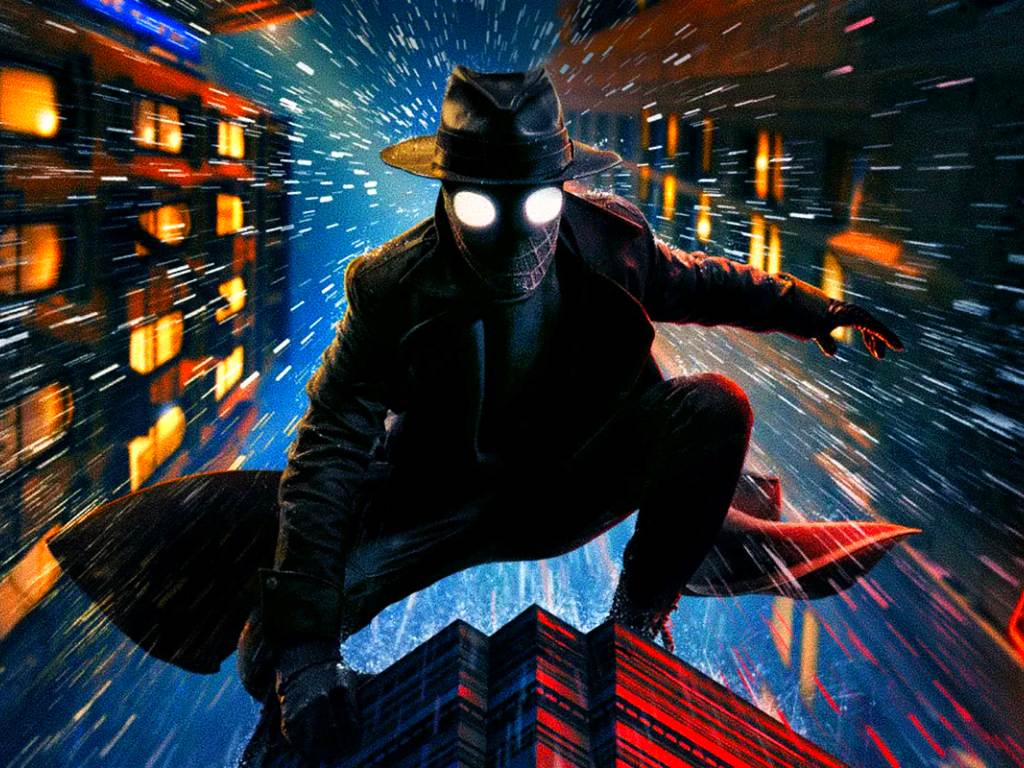
Spider-Man Noir is one of the most unique versions of Spider-Man ever created, transforming Marvel’s friendly neighborhood hero into a hard-boiled vigilante operating in the crime-ridden streets of 1930s New York. First introduced during Marvel’s Noir line of comics, Spider-Man Noir quickly became a fan favorite thanks to his darker tone, detective-inspired adventures, and striking black costume. With the character gaining even more attention through Spider-Man: Into the Spider-Verse and the new live-action series, many fans are wondering: who exactly is Spider-Man Noir and how did he become Marvel’s darkest web-slinger?
What Is Spider-Man Noir?
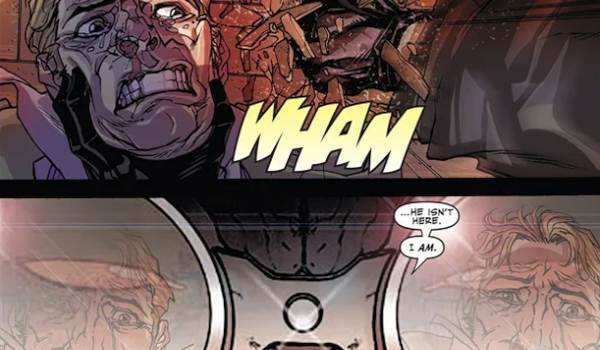
Spider-Man Noir is an alternate-universe version of Peter Parker from Earth-90214. Unlike the main Marvel Universe, he lives in a world shaped by the Great Depression. While Earth-616 exists in the present day, the Noir universe is set during the massive economic collapse from 1929 to 1939.
As a result, a darker version of Spider-Man is born. Superhero action is blended with crime noir storytelling, creating a world filled with corruption, poverty, and violence. Furthermore, the noir genre is defined by moral ambiguity, cynical antiheroes, and a pessimistic view of society. Consequently, Spider-Man Noir stories feel far grittier and more grounded than traditional Spider-Man adventures.
The Comic Book Origin of Spider-Man Noir
In the Noir comic books, Peter Parker is also raised by his Aunt May. But in the 1930s version she’s an outspoken activist. Meanwhile, Uncle Ben is murdered like in the traditional story. But in this case he’s killed for standing up to the mafia. Peter finds his mangled body that he believes was mauled by dogs.
How Peter Parker Became Spider-Man
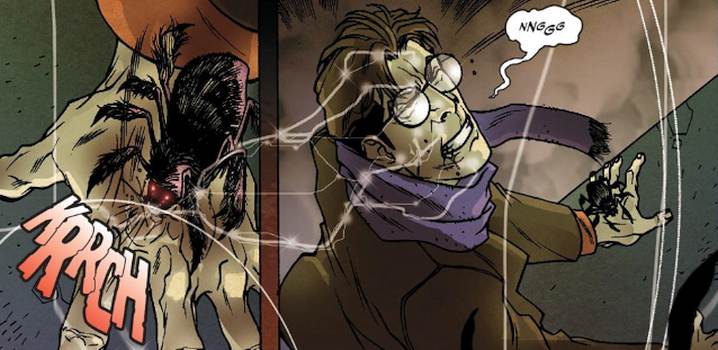
As a young photographer, Parker joins Ben Urich at The Daily Bugle to investigate corruption and organized crime. However, his origin differs greatly from the traditional Spider-Man story.
Instead of being bitten by a radioactive spider, he is bitten by a mystical spider hidden inside an ancient artifact. Consequently, he develops enhanced abilities. His Spider-Man costume is Uncle Ben’s black war uniform. He uses it to strike fear in the powerful crime bosses throughout New York City.
The world of Spider-Man Noir is much darker than the traditional Marvel Universe. Furthermore, pulp fiction and detective novels heavily influence the series. Social inequality and political corruption are also explored. Because of this, more lethal threats are faced than in most traditional Spider-Man stories.
Who Created Spider-Man Noir?
Spider-Man Noir was created by writers David Hine and Fabrice Sapolsky. Meanwhile, the gritty artwork was provided by Carmine Di Giandomenico.
The character debuted in 2009 as a four-issue miniseries. It was released as part of Marvel Noir, a publishing line that reimagined Marvel heroes in darker settings. Additionally, noir versions of Iron Man, X-Men, and Punisher were introduced through the same imprint.
The comic book origin of Spider-Man Noir quickly stood out because of its mature themes, historical setting, and crime-focused storytelling.
Spider-Man Noir’s Powers and Abilities
Spider-Man Noir is often seen as a darker version of Peter Parker. However, his abilities remain closely tied to the classic Spider-Man concept. At the same time, his methods and mindset are far more brutal and grounded in noir-style crime storytelling. As a result, his powers feel familiar but used in very different ways.
Similarities to Classic Spider-Man
Spider-Man Noir retains many core abilities seen in Earth-616 Spider-Man. These powers are enhanced versions of human traits rather than magical skills.
He possesses superhuman strength, allowing him to overpower armed criminals and gang leaders. His agility is also heightened, making him extremely fast and acrobatic in combat situations.
Additionally, wall-crawling abilities are fully present. He can scale buildings and move across surfaces with ease. His heightened senses also help him detect danger before it strikes, similar to the traditional “spider-sense.”
Because of these similarities, Spider-Man Noir still feels like Peter Parker at his core. However, the environment he operates in forces those abilities to be used in far more dangerous situations.
What Makes Him Different?
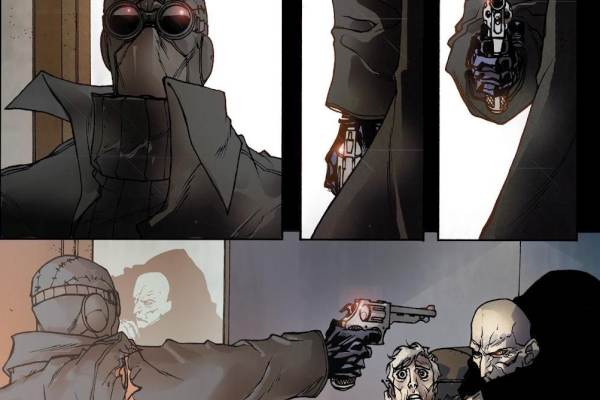
Although the powers are similar, Spider-Man Noir operates in a much darker and more violent world. This difference fundamentally changes how his abilities are applied.
Unlike the classic version, Spider-Man Noir uses black organic webbing instead of mechanical web-shooters. This natural ability reinforces his more primal and gritty design.
In addition, he is far more willing to use lethal force. Firearms are used when necessary, and criminals are sometimes killed if he believes it is justified. This approach puts him in direct conflict with traditional Spider-Man ethics.
His detective skills are also more prominent. Instead of relying only on heroics, investigations, surveillance, and interrogation are often used to dismantle criminal networks.
As a result, intimidation and stealth are just as important as strength. Spider-Man Noir is not just a superhero—he is also a noir-style vigilante operating in a corrupt and dangerous world.
Spider-Man Noir’s Greatest Enemies
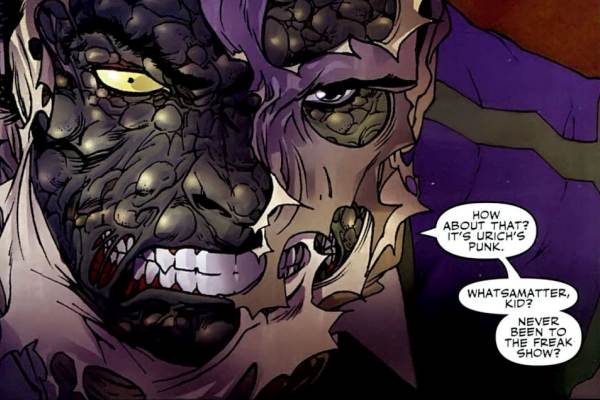
Spider-Man Noir faces some of the darkest reinterpretations of classic Spider-Man villains. However, these enemies are not just re-skinned versions of familiar characters. Instead, they are reshaped to fit a corrupt, Depression-era world where crime often feels more powerful than superpowers. As a result, the threats he faces are more grounded, violent, and politically charged than in most Spider-Man stories.
Major Villains
One of the primary antagonists in Spider-Man Noir’s world is Norman Osborn, who operates under the criminal identity known as the Goblin. In this version, Osborn is not just a corporate villain but a full-scale crime boss. His syndicate is shown to control much of New York City, including corrupt politicians, police influence, and business leaders.
Because of this control, Osborn’s power extends far beyond physical confrontation. Entire systems of authority are manipulated to maintain his criminal empire.
Other classic villains are also reimagined in disturbing ways. The Vulture is portrayed as a grotesque carnival “freak,” reinforcing the world’s darker tone. Similarly, Kraven is reinterpreted as an animal trainer with violent tendencies, rather than a traditional super-powered hunter.
Together, these enemies form a network of crime rather than isolated supervillains. Consequently, Spider-Man Noir is constantly surrounded by threats on multiple levels of society.
Why These Villains Matter
These villains are important because they define the tone of the entire Spider-Man Noir universe. Instead of flashy battles between heroes and costumed supervillains, the focus is placed on organized crime, corruption, and systemic decay.
As a result, the stakes are made far more personal for Peter Parker. He is not simply stopping robberies or individual criminals. Instead, he is challenging the structures that control an entire city.
Furthermore, the villains reinforce the noir theme of moral ambiguity. Justice is not always clear, and victory often comes at a cost. In this way, Spider-Man Noir is pushed into difficult ethical decisions that the traditional Spider-Man rarely faces.
Ultimately, these enemies transform the story into a crime-driven noir drama, where survival, corruption, and moral compromise are just as important as superhuman strength.
Spider-Man Noir and the Spider-Verse
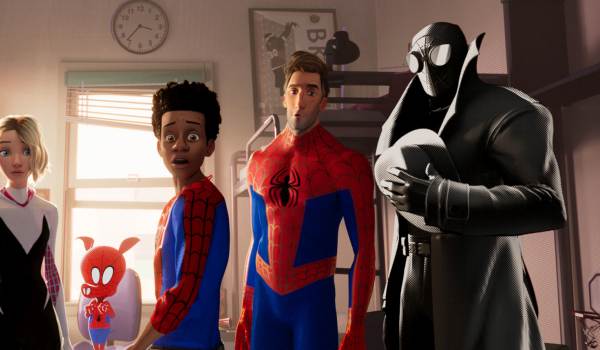
Spider-Man Noir isn’t just in the comic books. He has also jumped to the silver screen. The monochromatic hero was introduced through the magic of animation. He first appeared in Spider-Man: Into the Spider-Verse in 2018. This film introduced several alternate Spider-Man variants and immediately expanded the Spider-Verse concept. He arrived with his signature noir attitude, “with the wind” and “smelling of rain,” which made him instantly memorable.
He was voiced by Nicolas Cage, who delivered a performance based on a classic Humphrey Bogart-style detective voice. This exaggerated noir interpretation helped define the character for modern audiences. He later reprised the role in the sequel Across the Spider-Verse and is expected to return in the upcoming sequel. Despite limited screen time, his appearance became one of the most recognizable alternate Spider-Man versions.
Before the films, Spider-Man Noir was known mainly to comic book fans. However, after his animated debut, he became one of the most popular Spider-Verse characters. As a result, Marvel significantly expanded his presence across different media. A new Spider-Man Noir five-issue miniseries was released, written by Margaret Stohl. Additionally, Spider-Man Noir: The Gwen Stacy Affair was published as a tie-in to expand the universe further.
Expanding Beyond the Comics
Spider-Man Noir was first introduced to wider audiences through Spider-Man: Into the Spider-Verse. Through animation, he was transformed from a niche comic character into a mainstream Marvel figure. His black-and-white design and 1930s aesthetic helped distinguish him from other Spider-variants.
Because of the film’s success, interest in Marvel Noir storytelling increased significantly. The character was no longer limited to older comic book readers. Instead, he was introduced to a new generation of fans who were discovering the Spider-Verse for the first time.
Following this success, Marvel expanded his comic book presence. New miniseries and reprints of older stories were released. As a result, Spider-Man Noir became a key entry point into the darker side of Marvel storytelling.
Impact on Popularity
The impact of Spider-Man Noir’s appearance in the Spider-Verse films was immediate and significant. He became one of Marvel’s most recognizable alternate Spider-Men almost overnight. His unique design, tone, and personality helped him stand out in a crowded multiverse.
New readers were inspired to explore Marvel Noir comics after seeing him in the films. As a result, older stories gained renewed attention, and the character’s popularity increased across both comic and animation audiences.
Furthermore, Marvel expanded the Spider-Verse concept as a whole. Spider-Man Noir’s success proved that even darker, niche versions of iconic characters could succeed on a global stage. This helped strengthen Marvel’s focus on multiverse storytelling across comics, animation, and future adaptations.
Upcoming Spider-Man Noir Projects
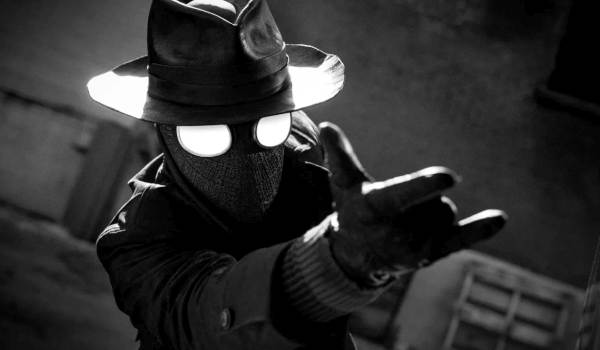
Spider-Man Noir is not limited to comics and animation anymore. His presence has continued to expand across multiple Marvel platforms. As interest in the Spider-Verse has grown, additional projects featuring the character have been developed to explore his darker, detective-driven world in greater depth.
New adaptations and spin-off content are being used to further expand the Marvel Noir universe. Because of this, Spider-Man Noir has transitioned from a niche alternate version into a key part of Marvel’s multiverse storytelling strategy. His continued popularity has encouraged more experimental takes on the character in both animation and live-action formats.
What Fans Should Know
Fans should know that Spider-Man Noir is no longer just a supporting variant in the Spider-Verse. Instead, he is now being treated as a standalone character with his own evolving mythology.
Live-action expansion and streaming projects have increased interest in his story. As a result, Marvel has continued exploring darker, more mature interpretations of the character. This includes deeper focus on detective storytelling, crime drama elements, and noir-style worldbuilding.
Additionally, future appearances are expected to continue building on both his comic book origins and his Spider-Verse popularity. The character is now positioned as a long-term part of Marvel’s multiverse expansion.
How the Spider-Noir TV Series Changed the Character
The Spider-Noir TV series marked a major shift in how the character is portrayed. Rather than being a supporting alternate Spider-Man, he was reimagined as a fully developed lead character in a live-action setting. This change significantly expanded his narrative depth.
The series redefined Spider-Man Noir by emphasizing his detective skills and moral complexity. Instead of focusing purely on superhero action, the tone was shifted toward crime investigation and noir storytelling. As a result, the character was given a more grounded and cinematic identity.
This adaptation also modernized the character while still preserving his original Depression-era aesthetic. Because of this balance, the series appealed to both longtime comic fans and new audiences.
Bringing Spider-Man Noir to Live Action
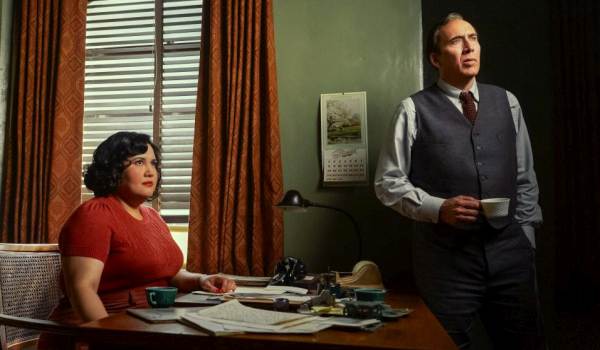
Spider-Man Noir was brought to live action in a way that stayed true to his noir roots while expanding his role in the Marvel universe. The series premiered on MGM+ and Prime Video in 2026, introducing a darker, more mature interpretation of the character.
Nicolas Cage returned to the role, this time portraying Ben Reilly, also known as The Spider. This reinterpretation allowed the show to explore a different angle of the Spider-Man mythos while still maintaining the noir identity.
To enhance the tone, the series was released in both black-and-white and color versions. This stylistic choice reinforced the classic noir atmosphere while also appealing to modern streaming audiences. As a result, the show stood out visually from other superhero adaptations.
Differences Between the Show and the Comics
While the Spider-Noir TV series is inspired by Marvel Noir comics, several key differences were introduced. Most notably, the series focuses on Ben Reilly instead of Peter Parker. This shift allowed a fresh interpretation of the Spider-Man Noir identity.
The show also expands the supporting cast and introduces new villains that were not present in the original comics. Because of this, the narrative feels more like an extended crime drama rather than a direct adaptation.
Additionally, the tone is more investigative than action-heavy. While the comics emphasized violent crime and moral conflict, the series places stronger focus on detective work, surveillance, and uncovering conspiracies.
Despite these changes, the core noir themes remain intact. Corruption, moral ambiguity, and urban decay are still central to the story.
Why the Series Matters
The Spider-Noir series is important because it expands the character beyond animation and comics into live-action storytelling. This transition demonstrates that alternate Spider-Man versions can successfully carry their own standalone narratives.
As a result, Spider-Man Noir has gained a broader audience and increased cultural relevance. The series also strengthened interest in Marvel’s darker storytelling styles, proving that noir-inspired superhero stories can succeed on streaming platforms.
Furthermore, the show has opened the door for future Marvel Noir adaptations. It has also reinforced the idea that the Spider-Verse can support multiple tones, genres, and character interpretations.
Ultimately, the series has elevated Spider-Man Noir from a cult favorite into a major multiverse figure, expanding both his legacy and the future potential of Marvel’s alternate universe storytelling.
Conclusion
Spider-Man Noir stands out as one of Marvel’s most compelling alternate Spider-Men, blending classic superhero traits with hard-boiled detective storytelling. From his Depression-era origins in the comics to his expanded presence in the Spider-Verse and live-action adaptation, the character continues to evolve without losing his gritty identity. Whether portrayed as Peter Parker or reimagined through Ben Reilly, Spider-Man Noir proves that great heroes can take many forms while still fighting the same core battle against corruption and injustice.
What do you think of Spider-Man Noir?
Spider-Man Noir proves that Marvel’s darkest Spider-Man still has a strong grip on fans across comics, animation, and live-action. What do you think of this gritty version of Peter Parker (or Ben Reilly)?
Drop your thoughts in the comments—especially whether you prefer Spider-Man Noir over the classic Spider-Man.
If you enjoyed this breakdown, share it on social media and tag fellow Spider-Verse fans who need to catch up on the origin of Marvel’s noir web-slinger.
Related Posts
- Review: Spider-Man: Into The Spiderverse (2018) is a Triumph For Spider-Man
Fans - Special Spider-Man: Into the Spiderverse Youth Screening with John
Singleton and Peter Ramsey - 10 Amazing Spider-Man Characters Sony Should Turn Into TV Shows
- Every Character Confirmed (and Rumored) for Spider-Man: Brand New Day
Discover more from The Geek Twins
Subscribe to get the latest posts sent to your email.
