


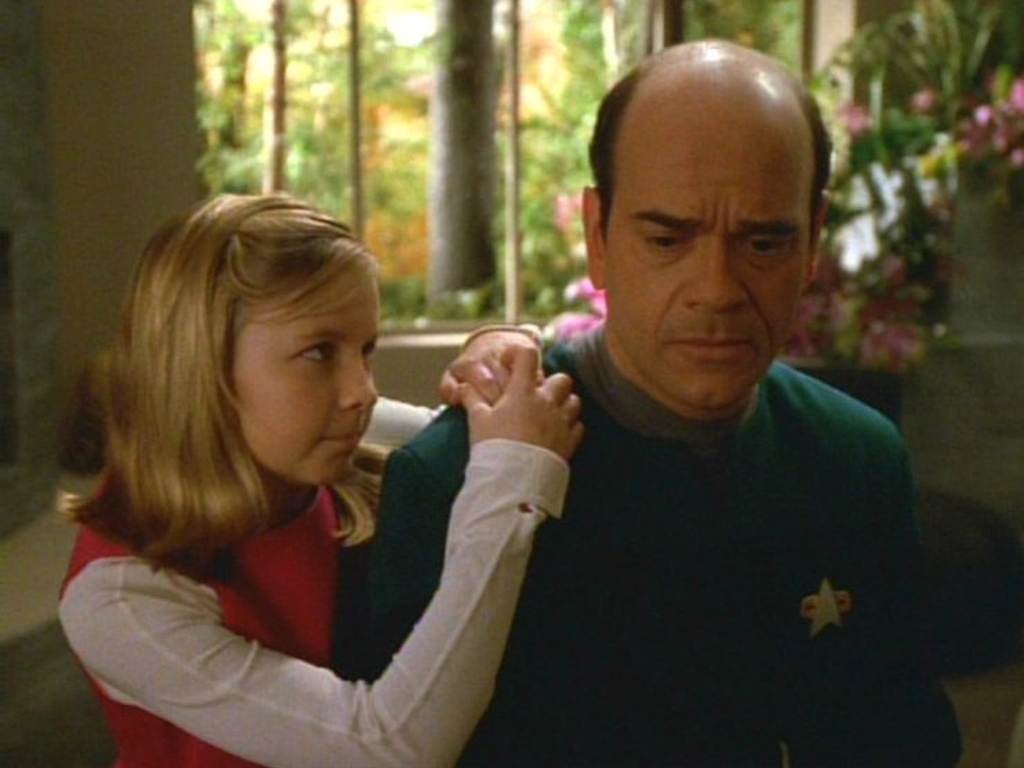
On this week’s episode of Starfleet: Academy, the show delved into the painful history of the EMH Doctor’s children. Star Trek: Voyager gave viewers more than space travel — it gave emotional arcs and unconventional families. While most fans remember the Doctor as Voyager’s holographic chief medical officer, his journey toward understanding humanity included creating a holographic family with children. Meanwhile, four Borg children rescued aboard Voyager — especially Icheb — challenged notions of identity, growth, and belonging in the Delta Quadrant. This post dives into those stories and why they remain memorable among sci-fi fans.
Who Are the Doctor’s Children in Star Trek: Voyager?
In Star Trek: Voyager, the Doctor — the Emergency Medical Hologram portrayed by Robert Picardo — has several very different sets of “children” during the series. From season 3 to season six, while not literally his offspring, the Doctor plays a key role in helping them grow. Together, these children — both holographic and former Borg — shape the Doctor’s emotional evolution and deepen one of the show’s most compelling character arcs.
1. The Doctor’s Holo-Family (Jeffrey, Belle) — Episode Deep Dive
First Appearance: Star Trek: Voyager (1997): S3E22 – “Real Life”
Release Date: April 23, 1997
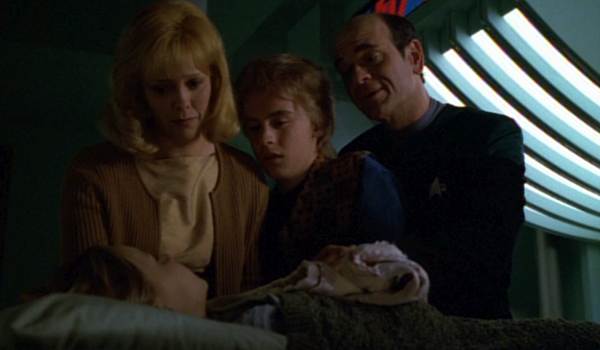
In season three of Voyager, the ship encountered massive subspace distortions. While this is happening, the Doctor creates a simulated family on the Holodeck. After the dinner with Tom Paris and B’Elanna Torres, she introduces imperfections to help him have a more realistic experience. Unfortunately, this also creates unintentional strife in the quartet. When he tries to introduce rules to help the family, they lash out in anger. Except for his daughter, while the other members rebuke him, Belle tells him she understands and loves him.
But later, she ends up in the hospital after an accident during a game of Parrises Squares. When it’s clear the girl will die from her brain injuries, he stops the program and leaves. In the sickbay, Paris convinces the doctor that he has to face the pain of loss. The episode ends with the four by Belle’s bedside as she dies, overcome with grief.
It’s one of the most moving and devastating episodes of Voyager. But in the episode “The Life Of The Stars,” it’s revealed that the pain of losing his simulated family still weighs on him 800 years later. His girl’s death forced him to distance himself from SAM. But this isn’t the only death that hurts the EMH.
2. One – The Holographic Son
First Appearance: Star Trek: Voyager (1998): S5E02 – “Drone”
Release Date: October 21, 1998
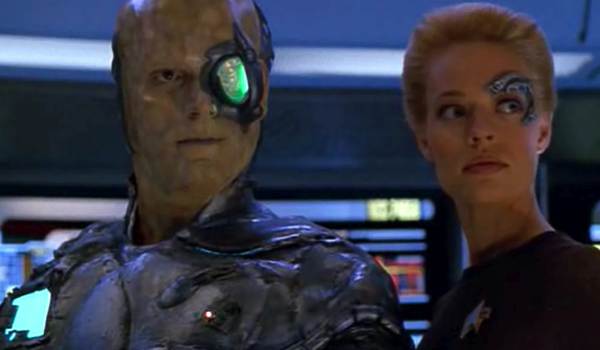
The Doctor was stuck in the Sickbay until he found a device called a holoemitter. After a transporter accident, it malfunctions, merges with Borg nanobots, and incorporates Ensign Mulchaey’s DNA. It creates a Borg child that grows and is given the designation “One.” The Doctor jokes that it has “his father’s intelligence and his mother’s humor.”
Unfortunately, it accidentally sends a message to the Borg Collective. One manages to destroy the ship during the battle with the Borg Sphere. But he realizes that if he’s assimilated, the Borg would become too powerful to defeat. He sacrifices himself to save the universe. Although One is like a surrogate son, he doesn’t seem too broken up about it.
3. Jason Tabreez
First Appearance: Star Trek: Voyager (2000): S6E12 – “Blink of an Eye”
Release Date: January 19, 2000
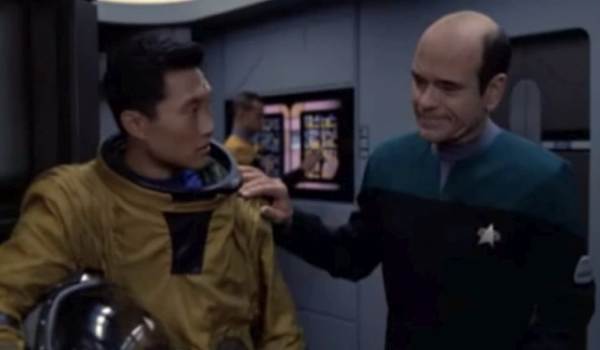
When the USS Voyager orbits a planet that rotates 58 times per minute, subspace interference traps the ship in its orbit. Because of the planet’s unique makeup, time operates differently on the surface. When the planet faces devastating earthquakes from the ship, they send the Doctor down to investigate.
When the EMH returns, it’s been three years for him. He tells them that the spaceship is seen as a god and is driving innovation. The crew saves an astronaut from the surface who has lived many years while in space. Before he returns home, the Doctor reveals that he had a family and a child named Jason on the planet. When the pilot asks how he can have a son as a hologram, he’s told, “It’s a long story.”
We can only imagine how the Doctor must feel as he tells the man his son is dead. But maybe he had children or grandchildren. Another painful death of a child for the holographic doctor.
4. The Borg Children (Icheb, Mezoti, Azan, and Rebi)— Four Unexpected Additions to Voyager
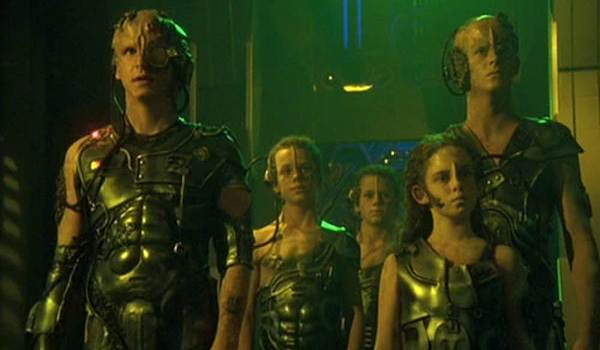
First Appearance: Star Trek: Voyager (2000): S6E16 – “Collective”
Release Date: February 16, 2000
When the Delta Flyer runs into a Borg Cube, it chases them to the ship. But after a confusing and inefficient battle, they realize the Borg ship doesn’t have thousands of drones as they usually do. It only has five. Captain Janeway negotiates a trade for their lost crewmen, and they discover the ship is populated by children. It turns out a pathogen killed all the adult Borg units. The five are desperately trying to repair communications to contact their brethren.
Later, they find out that because of the pathogen and age of the occupants on the ship, the Collective has abandoned the children. As Voyager’s Emergency Medical Hologram, he oversees the delicate removal of their Borg implants and monitors their physical and psychological recovery, effectively serving as both physician and caretaker. His interactions with the children highlight his growing compassion and bedside manner, especially as he navigates their fear, confusion, and emerging individuality. While Seven of Nine often acts as their primary mentor, the Doctor plays a crucial role in guiding their transition from drones to autonomous beings, reinforcing his own evolution from a simple medical program into a figure capable of empathy, mentorship, and parental concern.
Icheb — The Most Memorable Borg Child
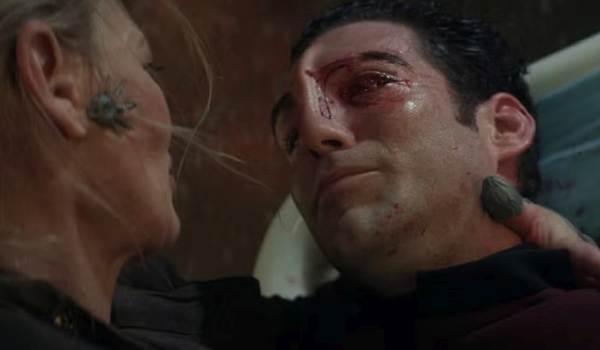
In Star Trek: Voyager, Icheb becomes the Borg child most closely connected to the Doctor after being rescued from the Collective in “Collective.” The Doctor performs the delicate procedures to remove Icheb’s implants and oversees his recovery, forming a bond that grows into mentorship as Icheb develops a passion for science and Starfleet ideals, often assisting in Sickbay. Their relationship highlights the Doctor’s evolution from a clinical hologram into a compassionate teacher and surrogate parental figure.
Icheb later returns in Star Trek: Picard, where it is revealed he joined Starfleet and maintained ties with Seven of Nine; his tragic fate in that series underscores the lasting emotional impact of his journey — and the legacy of the Doctor’s care — beyond Voyager’s Delta Quadrant voyage. The fact that he was taken and tortured by a medical procedure makes his death especially tragic to the doctor.
Why These Characters Matter in Voyager
The Doctor’s children — both holographic and former Borg — are essential to Voyager’s exploration of identity and emotional growth. In “Real Life,” his holodeck family includes his wife Charlene and children Belle and Jeffrey (sometimes misremembered as Jason), and through them he experiences love, frustration, and devastating grief when Belle is fatally injured. That story forces the Doctor to confront what it truly means to care as a parent rather than merely simulate concern. Later, the rescued Borg children — including Icheb, Mezoti, Azan, and Rebi — further his development as he becomes not just their physician but a steady, compassionate guide during their transition from collective consciousness to individuality. Even the Borg child known as One (from a separate but thematically linked storyline) reflects Voyager’s recurring question: what defines personhood? Together, these young characters transform the Doctor from an emergency program into one of the series’ most emotionally complex figures, reinforcing Voyager’s message that family can be chosen, created, and fiercely protected — even by a hologram.
If you’ve ever wondered how the Doctor’s wit and humanity stack up against the rest of the Federation, check out where his home series lands in our ranking of every Star Trek show.
Conclusion
Whether you’re a longtime Star Trek viewer or discovering Voyager for the first time, the tales of the Doctor’s family and the Borg children showcase the show’s heart beyond science fiction. They remind us that even holograms and former drones can teach powerful lessons about connection, growth, and family.
Do you have a favorite moment involving Voyager’s four Borg kids or the Doctor’s faux family? Share it in the comments and follow us on social media for more Star Trek insights!
Discover more from The Geek Twins
Subscribe to get the latest posts sent to your email.
