


Discover how an ancient Greek tragedy inspired the creation of one of the most acclaimed Star Wars novels, blending myth, epic storytelling, and galaxy-spanning drama.
The planning for the novelization of Star Wars Episode III: Revenge of the Sith was completed prior to the controversy surrounding the film’s eventual release. To the older generation of fanboys, at least, Matthew Stover’s account of the movie’s events proved to be one of the redeeming features of George Lucas’ final chapter. As everyone knows, the generation that grew up watching it and the animated series was more accepting of the creator’s last contributions to the Star Wars universe.
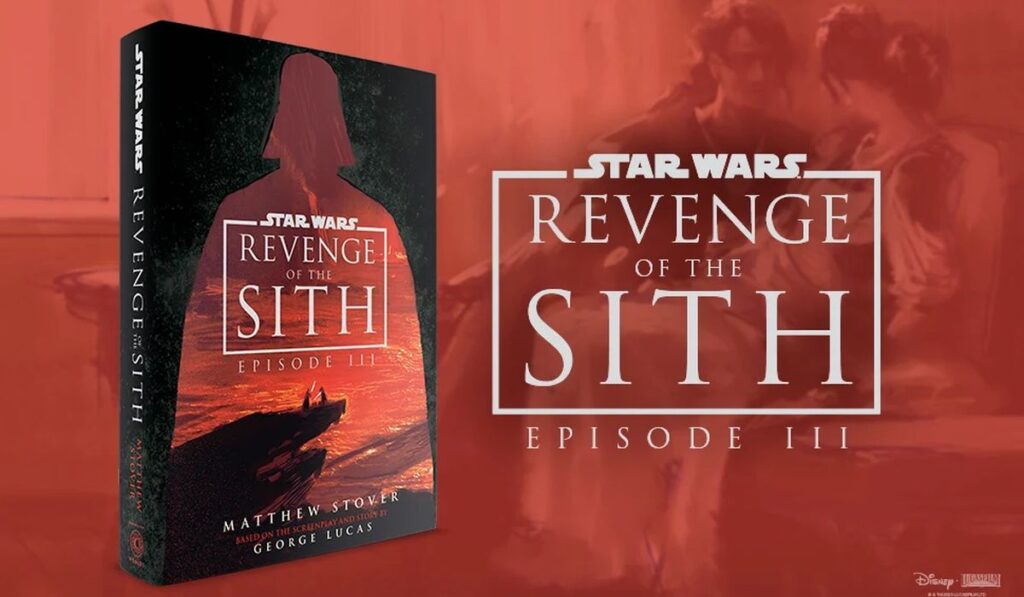
Stover revealed his new author’s note, which has been included in the book’s 20th anniversary re-release, in an exclusive interview with Entertainment Weekly. He talks about how he took a different approach to scripting the movie like a novel with George Lucas’ approval and how Greek tales served as inspiration.
The novel differs from the movie in that Stover was able to elaborate on Anakin’s viewpoint throughout his descent from the light side. And he was anxious about it from the beginning. “It had come to me during the panic attack I’d suffered after signing the contract to write this novelization, which had ignited because I’d foolishly committed to write the keystone in the arch of the Skywalker saga for the biggest audience of my career—and the entire Star Wars-loving universe would be hoping for a thrilling space opera, despite the plain fact that every main plot point had been spoiled for decades.”
Add to that the difficulty of producing a novelization without ever seeing the finished film because it wasn’t finished and wouldn’t be released before the book was sent to the printer, Stover added. All I would have would be the script and the collective Star Wars expertise at Lucasfilm. “My early training saved me then,” he said, explaining how the playwright found solace in the boundaries of classic theater mythology.
“More than 20 years before I signed that contract, I’d had the good fortune to study theater history under a professor who was an authority on ancient Greek drama. Every single one of the great Greek tragedians had faced exactly my trouble—their audience knew the story going in—and they had some tricks they would pull to make their plays dramatic anyway. I figured I could steal a couple of these for this book.
“The more I thought about Greek tragedy, the better it seemed to fit. The classical tragedies were drawn from Greek mythology and legend, right? Also—if I needed any further excuse—ancient Greek tragedies were traditionally performed as single acts without intermissions, like modern movies, and they were usually presented in actual, no kidding, wait for it . . . trilogies.”
“I hoped to present the story explicitly as a tragic myth, with language and style more formalized and darker in tone than people generally expect from Star Wars fiction. After all, I intended to argue that this story is special. It’s different from any other Star Wars story—not only because it’s the final film (or so we thought at the time), but because this story is the true foundation that underlies all the rest, and it should feel different from the very first page.”
Furthermore, his strategy would be influenced by the way that myth was used as a model for a large portion of Star Wars material in the Expanded Universe (before being decanonized). “But evoking the Greek tragedies was only part of my idea, and I expected that part to be an easy lift, for the reasons I sketched above. The rest, however, was gnawing holes in my stomach lining, because I wanted to fold in elements of the larger Star Wars Expanded Universe (EU).
“I desperately needed EU material to make this story work. Not because the EU had been part of my life ever since Splinter of the Mind’s Eye, and definitely not because it’d be extremely cool to incorporate elements of those stories into this novelization … I genuinely believed that I needed the EU to make this story work as a novel. It would give the story heft and texture. It would let me touch on where these people come from and where most of them are going to end up, and it would let me weave this specific narrative and its implications into the wider ‘historical’ context of the whole galaxy far, far away.”
The note’s best narrative was how he had gone to great lengths to plan and pitch to George Lucas, and how, when he asked the living icon how closely he should follow the screenplay, he received a startling response. Lucas freed him from seeing the film’s script as a limitation. “Don’t worry about that stuff. As long as you don’t violate the story, do whatever you want,” Lucas said to Stover. “Just make it good.”
What do you think about the upcoming book? Let us know in the comments below!
Discover more from The Geek Twins
Subscribe to get the latest posts sent to your email.
