


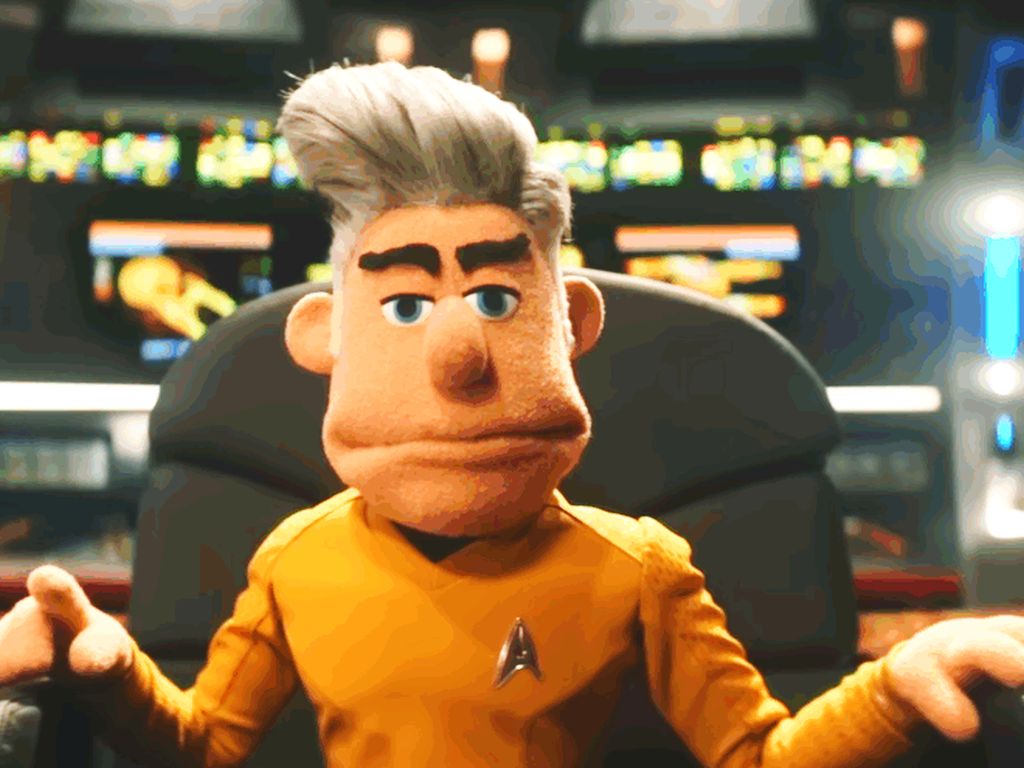
Star Trek: Strange New Worlds showrunners reveal that Seasons 4 and 5 will focus less on standalone concept episodes and return to a more traditional Star Trek storytelling style.
The show was created by Goldsman, Kurtzman, and Lumet for Paramount+. It is the 11th Star Trek series and it’s a spin-off of Star Trek: Discovery (2017–2024), which takes place in the decade preceding Star Trek: The Original Series (1966–1969) and centers on Anson Mount’s Captain Christopher Pike and the Enterprise’s crew in the twenty-third century.
SNW has earned praise for its bold storytelling, playful tone, and willingness to experiment with the genre. From musicals to body-swap comedies and courtroom dramas, the show has embraced the freedom of episodic television while keeping the spirit of Trek alive. But as the series nears its end, the showrunners have revealed that Seasons 4 and 5 will take a more traditional approach to storytelling.
The Shift in Storytelling
It sounds like we’ll be seeing fewer of these unconventional concepts in the future, even if we know that season 4 will eventually convert the team into puppets. In an interview with ScreenRant, co-showrunner Akiva Goldsman discussed how the show is changing in its final seasons:
Star Trek: Strange New Worlds co-showrunner Akiva Goldsman stated in an interview with Screen Rant that the last two seasons of the series will be less about the one-off idea episodes that have progressively grown in importance to the plot and more about concluding the series.
“We’re making season 5 now, we’re trending towards that, which is probably the center line of Star Trek, right?” Goldsman said. “We’re trending now, and beginning with season 4 and through season 5, to a much more singular sci-fi, action-adventure, emotional storytelling. And you know, the outliers are getting less and less, as we kind of focus on saying goodbye to each other and the fans.”
Returning to Classic Star Trek Roots
The decision to scale back the “outlier” episodes is part of a broader goal to align the show more closely with the spirit of classic Star Trek. Earlier series like The Next Generation and Deep Space Nine balanced episodic storytelling with overarching themes of exploration, moral choice, and human connection. The show plans to embrace that balance while streamlining its tone and narrative focus.
What Fans Can Expect in Seasons 4 and 5
Fans can expect the upcoming seasons to build on the strong relationships between Captain Pike, Spock, and the rest of the Enterprise crew. Character arcs that began in earlier seasons are expected to come full circle, offering resolution and emotional depth as the series concludes. This more serialized structure may allow the show to deepen its philosophical questions and thematic resonance—hallmarks of Star Trek at its best.
“The thing I will say about season 4 is, it’s in line with what we have done with the previous seasons, in the sense that we look at this like, ‘this could be our last season.’ So we treat it that way,” said Henry Alonso Myers. “What’s something that we want to try to do, that [we] have never done before? What is something we want to try to do a version of, that [past shows] have done before, but never in this way. So that’s what we do in season 4.”
Although SNW has never shied away from branching out into other genres, the numerous detours in season three have generated a lot of controversy. There were more tonal leaps than ever before, ranging from a murder mystery to a wedding comedy to a documentary to a sitcom-like story about four humans who were turned into Vulcans or Klingon zombies. After a record-breaking start to the season, the outcome was a mixed response from both fans and critics, as well as a decline from Nielsen’s Top 10.
Of course, some fans may miss the wilder, genre-bending experiments that made Strange New Worlds stand out from other Star Trek shows. Episodes like “Subspace Rhapsody” and “Those Old Scientists” demonstrated the show’s willingness to take risks and play with tone. But by focusing on a cohesive narrative in its final stretch, the series may leave a more unified and lasting impression.
According to Myers, the showrunners have been spiritually treating the series as though it might end at any time. That might help explain the show’s “go for broke” approach to releasing so many concepts in such a short amount of time.
The Legacy of Strange New Worlds
As Star Trek: Strange New Worlds prepares to wrap up, it continues to bridge the gap between the optimism of classic Star Trek and the character-driven drama of modern science fiction. Its final seasons promise to deliver the best of both worlds: the moral clarity and adventurous spirit that defined the franchise, paired with the emotional storytelling that made the show a fan favorite.
Whether you loved its experimentation or prefer a return to tradition, Strange New Worlds has proven that Star Trek can still boldly go where no series has gone before—and finish strong doing it.
(Via Worst Previews)
What do you think of the final season of Star Trek: Strange New Worlds? Let us know in the comments below!
Discover more from The Geek Twins
Subscribe to get the latest posts sent to your email.
