


Discover some fascinating behind-the-scenes facts about Captain America: The First Avenger (2011) — from hidden Marvel connections to how Chris Evans almost turned down the iconic role.
When the movie first hit theaters in 2011, it didn’t just introduce audiences to Steve Rogers — it laid the foundation for the entire Marvel Cinematic Universe as we know it today. From its World War II setting to the birth of the iconic shield, the film is packed with behind-the-scenes secrets and clever connections that even die-hard fans might have missed. Here are 13 fascinating facts about The First Avenger that reveal how this patriotic superhero leaped from comic book pages to cinematic legend.
1. Wolverine And Magneto Almost Appeared
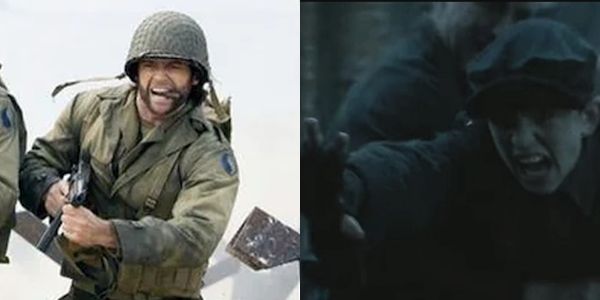
Fox was having too much fun to let Marvel play in its sandbox. You see, originally, James Logan Howlett (Wolverine) and Erik Lensherr (Magneto) were supposed to have cameos in the film. The movie is set during World War II. They both served during World War II (Logan as a soldier and Lensherr as a prisoner of war). So it made sense for the two Marvel characters to make an appearance. But, because Marvel didn’t have the rights, and Fox was planning the next X-Men movie reboot, they axed the cameos. For the same reason, a cameo with Namor the Sub-Mariner, who fought with the Invaders in WWII, was scrapped.
2. Will Smith Almost Played Captain America
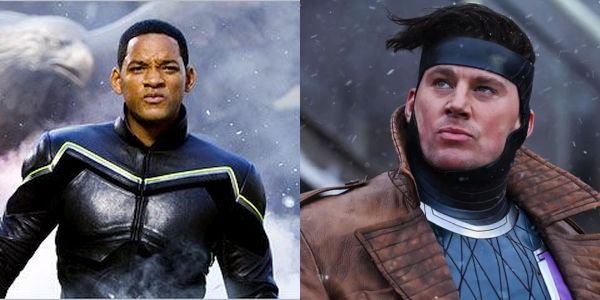
Channing-Tatum, Sebastian-Stan, Chris-Evans, and John-Krasinski were some of the names on the final shortlist for the lead role. Will Smith reportedly decided to turn it down. Mainly because Marvel insisted that all their stars sign long multi-picture contracts that span many years and films. While Sam Worthington and Will Smith were in preliminary discussions, both Kellan Lutz and Alexander Skarsgård tried out for the starring part. Chris Evans, who previously portrayed Johnny Storm/Human Torch in Fantastic Four (2005) and Fantastic Four: Rise of the Silver Surfer (2007), was cast in the role. Tatum and Krasinski would later play cameos in MCU movies, making a name for themselves.
3. Chris Evans Didn’t Use A Body Double for Skinny Steve
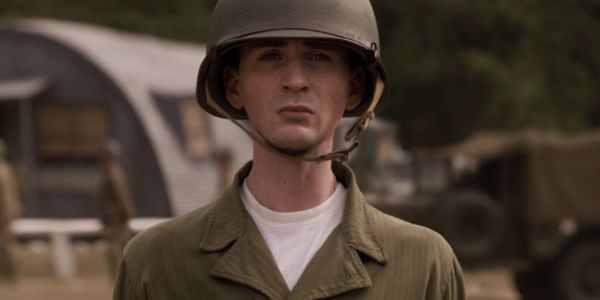
The studio originally wanted to use a skinny body double to produce Chris Evans’ “Skinny Steve”. But Evans carries himself in a very distinct way. So the filmmakers had Evans act out all the scenes and then used digital technology to shrink his physique. The shrinking process left space in the background, so many scenes had to be filmed in front of a green screen. Paul Warren, an experienced film double and actor known for prosthetic roles, was used in pre-production to develop the effect, while English Shakespearean-trained stage actor Leander Deeny was used on set. Together, they brought beanpole Captain America to life.
4. German Accents Motivated Actors
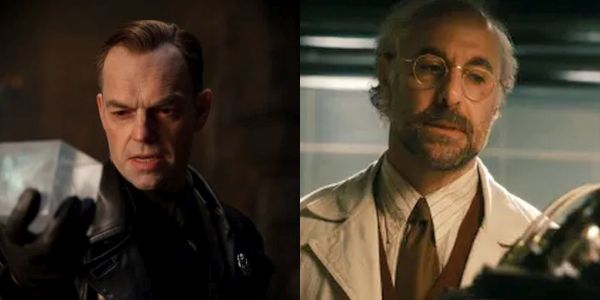
Because, apparently, a German accent is the Holy Grail for actors. So it’s not a huge surprise that they inspired one actor. But two? Stanley Tucci chose to play Dr. Abraham Erskine because it allowed him to adopt the German accent he had always wanted to do. Meanwhile, renowned German directors Werner Herzog and Klaus Maria Brandauer are said to have served as the inspiration for Hugo Weaving’s Johann Shmidt / Red Skull accent. He was evntually replaced, but his dedication is admirable.
5. Men In Black Easter Egg
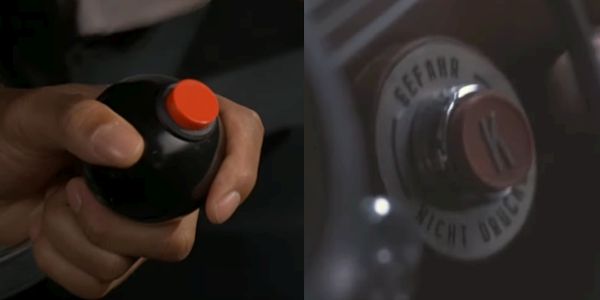
There’s a scene with a car chase on a runway, Tommy Lee Jones’ character, Phillips, pushes a red button in the German car that reads “Gerfar Nicht Drängen.” In German, this (loosely) means “Danger Do Not Push” in English, and it causes the car to accelerate down the runway. This is a reference to Men in Black when Jones’s character Kay cautions his partner Jay (played by Will Smith) not to “ever touch the red button.” Later on, Kay instructs Jay to “push the little red button” to send their car hurtling down a tunnel. If you think this is a coincidence, there’s a great big ‘K’ on the button.
6. Captain America Was Originally Not An MCU Film
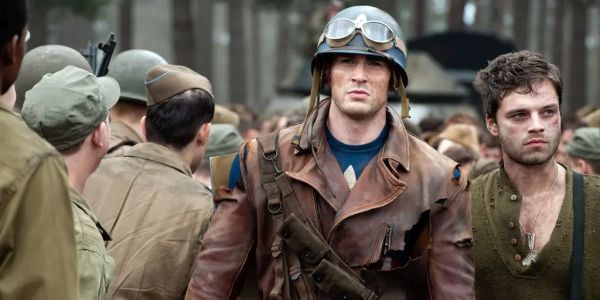
The first Captain America movie was originally intended to be a stand-alone movie. However, when Joss Whedon was hired to direct The Avengers (2012) and do rewrites on the script, he made changes to connect it to the Marvel Cinematic Universe. “I just got to make some character connections,” he later said. “The structure of the thing was really tight and I loved it, but there were a couple of opportunities to find his voice a little bit – and some of the other characters – and make the connections so that you understood exactly why he wanted to be who he wanted to be. And progressing through the script to flesh it out a little bit.”
7. Shield Car Door
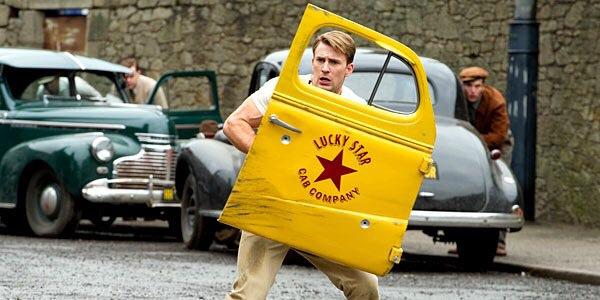
Steve picks up a taxi door while pursuing the Hydra agent after receiving the super soldier serum injection. ‘Lucky Star Cab firm’ is the name of the taxi. The logo, which circles the star, foreshadows and resembles the famous shield that Steve will later wield as Captain America.
8. Roger’s Blood Returns
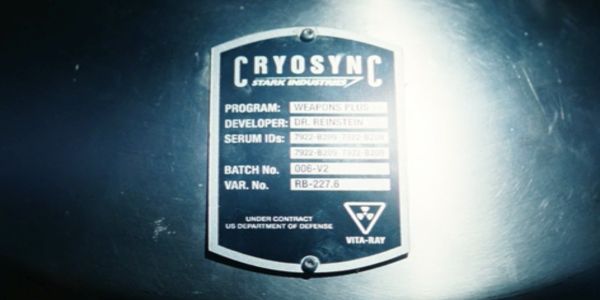
Two years before this film, we get an appearance of Steve Rogers’ blood in The Incredible Hulk. In that movie, the Hydra agent’s stolen bottle of serum is used to inject Emil Blonsky, who is then transformed into the Abomination. Even the refrigerated storage container has the words “Vita-Rays” and Stark Industries inscribed on it.
We see the experiment that created Captain America in this film. Despite numerous attempts to duplicate the Super-Soldier experiment, it only ever worked on Steve Rogers for an unidentified reason. The government collected 12 samples of Rogers’ blood, but by 1946, they had wasted the majority of them without any success.
9. Arnim Zola Experimented on Bucky
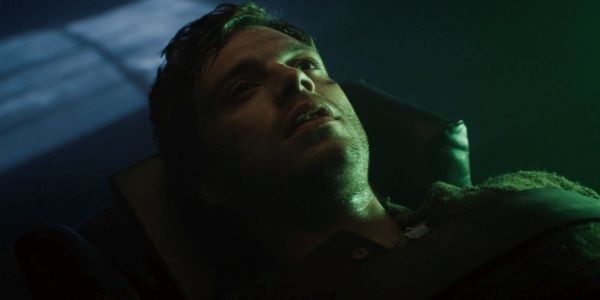
When Captain America raids the Hydra base, he discovers that his old friend James Buchanan ‘Bucky’ Barnes (Sebastian Stan) is strapped to a table. It appears that he’s been saved from whatever awful fate Dr. Arnim Zola (Toby Jones) had planned for him. But it turns out he was a victim of the mad scientist after all. Later, we learn that Zola had already conducted experiments on him. This enables Barnes to survive his fall from the train and be captured by the Soviets. This paved the way for Barnes’ eventual role as the Winter Soldier, a plot point that was realized in the movie’s sequel.
10. Robert Downey Jr. Talked Chris Evans Into The Role
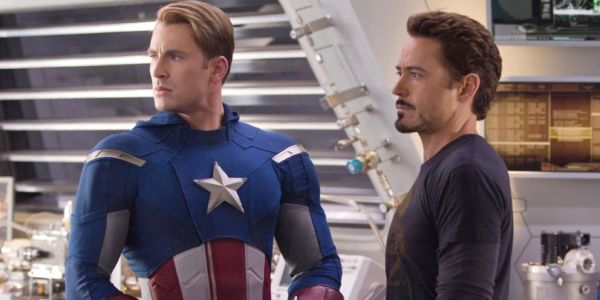
Before taking the Captain America job, Chris Evans turned it down three times. He was afraid of how the unexpected rise in celebrity might impact his personal life, not because he didn’t like the character. Then, Robert Downey Jr. persuaded him to accept the role, allowing him to later sign on for any other role he desired.
Evans then met with the producers and director Joe Johnston, who persuaded him to accept the part. “I really owe that to Kevin Feige for being persistent and helping me avoid making a huge mistake,” Evans said, reflecting on the fact that it was the best choice he had ever made.”
11. Harry Atwood Had Never Seen Evans’ Muscles
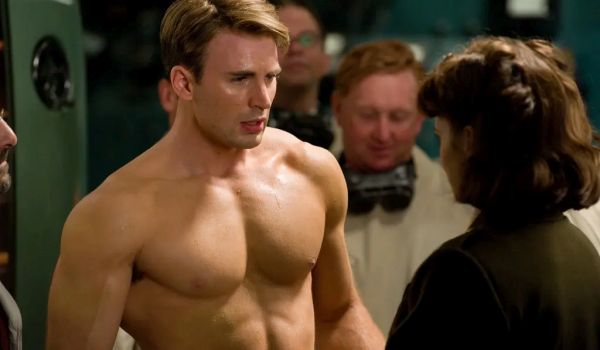
Hayley Atwell’s flustered response to Chris Evans’ muscular physique was genuine. That’s because she hadn’t seen his body before filming the scene where he exits the testing chamber. “I just instinctively grabbed his man boob,” She told Esquire. “They kept it in the film. So we did a couple of takes of me being really inappropriate with my hand on his pec for the duration of the scene.”
12. There’s a Real Comic In The Movie
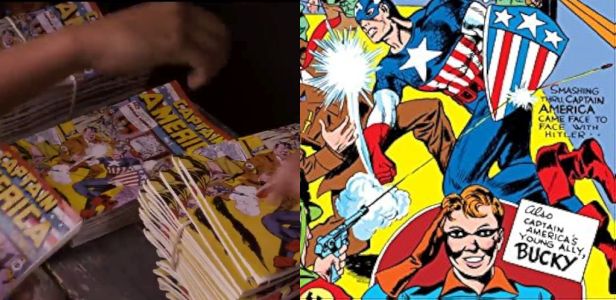
The first issue of the real Captain America Comics, which was published in March 1941, is featured in the movie. It’s in the montage of “The Star Spangled Man”. Because the movie version of Bucky differs from his (much younger) comic counterpart, the original cover has been altered to remove its representation of the character.
13. The First Stan Lee Cameo
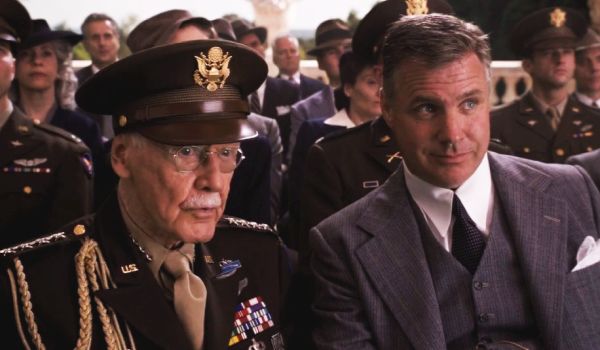
Stan Lee plays a military official attending a Captain America award ceremony. When Captain America doesn’t appear at Senator Brandt’s ceremony, the guy says, “I thought he’d be taller.” This is the first time Lee appeared in a feature film adaptation of a superhero character from Marvel Comics is in Iron Man. But this is the first time appearing in a movie with a character he didn’t create himself. However, in Captain America Comics #3, Lee did create the element of Captain America using his shield as a returning throwing weapon. Additionally, after years of being in suspended animation, Stan the Man was in charge of bringing the character back to life in the 1960s, first as a member of The Avengers and later in a solo series that centred on the hero as a troubled man out of his time.
Discover more from The Geek Twins
Subscribe to get the latest posts sent to your email.
