


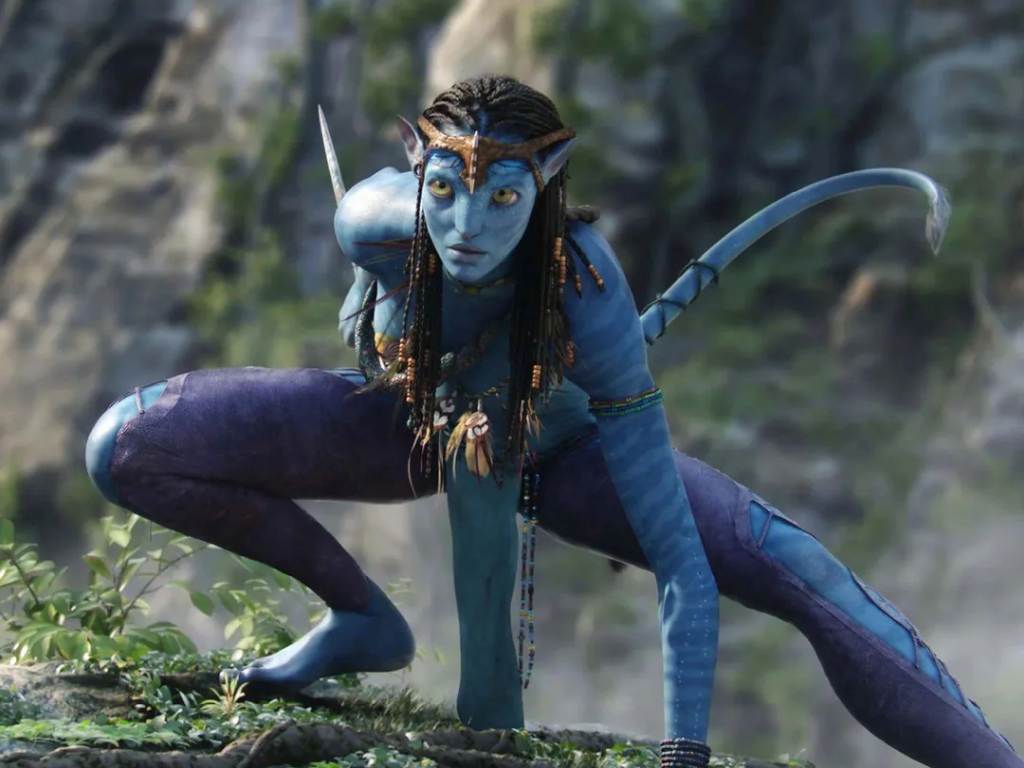
James Cameron created one of the most believable alien worlds ever put on film when Avatar debuted in 2009. Pandora feels alive, the wildlife is breathtaking, and the Na’vi are unlike any extraterrestrials we’ve seen before. Even after Avatar: The Way of Water, however, there are still plenty of questions about their biology and culture that have never been fully answered. Some mysteries can probably be explained by evolution, while others were likely creative decisions to make the Na’vi more relatable to audiences. Either way, they’re fun to think about. Here are some of the strangest things about Pandora’s most famous inhabitants that still leave us scratching our heads.
One thing that I have found most annoying about the movie Avatar is the chorus of praise for its “scientific accuracy.” It’s only a movie, but I don’t know of any movie short of Star Trek that has tried so hard to convince its fans that it’s based on real science, and fallen so short. So I thought it would be useful to just make an archive showing that the movie is not science fiction. It’s science mixed with fantasy.
Table of Contents
- 1. Why Do the Na’vi Have Breasts?
- 2. Why Do the Na’vi Have Human-Like Noses?
- 3. Why Do the Na’vi Have Human Hair?
- 4. Why Do the Na’vi Wear So Little Clothing?
- 5. Why Are the Na’vi So Similar to Humans?
- 6. How Can the Na’vi Connect to Animals With
Their Queue? - 7. Why Are the Na’vi Blue?
- 8. Why Doesn’t Every Pandora Animal Have a
Neural Queue? - 9. How Does Eywa Store Millions of Memories?
- 10. Why Are the Na’vi Stronger Than Humans?
- 11. How Do Pandora’s Floating Mountains Stay
in the Air? - 12. Why Do Different Na’vi Clans Look So
Different? - 13. What Happens After a Na’vi Dies?
- 14. Could Humans Permanently Become Na’vi?
- 15. How Much of Pandora Is Still Unknown?
- Frequently Asked Questions
- Final Thoughts
1. Why Do the Na’vi Have Breasts?
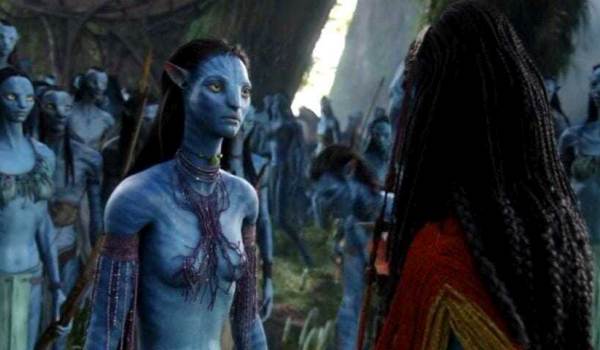
First, now let’s talk about what you’ve all been waiting for: boobs. The Na’vi females have breasts. One of the first questions many fans asked after seeing Avatar was why the female Na’vi have breasts at all. On Earth, mammals evolved breasts to feed their young. Since the Na’vi also nurse their children, that part actually makes biological sense. If they’re mammals—or at least evolved along similar lines—there’s no reason females wouldn’t have mammary glands.
The bigger mystery is why their bodies are so remarkably human. They have a waist, hips, shoulders, and facial features that look much more like ours than you might expect from an alien species that evolved on another world. Of course, there’s also a practical filmmaking reason. If James Cameron had designed the Na’vi to look completely alien, audiences might have struggled to connect emotionally with Jake Sully, Neytiri, and the rest of the characters. Giving them familiar human features made them more expressive and relatable.
The real reason the aliens have boobs is that Cameron wanted them. So while their breasts make sense biologically, they also remind us that storytelling sometimes wins over strict science.
2. Why Do the Na’vi Have Human-Like Noses?
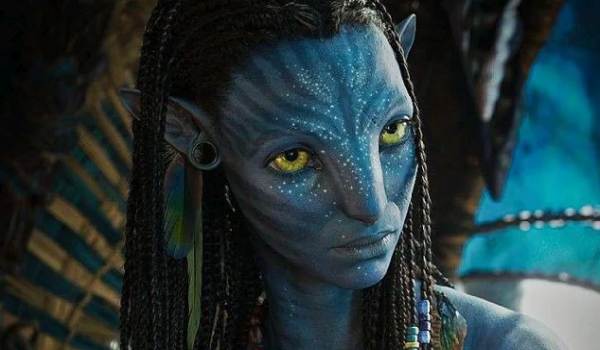
Considering Pandora’s atmosphere is toxic to humans, it’s surprising that the Na’vi breathe through noses that look so much like ours. Most of Pandora’s animals have dramatically different respiratory systems and facial structures. Hammerhead titanotheres, direhorses, and banshees all have unique adaptations that immediately set them apart from Earth’s wildlife. Most of the animals have an operculum. That’s an opening that opens and closes to let in air. We already said why this makes no sense.
On the other hand, the Na’vi noses seem almost ordinary. Perhaps that’s simply the most efficient way for intelligent humanoids to breathe. Or maybe evolution arrived at a similar solution despite occurring on a completely different world. Either way, it’s another reminder that the Na’vi were designed to balance believable alien biology with recognizable human characteristics. So why does Grace Augustine have an even more human nose in her alien form? Because her Avatar has more human DNA and more human features.
3. Why Do the Na’vi Have Human Hair?
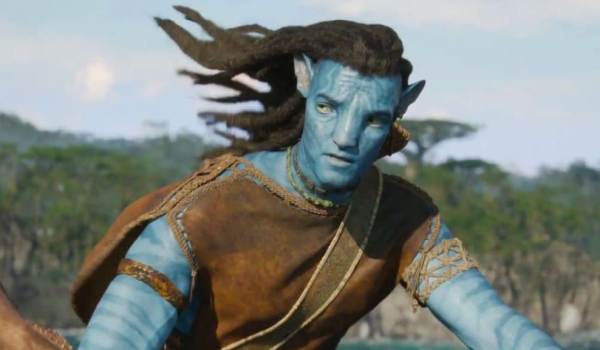
Hair is another curious feature. The Na’vi wear long braids and hairstyles that wouldn’t look out of place on Earth, yet the rest of Pandora’s creatures don’t have anything quite like it. Their famous braid also hides one of their most important biological features: the neural queue that allows them to bond with animals, connect with other Na’vi, and communicate with Eywa.
Perhaps the hair evolved to protect this delicate organ from injury, much like eyelashes protect our eyes or eyebrows keep sweat away. Or maybe it’s simply another example of convergent evolution producing familiar traits on a distant moon. Whatever the explanation, it’s difficult to imagine the Na’vi without their iconic hairstyles.
4. Why Do the Na’vi Wear So Little Clothing?
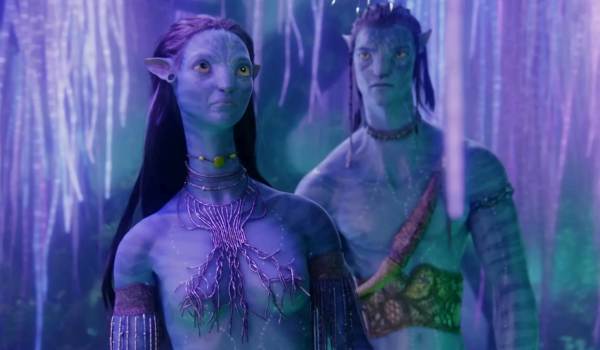
Pandora isn’t exactly a tropical paradise. The moon is filled with dangerous predators, dense jungles, and changing weather, yet many Na’vi wear surprisingly little clothing compared to humans. Some of that can be explained by climate. If Pandora’s forests are warm and humid year-round, heavy clothing would only slow them down. That’s why it’s recommended to wear light fabrics in tropical areas. Living close to nature also means they have little need for manufactured fabrics.
Clothing in Na’vi culture often appears to communicate identity instead of modesty. Beads, feathers, woven fibers, shells, and ceremonial decorations tell stories about a person’s family, accomplishments, or clan. As we saw in Avatar: The Way of Water, different clans even dress differently based on their environment. The ocean-dwelling Metkayina incorporate shells and marine materials, while forest clans rely on leather, leaves, and woven plants.
5. Why Are the Na’vi So Similar to Humans?

This may be the biggest mystery of all. The Na’vi have two eyes, two arms, two legs, five senses, and facial expressions we instantly recognize. They laugh, cry, fall in love, raise families, tell stories, and build communities that feel surprisingly familiar. From an evolutionary perspective, that’s an incredible coincidence. Scientists call this idea convergent evolution, where unrelated species independently develop similar traits because they solve similar problems.
On Earth, wings evolved separately in birds, bats, and insects. These are classic examples of convergent evolution. Could intelligence naturally lead to a humanoid body plan on many worlds? Maybe. Or perhaps James Cameron intentionally gave the Na’vi familiar features so audiences could empathize with them. After all, Avatar isn’t just about aliens—it’s about seeing ourselves through another culture’s eyes. Whatever the answer, the Na’vi remain one of science fiction’s most fascinating alien species precisely because they feel both completely foreign and strangely familiar.
6. How Can the Na’vi Connect to Almost Everything With
Their Queue?
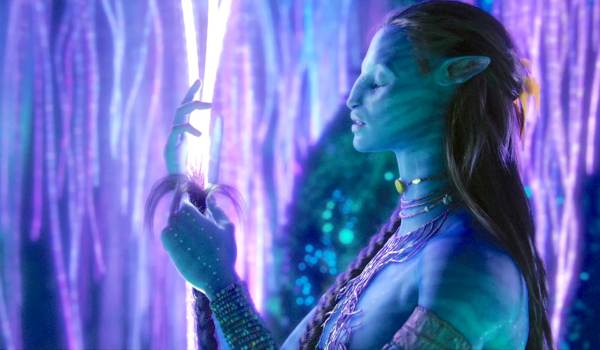
The neural queue is easily one of the coolest ideas in Avatar. Instead of using saddles, reins, or even spoken commands, the Na’vi literally plug into another living creature’s nervous system. Through a bond called tsaheylu, they can ride direhorses, fly mountain banshees, tame skimwings, and even connect to sacred trees. The connection allows both beings to communicate almost instantly, creating a partnership that goes far beyond anything humans experience with animals. But how does it actually work? The movies suggest the queue is a biological extension of the nervous system, yet it somehow connects with dozens of completely different species.
On Earth, even closely related animals have nervous systems that aren’t universally compatible, so, remarkably, Pandora’s wildlife seems to share the same biological “plug.” The simplest explanation is that most life on Pandora evolved from a common ancestor that developed this neural interface millions of years ago. If that’s true, nearly every major species would share compatible biology. Even so, the queue remains one of the most fascinating—and mysterious—concepts in science fiction.
7. Why Are the Na’vi Blue?
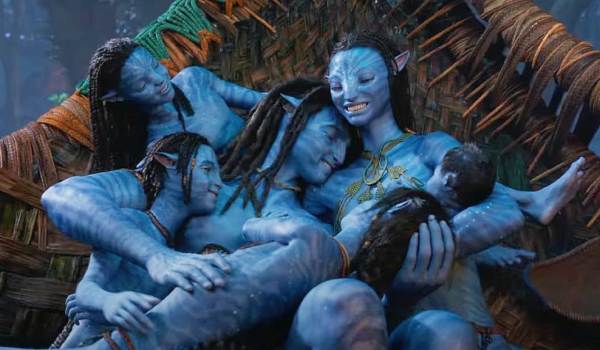
Blue isn’t exactly a common color for large mammals on Earth, which makes the Na’vi’s skin especially striking. James Cameron has said the color was chosen partly because green would have blended into Pandora’s forests and looked too much like other famous movie aliens. Blue made the Na’vi instantly recognizable while giving them an otherworldly appearance. Could there also be an in-universe explanation? Possibly. Blue skin may provide camouflage in Pandora’s lush jungles, where filtered sunlight and colorful plants create a sea of blues, greens, and purples. It may also protect them from Pandora’s unique environment or play a role in regulating body temperature. The ocean-dwelling Metkayina introduced in Avatar: The Way of Water even have subtle differences in coloration, suggesting that skin color may continue to evolve as different clans adapt to different habitats. Whatever the reason, it’s hard to imagine the Na’vi any other color.
8. Why Doesn’t Every Animal Have a Neural Queue?
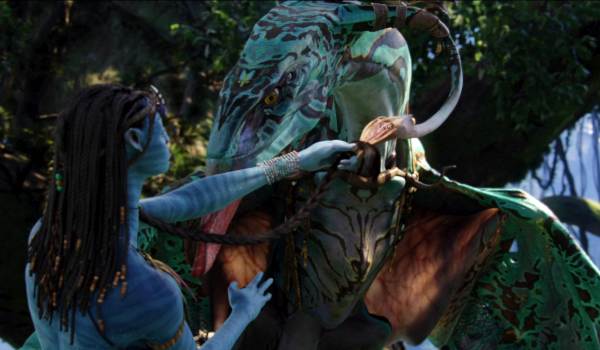
If the neural queue is such an important part of Pandora’s ecosystem, why don’t all of its creatures have one? Direhorses, ikran, skimwings, and several other animals clearly possess compatible queues, allowing the Na’vi to form tsaheylu. Yet many species either don’t have a visible connection point or have never been shown bonding with the Na’vi.
Does that mean some animals evolved without the ability? Are there species that simply can’t be linked? Or have we only seen a tiny fraction of Pandora’s wildlife? Considering that Pandora is an entire moon with countless ecosystems, we may have only scratched the surface. Future Avatar films may introduce creatures with completely different methods of communication—or reveal that the queue isn’t nearly as universal as we once thought.
9. How Does Eywa Store the Memories of an Entire Planet?
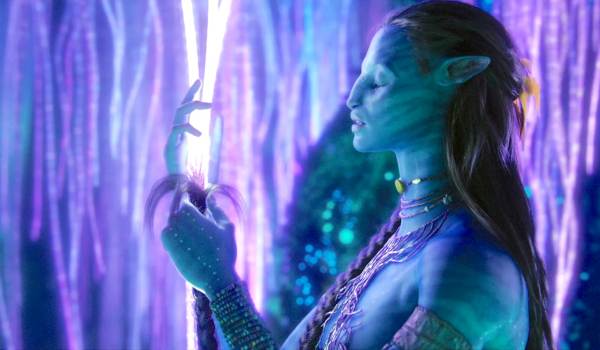
Eywa is often described as the guiding force of Pandora, but she’s much more than a goddess. According to the films, Eywa is a vast biological network connecting trees, plants, animals, and the Na’vi themselves. Through sacred places like the Tree of Souls, memories can be preserved and even shared with future generations. That’s an incredible amount of information.
One human brain can hold over 74 Terabytes of information. How can a living ecosystem store the experiences of countless generations without running out of space? Is Eywa functioning like an organic supercomputer? Does every sacred tree add to the network like another server joining the internet? The movies intentionally leave these questions unanswered, making Eywa one of the most intriguing concepts in the franchise. Whether she’s science, spirituality, or something in between is still open to interpretation.
10. Why Are the Na’vi So Much Stronger Than Humans?
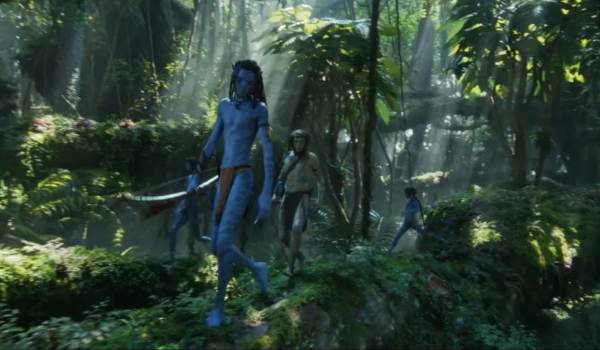
Standing about ten feet tall, the Na’vi are naturally larger than humans, but their strength seems almost superhuman. They leap across branches dozens of feet above the ground, climb with ease, draw enormous bows, and overpower heavily equipped soldiers despite having little more than primitive weapons. Pandora’s lower gravity certainly helps. A lower gravitational pull would make jumping easier and reduce the amount of energy needed to move such a large body. Even so, gravity alone can’t explain everything.
The Na’vi also possess incredible balance, agility, endurance, and reflexes that allow them to survive in one of the most dangerous environments imaginable. Perhaps millions of years of evolution on Pandora favored stronger muscles, denser bones, and faster reactions. Or maybe we’re simply seeing what happens when an intelligent species evolves without modern technology to do the hard work for them. Either way, it’s no wonder humans needed AMP suits and advanced weapons just to compete with bows, arrows, and determination.
11. How Do Pandora’s Floating Mountains Stay in the Air?
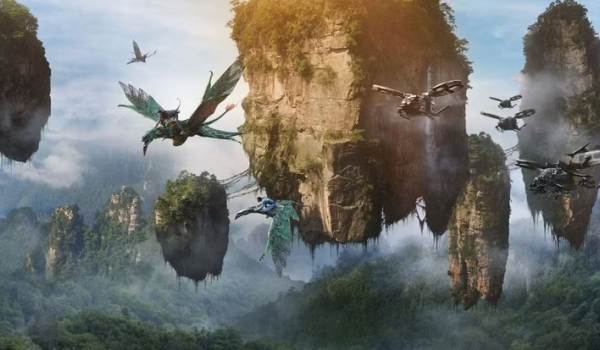
The Hallelujah Mountains are among the most unforgettable images in Avatar. They float high above Pandora’s surface, creating a landscape that looks both beautiful and impossible. Even after two movies, fans still wonder how these massive rock formations remain suspended. We talked about it before. The films credit the phenomenon to unobtanium, a rare mineral that generates powerful magnetic fields. According to the story, those fields counteract gravity and keep entire mountains floating. It’s a clever science-fiction explanation, but it raises even more questions than it answers.
How strong would those magnetic fields need to be? Why don’t the mountains drift into one another or crash to the ground? Scientists have never discovered a material on Earth with anything close to those properties, making unobtanium one of the franchise’s biggest leaps into speculative science. Still, realism isn’t the point. The floating mountains instantly make Pandora feel unlike any world we’ve seen before. They also remind viewers that James Cameron values wonder as much as scientific accuracy. Sometimes the best science fiction leaves us asking questions instead of providing every answer.
12. Why Do Different Na’vi Clans Look So Different?
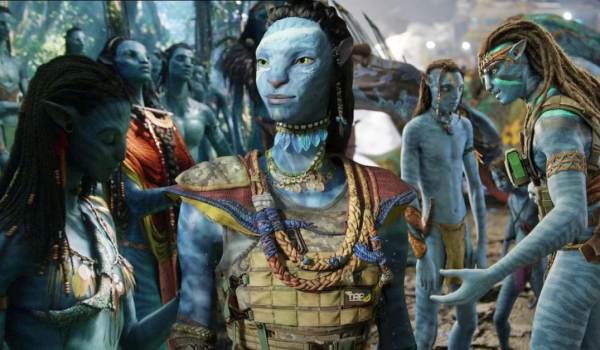
When Avatar debuted in 2009, it seemed like all Na’vi shared the same basic appearance. That changed with Avatar: The Way of Water, which introduced the Metkayina, a clan that has adapted to life in Pandora’s oceans. Their wider tails, stronger arms, larger lungs, and fin-like forearms make them better swimmers than their forest relatives. These physical differences make perfect evolutionary sense. On Earth, animals that live in different environments often develop unique traits over thousands of generations. The same process could explain why the Metkayina look different from the Omaticaya despite sharing a common ancestry.
However, the new clan also raises bigger questions about Pandora. If ocean-dwelling Na’vi evolved distinct features, how many other clans exist across the moon? Could mountain tribes have stronger legs for climbing? Might desert clans have lighter skin or different ways of conserving water? Polar clans, if they exist, could look even more different. James Cameron has already hinted that future Avatar films will introduce new regions and cultures. If that’s true, we’ve probably explored only a tiny fraction of Pandora. Every new clan expands the world’s mythology while proving that the Na’vi are far more diverse than fans first imagined.
13. What Happens After a Na’vi Dies?
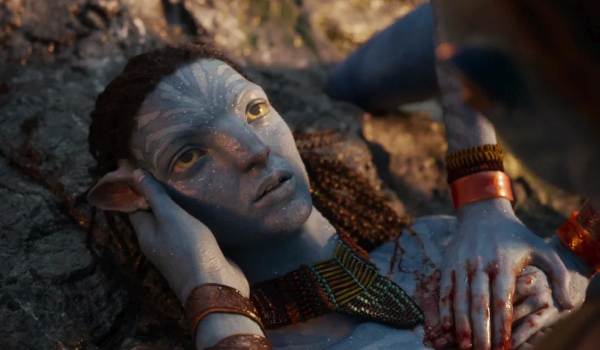
Death doesn’t seem to mean the same thing on Pandora as it does on Earth. The Na’vi believe that every living thing returns to Eywa, allowing life to continue in a different form. Unlike many fictional religions, the movies suggest that this belief has a real scientific basis. Jake Sully experiences Eywa’s power more than once. In Avatar, Grace Augustine briefly connects to the Tree of Souls before she dies. Although Eywa cannot save her body, Jake later speaks with what appears to be Grace’s consciousness.
Avatar: The Way of Water expands this idea when Kiri forms an unusually strong connection with Eywa and experiences visions that seem impossible to explain. Even so, the movies never answer the biggest question. Are the Na’vi truly communicating with the spirits of their ancestors, or are they accessing preserved memories stored within Pandora’s biological network? Those possibilities are very different, yet the films leave both on the table. That mystery gives Eywa emotional and spiritual depth. Instead of defining the answer, James Cameron encourages viewers to decide what they believe.
14. Could Humans Permanently Become Na’vi?
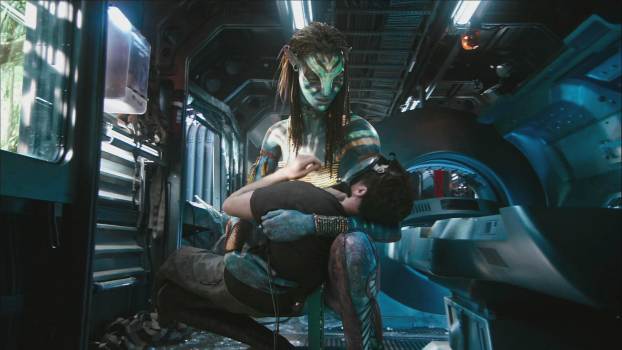
Jake Sully begins the first movie as a human Marine using an Avatar body to explore Pandora. By the end of the film, however, Eywa permanently transfers his consciousness into that body, leaving his human form behind forever. It’s one of the franchise’s most memorable moments, but it also creates one of its biggest mysteries.
If Jake can become Na’vi permanently, why can’t other humans do the same? The technology clearly exists, and the transfer appears to work. Perhaps Eywa played a role that human science cannot duplicate. The ceremony might require a spiritual connection instead of advanced technology alone. It’s also possible that the process carries enormous risks, making Jake’s transformation an extraordinary exception rather than a repeatable procedure. Future movies may finally explain the rules. Until then, Jake’s new life remains one of the most fascinating unanswered questions in the Avatar universe.
15. How Much of Pandora Is Still Unknown?

After two films, Pandora still feels almost limitless. We’ve visited rainforests, floating mountains, reefs, and open oceans, yet those locations represent only a small part of the moon. James Cameron has built a world that seems much larger than the stories we’ve seen so far. The sequels have already proven that every new region introduces different wildlife, traditions, and Na’vi clans.
That pattern suggests Pandora contains many more cultures waiting to be discovered. Mountain kingdoms, desert settlements, frozen landscapes, or underground civilizations could all exist beyond the areas we’ve explored. James Cameron has hinted that future installments will introduce new clans and even Na’vi groups with darker values. “I want to show the Na’vi from another angle because, so far, I have only shown their good sides,” Cameron told 20 Minutes (via Screenrant). “In the early films, there are very negative human examples and very positive Na’vi examples. In Avatar 3, we will do the opposite.” This was shown in Avatar: Fire and Ash. Those stories could answer many of the mysteries on this list while creating entirely new ones.
That’s one reason the Avatar franchise remains so compelling. Every visit to Pandora expands the mythology without making the world feel smaller. Instead, each movie reminds us how much remains undiscovered.
Frequently Asked Questions
Why are the Na’vi blue?
James Cameron chose blue to make the Na’vi stand out from other movie aliens. Within the story, their skin color likely evolved to suit Pandora’s unique environment.
How tall are the Na’vi?
Most adult Na’vi stand between nine and ten feet tall, making them much larger and stronger than the average human.
What is Eywa?
Eywa is a planet-wide biological network that connects Pandora’s plants, animals, and Na’vi. Many Na’vi also worship Eywa as a spiritual force.
How does the Na’vi queue work?
The queue forms a neural bond called tsaheylu. It allows the Na’vi to connect directly with compatible animals, sacred trees, and even other Na’vi.
Will future Avatar movies introduce more Na’vi clans?
Yes. James Cameron has confirmed that future films will explore new regions of Pandora, which means fans should meet additional clans, creatures, and cultures.
Final Thoughts
With so much effort put into the alien appearance of other creatures on Pandora, the Na’vi are kind of boring. To explain why the Na’vi look so different, some have argued that they must be from another planet and emigrated to Pandora. Since we see the precursor primate with the four fused arms, that clearly isn’t true. The reality is that the designers were more interested in making the Na’vi cute and cuddly than realistic or interesting. Reports are that their original concept was for a much more alien design. However, they changed the design when test viewers found the Na’vi too alien to relate to.
More than 15 years after Avatar changed science fiction, the Na’vi continue to inspire debate among fans. Some of these mysteries may receive answers in future films, while others may remain part of Pandora’s enduring appeal. That’s part of what makes James Cameron’s world so memorable. Every answer reveals another mystery, giving fans a reason to return to Pandora again and again.
Related Posts
- The Flawed Science of “Avatar” (Pt 1): Floating Mountains
- The Flawed Science of “Avatar” (Pt 2): The Avatar
- The Flawed Science of “Avatar” (Pt 3): Six Legs
- The Flawed Science of “Avatar” (Pt 4): Pandora
- The Flawed Science of “Avatar” (Pt 5): Chest Nostrils
- The Flawed Science of “Avatar” (Pt 6): Unobtanium
What do you think is the Biggest Mystery of the Na’vi?
Did we miss one that belongs on this list? Let us know in the comments, and share this article with the Avatar fans in your life.
Discover more from The Geek Twins
Subscribe to get the latest posts sent to your email.

<span class="dsq-postid" data-dsqidentifier="38242 ">16 Comments
But they need the tails to plug into animals–including each other! Anyway, this reminds me of when people praised "Moneyball" or "Million Dollar Baby" as being realistic when both were not all that realistic at all.
Here, here! I had heard that Ubisoft, creators of the Myst series and other game worlds, were behind the creation of the flora and fauna of Pandora, and what a great job they did. I'm sure if they had also been in charge of the "humanoids", they would have been of much closer kinship to the rest of Pandora. For a game, it would have worked great – the more alien the better. For a film, I can see how the Na'vi's kinship with their world would work against the sympathies of audiences.
I don't remember lower gravity in the film either. But good point about all the other species having six limbs.
As for the boobs – scientific or not, I'm really glad he put them in.
never saw this film… i know for shame!
Good points. I actually haven't seen this film.
i never got the braid, that was always my biggest problem. somehow is contains some na'vi penis, but yet still is braided with the genital inside. i simply have no idea how to "braid-in" something. i am no expert braider, but i always found that funny and not really explained/showed in the movie. are the na'vi born with braided hair?
"All placental mammals carry their babies inside of them in the placenta."
Uhh, No.
From Here: http://www.enchantedlearning.com/subjects/mammals/Placental.shtml
Placental mammals (subclass Eutheria) are advanced mammals whose young are born at a relatively advanced stage (more advanced than the young of other mammals, the monotremes and marsupials). Before birth, the young are nourished through a placenta. The placenta is a specialized embryonic organ that is attached the mother's uterus and delivers oxygen and nutrients to the young.
You really should do a bit of research before you start trying to show how knowledgeable you are. When you make a horribly inaccurate statement like the one above, while trying to correct someone else's inaccuracy, it tends to invalidate the rest of your argument.
Just sayin', you know
When did you read biology last ? Middle school ?
it is copied from green mythology the beliefs & spiritual of the navi
True and one of the biggest reasons for putting breasts on female aleins in movies is for sex appeal and I agree that you don't know they breast feed
You misread the quote. Read it again
1. Carbon is soft. Check the link for more info
2. The part about lower gravity making them stronger came from the novel.
3. You're wrong about the tails. Check the link for more info.
4. Cameron, the director of the movie, specifically said the Navi don't breastfeed. Check the link for more info
5. Pupils can only dilate so much and only so quickly. Check the link for more info
Thanks for commenting
Cameron, the director and writer of the movie, said the Navi don't breastfeed. Check the link for more info
Carbon may be flexible, but that doesn't mean it isn't strong. It could act for bone as rebar is to concrete.
and they still carry them until they're thrown out. yes, i'm sure the author knows that we are more developed than kangaroo babies are.
the na'vi could well be from a different planet.